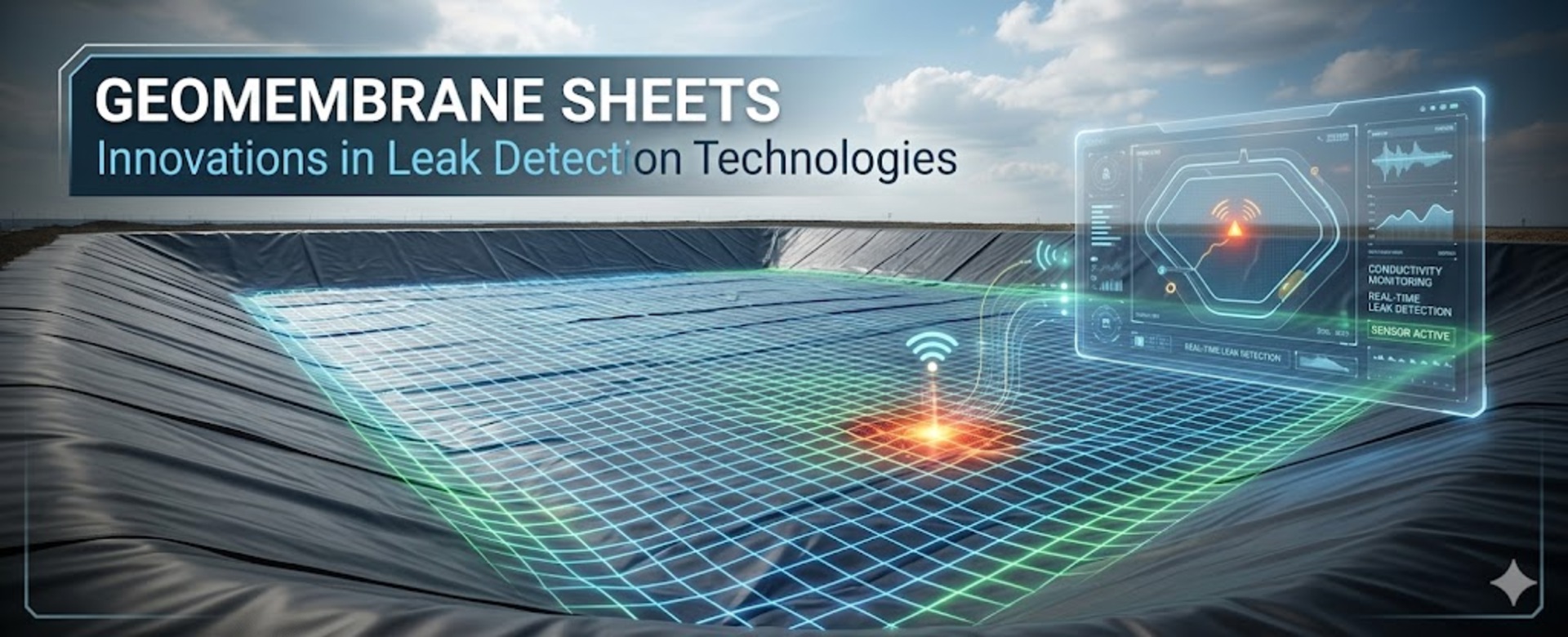

Leak detection is a critical aspect of maintaining the integrity of geomembrane systems used in containment and environmental protection. Over time, even minor leaks can lead to significant environmental damage, making early detection essential. Several innovative technologies have emerged to improve the effectiveness and efficiency of leak detection in geomembrane-lined systems.
Innovations in Leak Detection:
- Electrical Leak Location (ELL) Technology:
Electrical Leak Location is one of the most widely used methods for detecting leaks in geomembrane systems. This technology involves applying an electric current to the geomembrane surface, which creates a conductive path. If there is a hole or puncture, the current will escape, triggering an alarm. This non-destructive method allows for pinpointing the exact location of the leak, making repairs faster and more efficient. - Acoustic Emission Testing (AET):
Acoustic emission testing is an advanced technique used to detect leaks by monitoring high-frequency sound waves generated by leaks or cracks in the geomembrane. Sensors are placed along the geomembrane surface, and any leaks will generate acoustic emissions that are detected by the sensors. This technology is particularly useful for identifying small or hidden leaks that may not be visible or easily detected by other methods. - Hydraulic Leak Detection Systems:
In hydraulic systems, leak detection can be performed using a change in water or liquid pressure. A hydraulic leak detection system is installed within the geomembrane structure, where any drop in pressure signals a leak. This system is effective for detecting large leaks in water reservoirs or containment ponds and is widely used in applications where liquid containment is crucial. - Fiber Optic Sensing Technology:
Fiber optic sensors are being integrated into geomembrane systems for continuous monitoring of temperature, pressure, and chemical exposure. These sensors can detect even minute changes in environmental conditions, such as the presence of leaks or the potential for geomembrane degradation. The data collected from fiber optic sensors can be transmitted in real-time, providing early warning signs of leaks and allowing for quick intervention. - Infrared Thermography:
Infrared thermography uses infrared cameras to detect temperature variations across the geomembrane surface. Leaks or areas of damage can cause localized temperature differences, which are visible on thermal imaging cameras. This method is useful for large-scale inspections and can identify leaks that might be missed during a visual inspection. - Visual Inspection with Drone Technology:
Drones equipped with high-definition cameras and sensors are increasingly used to perform visual inspections of large geomembrane installations. Drones can access hard-to-reach areas and provide a quick and comprehensive overview of the system. Combined with AI algorithms, drone inspections can identify anomalies that could indicate potential leaks.
These innovations in leak detection technology enhance the ability to monitor the condition of geomembrane systems, detect issues early, and reduce the risk of environmental contamination.