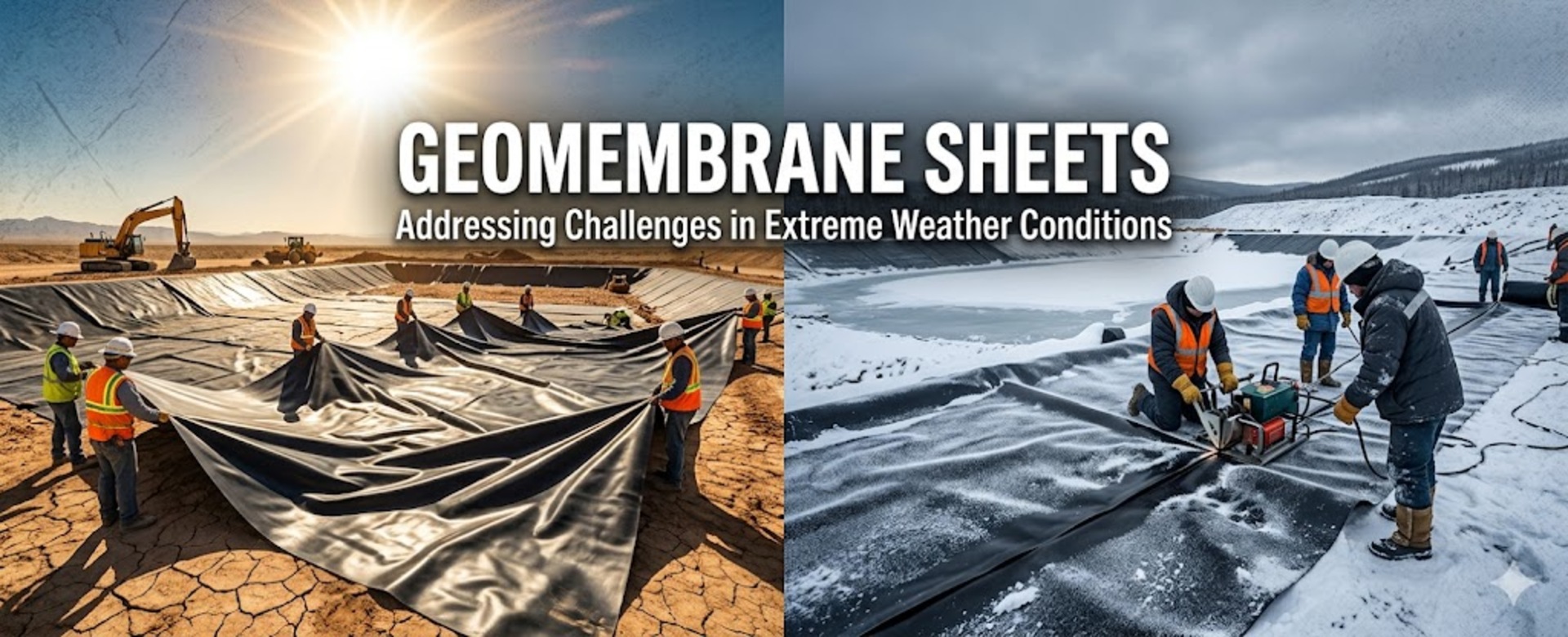

Geomembrane sheets are often deployed in environments subject to extreme weather conditions, such as high winds, heavy rainfall, freezing temperatures, or intense heat. These conditions can put significant stress on geomembrane systems, potentially leading to material failure or reduced performance. However, with the right materials, installation techniques, and maintenance practices, geomembranes can be designed to withstand extreme weather and continue to function effectively.
Challenges in Extreme Weather Conditions:
- UV and Ozone Degradation: Prolonged exposure to UV radiation and ozone can cause certain geomembrane materials, particularly those made from PVC or PE, to degrade over time. UV exposure can lead to cracking, brittleness, and a reduction in tensile strength. To address this challenge, geomembranes are often formulated with UV stabilizers, carbon black, or antioxidants to enhance their resistance to UV and ozone degradation, thus prolonging their lifespan.
- Temperature Extremes: Geomembranes must be able to withstand extreme temperature variations, from freezing temperatures to extreme heat. In cold climates, materials like HDPE can become brittle, while in hot climates, they can soften and deform. EPDM geomembranes are particularly well-suited for applications in areas with wide temperature fluctuations due to their excellent resistance to both heat and cold. The installation of geomembranes in these environments requires careful attention to material properties and the use of reinforced geomembranes where needed.
- Flooding and Water Accumulation: Heavy rainfall and flooding can overwhelm containment systems, especially if geomembranes are not properly installed or maintained. In regions with frequent flooding, geomembranes must be designed to handle large volumes of water and resist water pressure. Proper installation of drainage systems and ensuring that geomembranes are securely anchored can help prevent damage caused by water accumulation.
- Wind and Storm Resistance: In areas prone to high winds and storms, geomembranes may experience shifting or tearing. High winds can cause the material to flap or become damaged if not properly secured during installation. Reinforced geomembranes, such as those with additional layers of protection or welded seams, can help ensure that the material stays in place and performs as required even in extreme wind conditions.
Solutions to Address Extreme Weather Challenges:
- Use of UV-Resistant Additives: Materials like HDPE can be treated with additives such as carbon black to resist UV degradation.
- Thicker or Reinforced Geomembranes: For high-stress areas, geomembranes with additional reinforcement can provide greater strength and durability.
- Flexible Materials: Materials like EPDM are ideal for areas with extreme temperature fluctuations because of their superior flexibility and resilience to both heat and cold.
- Anchoring Systems and Drainage: Proper installation techniques, such as anchoring geomembranes securely and ensuring efficient drainage, can help prevent damage from wind and flooding.
By selecting the right geomembrane material and installation techniques, many of the challenges posed by extreme weather conditions can be effectively addressed, ensuring long-term performance.