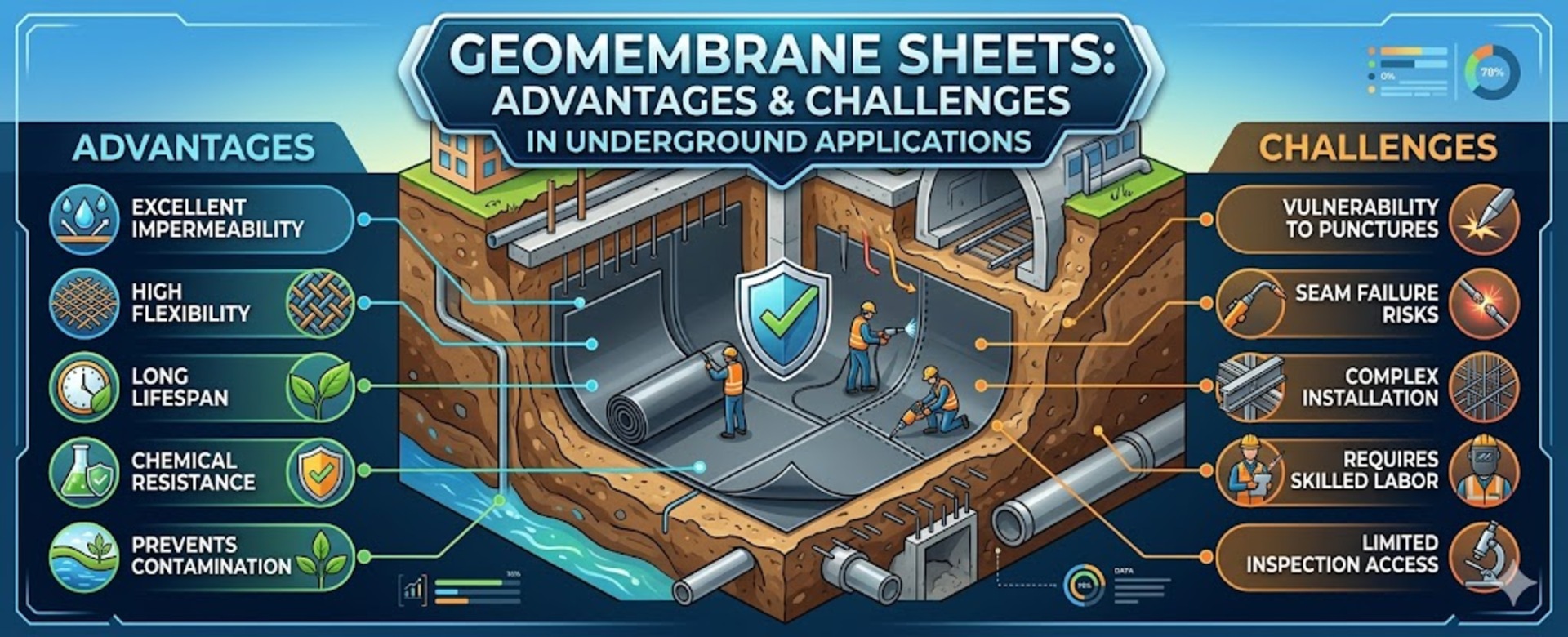

Geomembrane sheets are widely used in underground applications for waste containment, waterproofing, and environmental protection. These applications include landfills, mining operations, underground reservoirs, and wastewater treatment plants. Geomembranes offer significant advantages in these environments, but they also face specific challenges that must be addressed during design and installation.
Advantages of Geomembrane Sheets in Underground Applications:
- Waterproofing and Containment:
One of the primary benefits of geomembranes in underground applications is their ability to provide waterproofing and containment. For instance, geomembranes are used in landfill liners and containment basins to prevent leachate from seeping into the groundwater. This impermeability ensures that hazardous chemicals and waste materials are contained safely, protecting the environment and local water supplies. - Durability and Resistance to Chemicals:
Underground applications often involve exposure to chemicals, soil degradation, and water. Geomembranes, especially those made from HDPE and PVC, are highly resistant to chemical attacks, including acids, oils, and solvents. This makes them ideal for hazardous waste containment in mining and landfill applications, where materials may be exposed to harsh chemicals for long periods. - Flexibility and Adaptability:
Geomembranes can be manufactured in various thicknesses and materials, providing flexibility for different underground applications. The flexibility of geomembranes allows them to conform to uneven or irregular surfaces, ensuring a tight seal, which is essential in underground environments where ground movement can occur. - Cost-Effective Solution:
In many underground projects, geomembranes offer a cost-effective alternative to more traditional waterproofing and containment methods. They require less maintenance and have a longer lifespan, which makes them a more economical choice in the long term, reducing the need for frequent repairs or replacements.
Challenges in Underground Applications:
- Installation Challenges:
The installation of geomembranes in underground settings can be challenging due to limited accessibility, confined spaces, and the need to avoid puncturing or damaging the material. Proper training and careful handling during installation are critical to ensure the geomembrane’s integrity. - Pressure and Stress from Overlying Soil:
In underground applications, geomembranes may be subjected to significant pressure from the surrounding soil or infrastructure. This can lead to deformation or stretching, particularly in areas with unstable or shifting soil. Reinforced geomembranes may be necessary to withstand these conditions. - UV and Ozone Exposure during Installation:
Though geomembranes are often used underground, during the installation phase, they may still be exposed to UV radiation and ozone. UV exposure can degrade the material if not properly shielded, requiring protective measures such as temporary covering or indoor installation conditions.
By addressing these challenges through careful design, proper installation techniques, and material selection, geomembrane sheets can be effectively used in a wide range of underground applications, providing long-term protection and performance.