
In an era where sustainability is a critical concern, industries are increasingly adopting technologies that minimize environmental impact and promote efficient resource management. Geomembrane sheets are one such innovation that combines practicality with eco-friendliness. These impermeable sheets, typically made from HDPE (High-Density Polyethylene), LDPE (Low-Density Polyethylene), or PVC (Polyvinyl Chloride), play a pivotal role in promoting sustainable practices across various sectors. Below, we explore the key sustainability benefits of geomembrane sheets and their role in creating a greener future.
- Reducing Resource Wastage
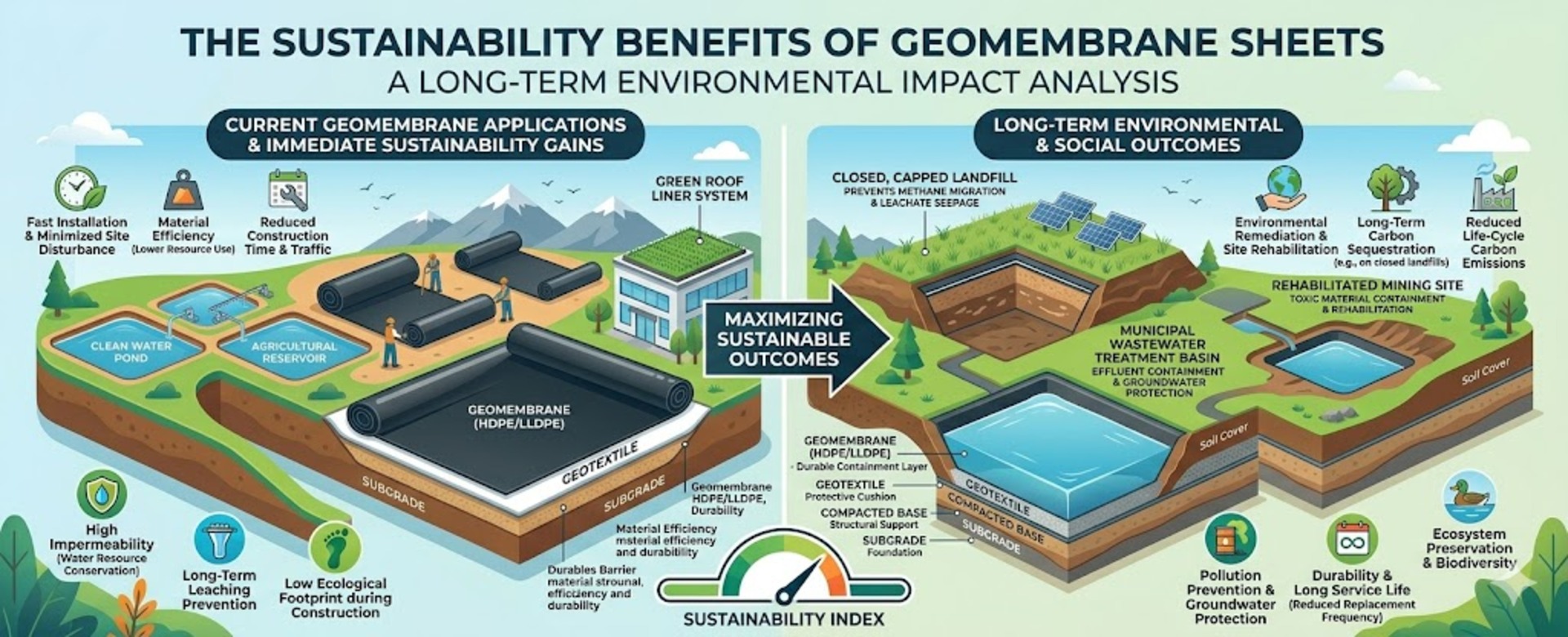
Geomembrane sheets are highly effective at preventing the loss of valuable resources such as water and soil. For instance, in agricultural applications, they are used to line ponds, reservoirs, and irrigation canals to minimize water seepage. By conserving water, these sheets support efficient resource utilization, which is essential in arid and drought-prone regions.
In industrial settings, geomembrane sheets prevent the leakage of chemicals and other hazardous materials, reducing the need for additional resources to address contamination or spills.
- Mitigating Environmental Contamination
One of the most significant sustainability benefits of geomembranes is their ability to protect soil and water from contamination. In landfills, they act as impermeable barriers that prevent toxic leachate from seeping into the ground, safeguarding groundwater and nearby ecosystems.
Similarly, in mining and wastewater treatment plants, geomembranes contain harmful substances, ensuring that pollutants do not enter the environment. By preventing contamination, geomembrane sheets reduce the need for costly and resource-intensive environmental remediation efforts.
- Supporting Renewable Energy Projects
Geomembranes contribute to sustainability by supporting renewable energy initiatives. For example, they are used in biogas plants to line anaerobic digesters, which convert organic waste into biogas—a clean and renewable energy source. Their durability and impermeability ensure that the digestion process is efficient and contained.
Additionally, geomembrane sheets are used in solar energy projects, such as floating solar panel installations on water reservoirs. These sheets provide the necessary waterproofing and support, allowing solar energy to be harnessed without compromising water conservation.
- Durability and Longevity
Geomembrane sheets are designed to withstand harsh environmental conditions, including UV exposure, temperature fluctuations, and chemical interactions. Their long lifespan reduces the need for frequent replacements, minimizing the consumption of raw materials and energy required for manufacturing.
This durability also translates to reduced waste generation, as geomembranes remain effective for decades, significantly lowering their environmental impact over their lifecycle.
- Reducing Carbon Footprint
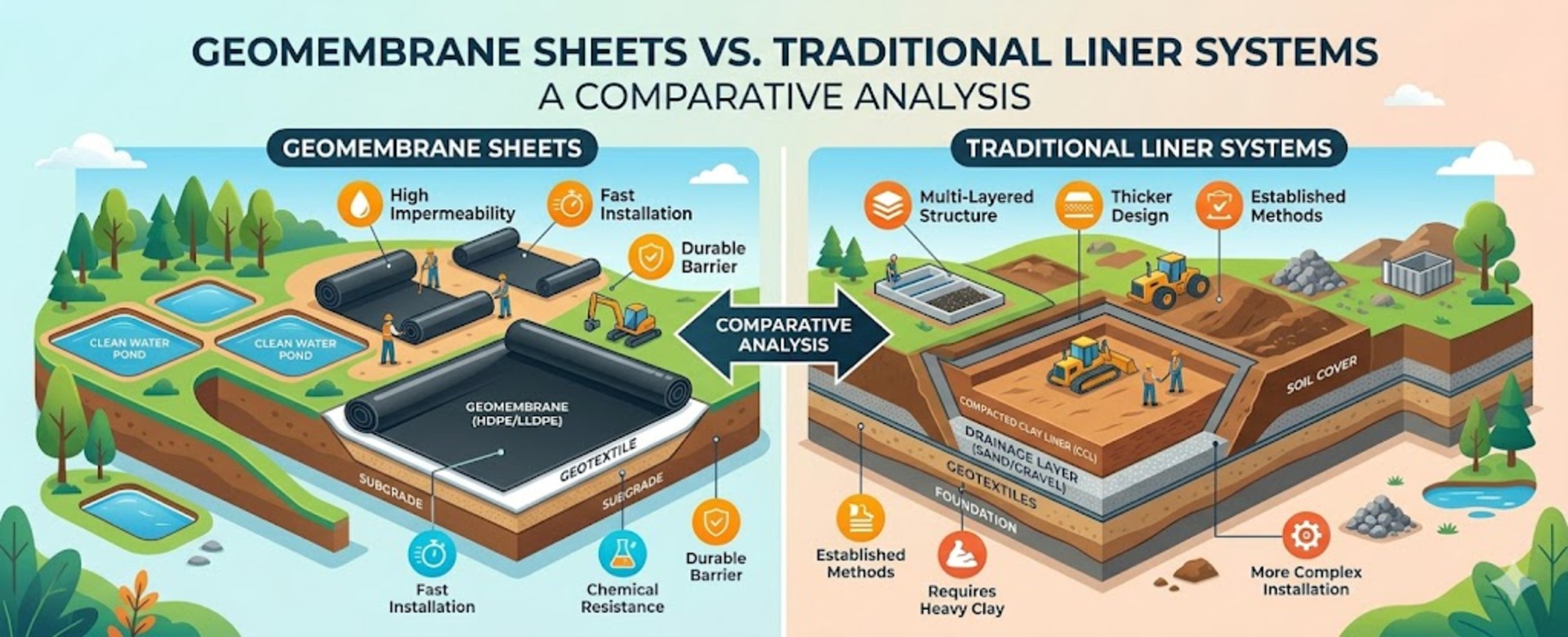
Compared to traditional containment methods such as concrete or compacted clay liners, geomembrane sheets have a lower carbon footprint. The production and installation of geomembranes require fewer resources and generate fewer emissions.
Furthermore, their lightweight nature makes them easier to transport, reducing fuel consumption during shipping. This makes geomembrane sheets an eco-friendly alternative for large-scale infrastructure projects.