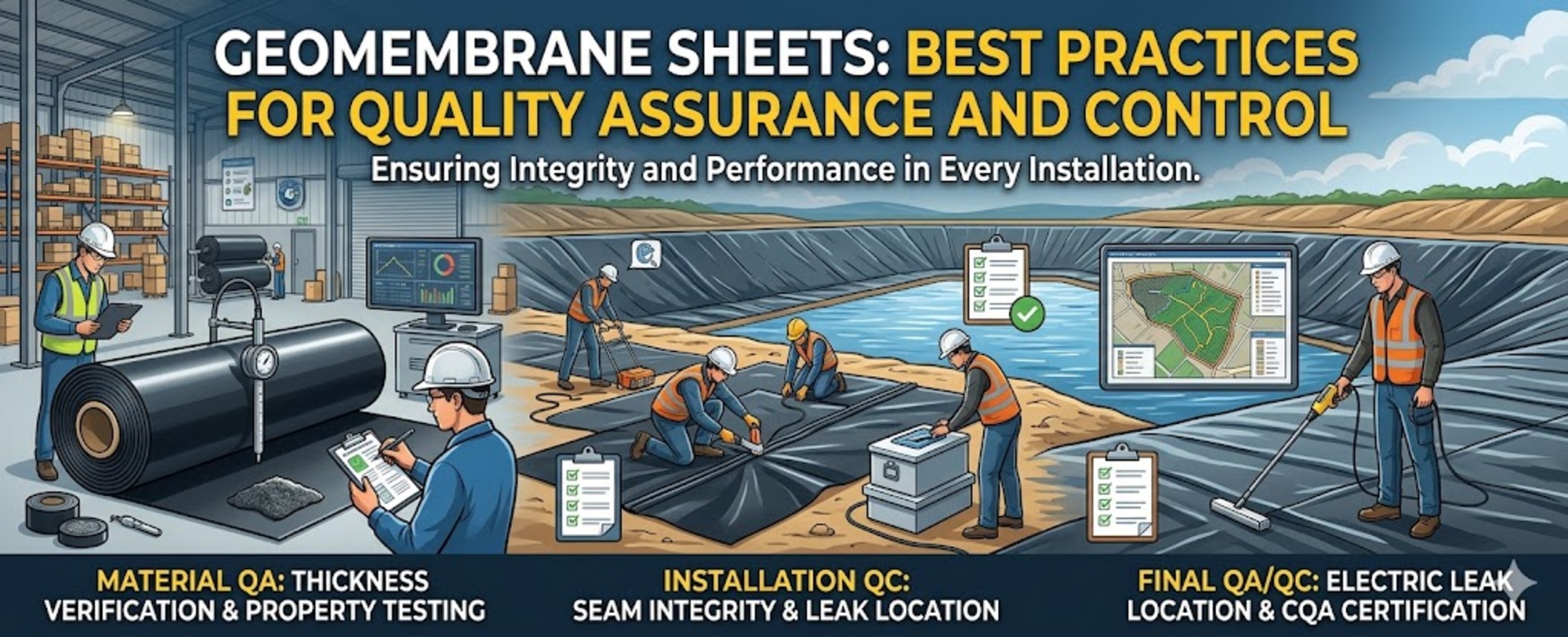

Quality assurance and control (QA/QC) are fundamental to ensuring that geomembrane sheets meet the performance standards required for their specific applications. Whether used in waste containment, water management, or erosion control, proper QA/QC practices can significantly reduce the risk of material failure, leaks, and environmental contamination. The following best practices can help ensure the quality and reliability of geomembranes in various projects.
1. Material Selection and Sourcing
Selecting the appropriate material for the geomembrane is the first step in ensuring quality. Materials such as HDPE, LDPE, PVC, and EPDM offer different characteristics suited to specific applications. It is critical to source materials from reputable suppliers that provide certification for material properties, including tensile strength, chemical resistance, UV resistance, and flexibility. The material must meet the relevant international standards (e.g., ASTM, ISO) for the intended application.
2. Pre-Installation Inspections
Before installation, geomembrane sheets should undergo thorough visual inspection to ensure they are free from defects such as tears, wrinkles, or punctures. The material should also be checked for consistency in thickness and appearance, ensuring there are no manufacturing defects that could affect its performance. Samples of the geomembrane should be tested for key properties such as thickness, tensile strength, and elongation at break before installation.
3. Seam Integrity and Welding Techniques
Seam quality is one of the most critical factors in the long-term performance of geomembranes. Poorly welded seams can lead to leaks, reducing the geomembrane’s effectiveness in containment applications. Geomembranes should be welded using high-quality, industry-standard methods, such as extrusion welding, thermal fusion welding, or adhesive bonding. The welded seams should be inspected using non-destructive testing methods, such as vacuum box testing or spark testing, to ensure they are free from defects.
4. Environmental Considerations During Installation
Geomembranes must be installed under proper environmental conditions to avoid damage. Installation should ideally occur in temperatures within the recommended range specified by the manufacturer. Extreme weather conditions, such as rain, snow, or high winds, can complicate the installation process and lead to issues like material deformation or seam failure. During installation, geomembranes should be protected from UV exposure and physical damage.
5. Ongoing Monitoring and Maintenance
Even after installation, geomembranes require ongoing monitoring and maintenance to ensure their effectiveness. Regular inspections should be carried out to detect any physical damage, such as punctures or tears, and to ensure the integrity of seams and welds. Leak detection systems, such as electric leak location (ELL) or acoustic monitoring, can be used to identify issues early before they lead to significant environmental harm. Additionally, periodic testing of the geomembrane’s material properties may be necessary to assess its long-term performance.
6. Documentation and Reporting
Maintaining comprehensive records of material properties, installation processes, testing procedures, and inspection results is crucial for ensuring traceability and accountability. These records can be used to verify compliance with industry standards and provide valuable information for future maintenance or replacement projects.
By adhering to these best practices, quality assurance and control for geomembrane sheets can significantly enhance their performance and longevity, minimizing the risk of leaks, contamination, and failure.