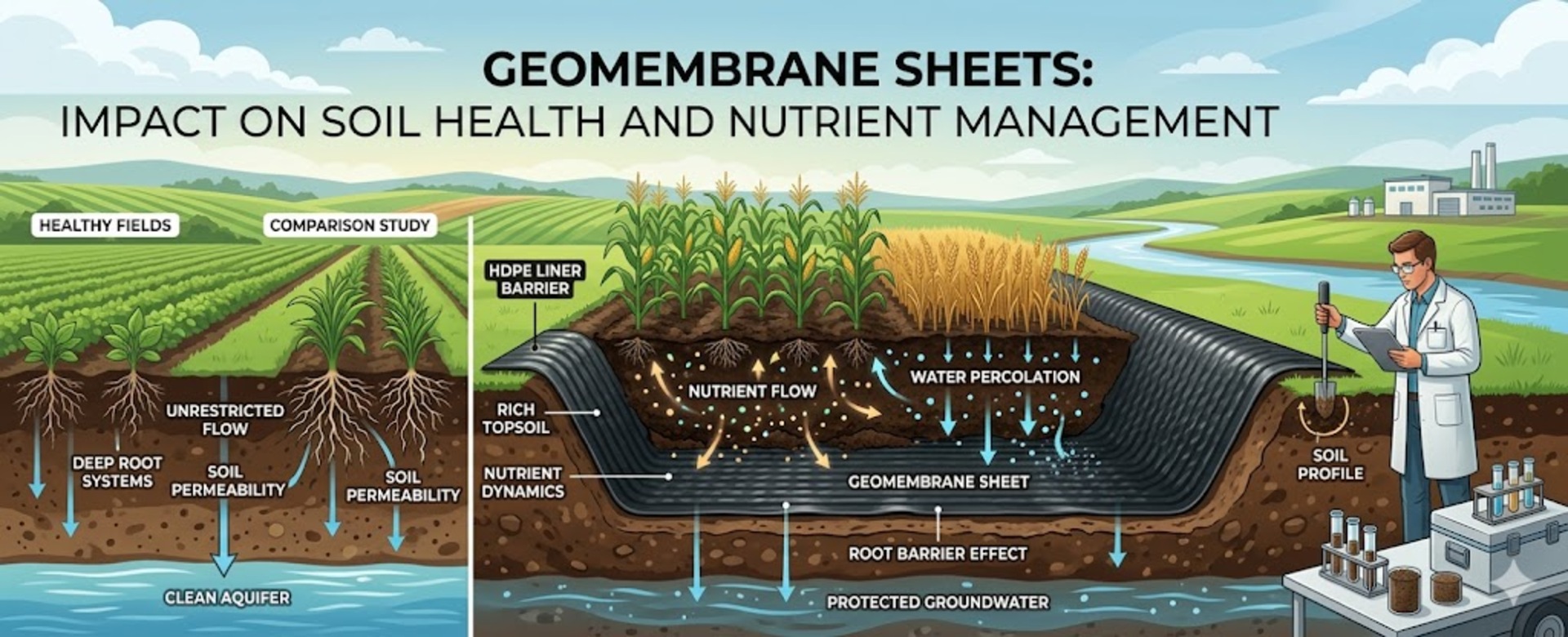

Geomembrane sheets not only provide protection against erosion and contamination but also play a crucial role in maintaining soil health and nutrient management, especially in agricultural and waste management contexts. By creating a barrier between the soil and external environmental factors, geomembranes help preserve soil structure, enhance nutrient retention, and support sustainable land management practices.
How Geomembranes Impact Soil Health and Nutrient Management:
- Preventing Soil Contamination
Geomembranes are used in landfills and waste containment systems to prevent hazardous chemicals, leachate, and other pollutants from contaminating the soil. By keeping toxic substances away from the soil, geomembranes help preserve the soil’s natural health and prevent the degradation of its nutrient content. This is particularly important in areas where agricultural land is located near industrial or waste disposal sites. - Improving Water Efficiency in Agriculture
In agricultural applications, geomembranes help prevent the loss of water due to seepage, ensuring that water is efficiently retained in irrigation systems or storage ponds. This results in better soil hydration, which in turn supports optimal plant growth and nutrient uptake. The reduced evaporation and water loss also contribute to sustainable water usage, particularly in areas with limited water resources. - Enhancing Soil Aeration and Structure
By preventing erosion and protecting the soil from heavy rainfall and wind, geomembranes help maintain the soil’s natural structure. This protection ensures that the soil remains aerated, promoting healthy root systems for plants. Healthy soil aeration is essential for nutrient uptake, as it allows for the proper exchange of gases and moisture within the soil. - Supporting Organic Farming Practices
In organic farming, geomembranes are used to control the growth of weeds without the use of chemical herbicides. By covering the soil with geomembranes, farmers can suppress weed growth, allowing nutrients to be directed toward crops rather than competing plants. This also helps maintain soil fertility and prevents the depletion of valuable nutrients in the soil. - Preventing Soil Compaction
In areas where heavy machinery is used, geomembranes can protect the soil from compaction, which can limit the soil’s ability to retain water and nutrients. By providing a stable surface for machinery, geomembranes prevent direct pressure on the soil, ensuring that soil structure is maintained and that nutrients remain accessible to plants.
By contributing to improved soil health, water efficiency, and nutrient management, geomembranes play a vital role in supporting sustainable land use and agriculture. They help preserve the balance of nutrients, reduce contamination risks, and promote better productivity in both agricultural and waste management contexts.