
As climate change leads to more extreme weather conditions, such as higher temperatures, stronger storms, and increased rainfall, the resilience of infrastructure becomes even more critical. Geomembrane sheets, known for their durability and versatile applications, play an essential role in enhancing resilience to the impacts of climate change, particularly in waste management, water containment, and land conservation projects.
1. Protection Against Extreme Weather Events
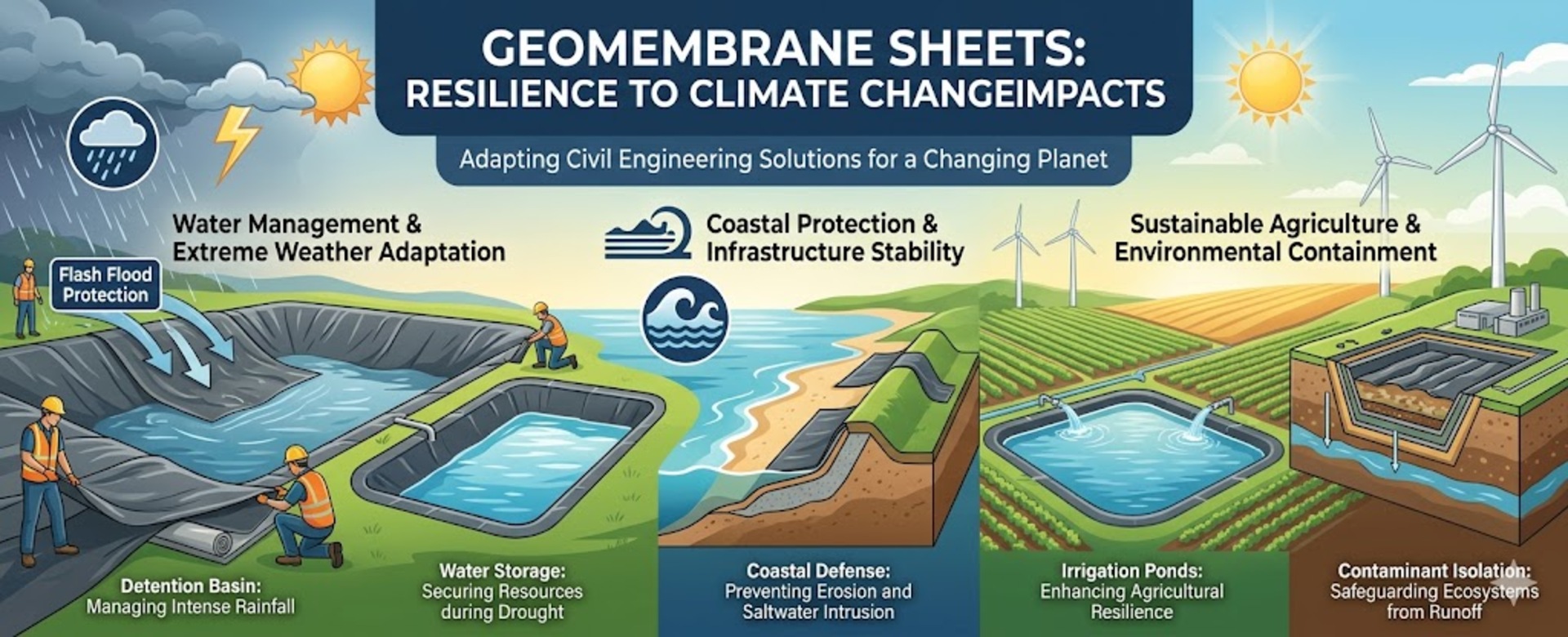
Geomembranes provide an effective barrier against environmental stressors such as heavy rain, flooding, and extreme temperatures. For example, geomembrane liners are commonly used in landfills and stormwater management systems to prevent erosion and runoff during heavy rainfall. The impermeable nature of geomembranes helps keep harmful substances contained, preventing them from leaching into soil and groundwater. Additionally, geomembranes protect exposed soils from wind erosion, which can be exacerbated by climate change.
2. UV and Ozone Resistance
The increasing intensity of UV radiation due to climate change poses a significant risk to materials used in outdoor infrastructure. Geomembranes made from materials such as HDPE and EPDM are specifically designed with UV stabilizers and antioxidants to withstand prolonged exposure to sunlight and ozone, thus extending their lifespan. This resilience to UV radiation helps protect infrastructure in outdoor applications, such as ponds, landfills, and reservoirs, ensuring they remain functional even under extreme environmental conditions.
3. Water Management in Drought-Prone Areas
In regions facing drought or water scarcity due to climate change, geomembranes are used in water management systems to prevent water loss through seepage. Geomembrane-lined reservoirs, irrigation ponds, and water storage tanks ensure that stored water remains contained and does not leach into the ground, optimizing water conservation efforts. The use of geomembranes in these systems is particularly beneficial in areas with limited water resources, helping to preserve water for agricultural and potable use.
4. Coastal and Riverbank Protection
Coastal erosion and riverbank instability are becoming increasingly problematic due to rising sea levels and more frequent flooding events. Geomembranes are often used in coastal and riverbank projects to prevent erosion and stabilize the soil. They act as barriers against the force of waves, tides, and flooding, reducing the rate of land loss. By stabilizing riverbanks and coastlines, geomembranes protect both the environment and human settlements from the damaging effects of climate change.
5. Sustainable Waste Management
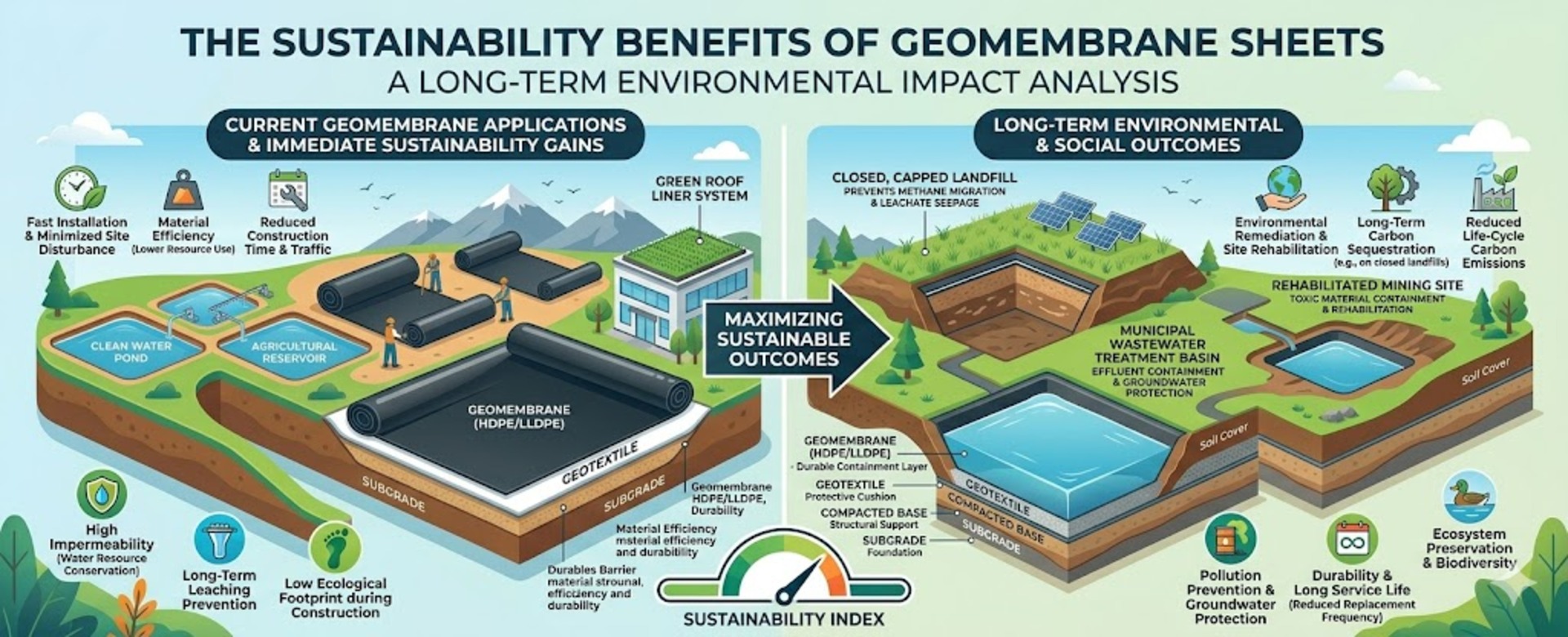
As climate change accelerates, managing waste more sustainably is becoming crucial. Geomembranes play a key role in improving the sustainability of waste management systems. By using geomembranes in landfill liners, leachate collection systems, and hazardous waste containment facilities, the risk of contamination from waste materials is reduced. This helps prevent environmental degradation, such as soil and water pollution, which can be exacerbated by extreme weather events.
Through their durability and ability to withstand extreme conditions, geomembrane sheets are an essential component in climate-resilient infrastructure, helping to mitigate the impacts of climate change across various sectors.