
Maintaining and repairing geomembrane sheets is essential to ensuring their long-term performance, particularly in applications such as waste containment, water management, and erosion control. Geomembranes are highly durable but, like any infrastructure, they require proper care and attention to maintain their integrity and avoid costly failures. Below are best practices for maintaining and repairing geomembrane sheets.
Maintenance Best Practices:
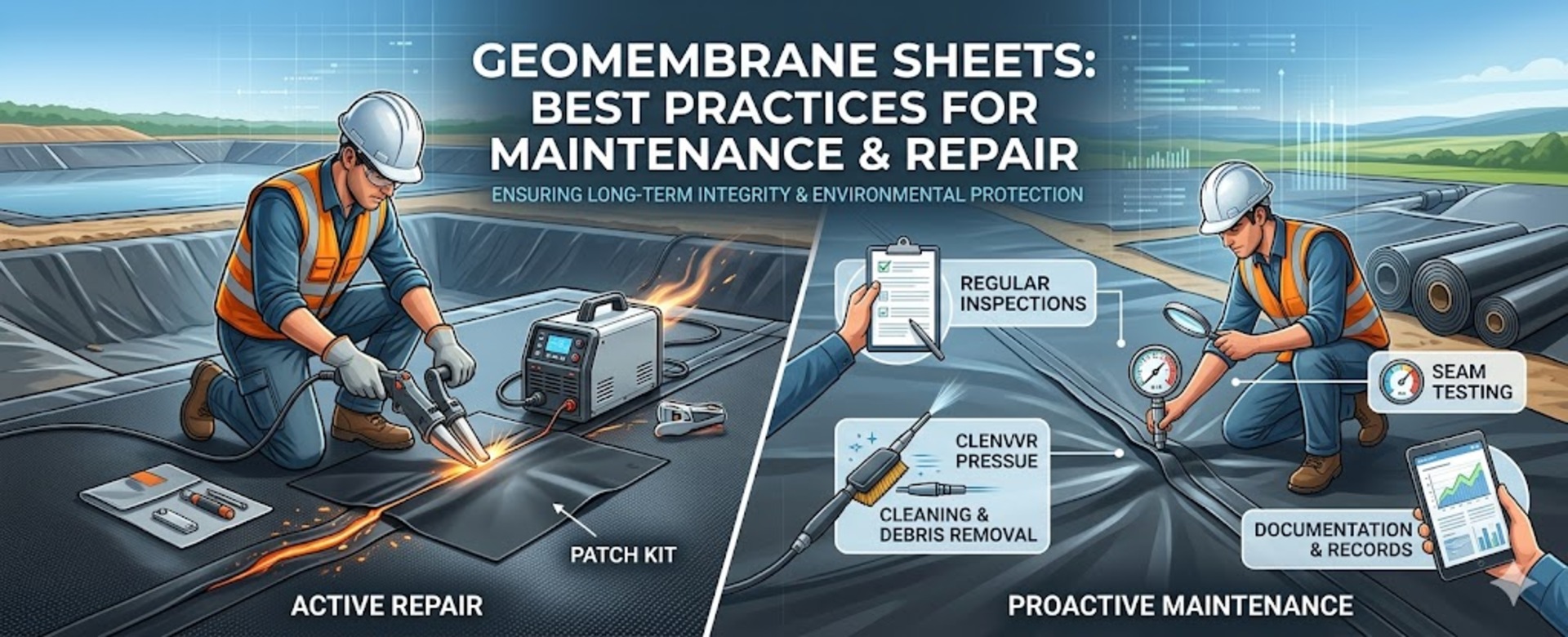
- Regular Inspections: Frequent visual inspections are the first line of defense in maintaining geomembrane sheets. Inspections should be conducted at regular intervals, particularly after extreme weather events, such as storms or floods, or during any maintenance activity. During inspections, look for visible damage, punctures, cracks, or any signs of wear and tear in the seams and material.
- Monitoring of Environmental Conditions: Geomembranes exposed to environmental factors such as UV radiation, extreme temperatures, and chemical exposure require special attention. Monitoring environmental conditions regularly and assessing the geomembrane’s response to these factors is crucial for identifying issues before they escalate. For example, high temperatures or UV exposure can degrade certain materials, so geomembranes should be inspected for signs of degradation.
- Leak Detection: Using technologies like Electrical Leak Location (ELL), acoustic emission testing, or hydraulic monitoring systems helps detect small leaks or weak points in the geomembrane system. Early detection allows for timely intervention, preventing larger-scale issues and ensuring that the geomembrane continues to function as expected.
- Proper Cleaning and Maintenance of Surfaces: For geomembranes in ponds, reservoirs, or irrigation systems, it is important to keep the surface clean from debris, vegetation, and sediments, which could cause abrasion. Regular cleaning ensures that the material remains in good condition and minimizes the risk of punctures or wear.
- Patching and Repairing Small Damage: If small punctures, tears, or cracks are detected during inspections, repairs should be carried out immediately. This involves using compatible repair patches or materials, depending on the geomembrane’s composition. For HDPE geomembranes, for example, heat fusion or extrusion welding can be used to restore the membrane’s integrity.
- Reinforcement in High-Stress Areas: Geomembranes in areas that experience high stress—such as landfills, mining sites, or regions prone to extreme weather—should be reinforced at regular intervals to prevent future damage. Using additional protective layers or reinforcing materials can help extend the life of the geomembrane.
Repair Best Practices:
- Surface Preparation: Before repairing any geomembrane, ensure the surface is clean and dry. Any debris, dirt, or moisture can affect the bonding quality of the repair material. Thoroughly clean the area around the puncture or tear using appropriate tools and solvents to ensure the repair material adheres properly.
- Using Compatible Repair Materials: Repairs should always be done with materials that are compatible with the geomembrane type. For HDPE, specialized welding equipment or adhesive films may be required to ensure a strong, lasting bond.
- Proper Welding or Seaming Techniques: For more extensive repairs, especially along seams or large tears, heat welding or extrusion welding is typically the most reliable method. Ensure that the proper welding parameters (temperature, speed, and pressure) are used to create a solid and durable bond between the repair patch and the existing geomembrane.
- Post-Repair Inspection: After repairs are made, conduct a thorough inspection to ensure that the repaired area is completely sealed and leak-free. Perform additional leak detection tests to verify the integrity of the repair.
By following these best practices for maintenance and repair, geomembranes can continue to function effectively for many years, minimizing the risk of environmental contamination and system failure.