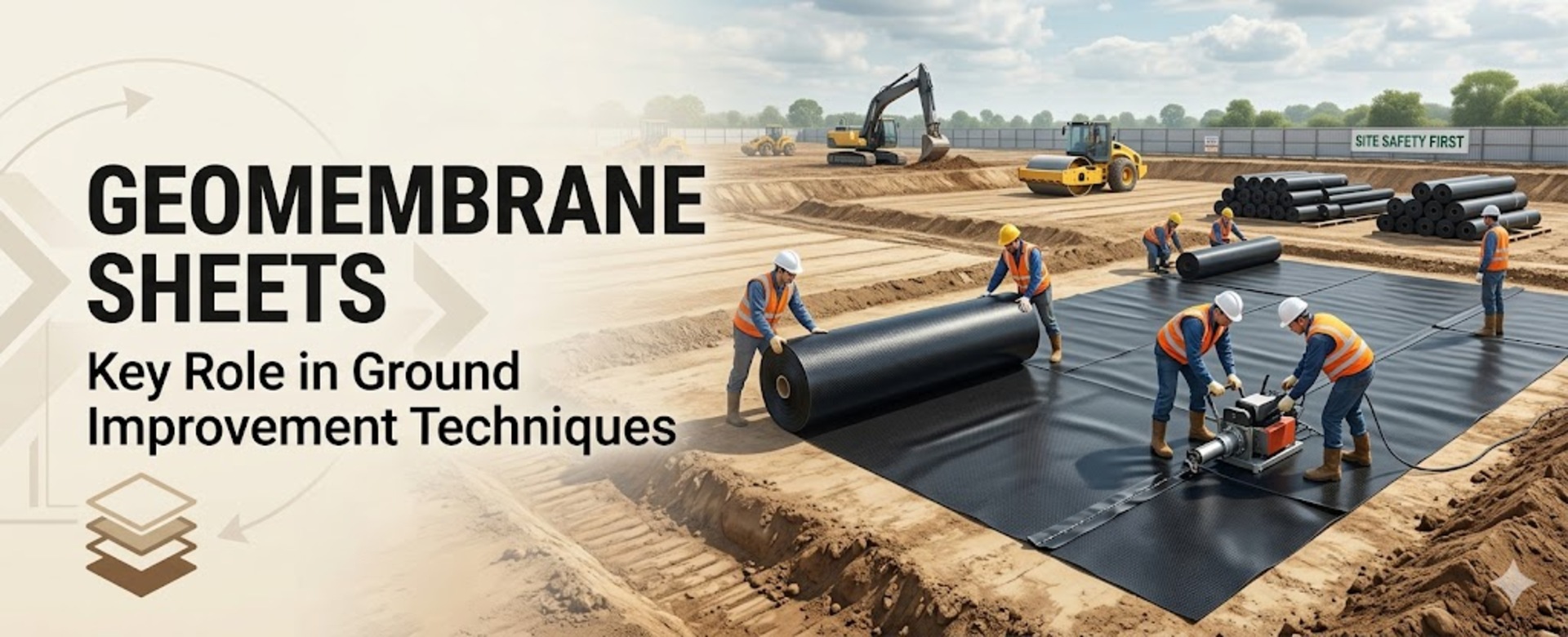

Ground improvement techniques are used in construction projects to enhance the stability, strength, and overall performance of the soil. Geomembrane sheets are an essential component of several ground improvement techniques, providing a reliable solution for soil stabilization, drainage control, and the protection of underlying structures.
Applications of Geomembranes in Ground Improvement:
- Slope Stabilization and Erosion Control: Geomembranes are commonly used in slope stabilization projects, where they help prevent soil erosion caused by wind, water, or human activity. The impermeable nature of geomembranes prevents surface runoff from washing away soil, while their flexibility allows them to conform to the natural contours of the land. This helps maintain the integrity of slopes and prevents soil loss, particularly in areas prone to heavy rainfall or flooding.
- Reinforcement for Soft or Weak Soils: In areas where the soil is too soft or weak to support heavy construction loads, geomembranes are used as part of a reinforcement system. Geomembranes can be combined with geogrids or geotextiles to improve the load-bearing capacity of the soil, preventing settlement and instability in construction projects such as foundations, roads, and embankments.
- Contaminated Site Remediation: In contaminated site remediation, geomembranes are used to isolate hazardous materials from the surrounding environment. The geomembrane acts as a barrier to prevent the migration of contaminants, such as chemicals or heavy metals, into the soil and groundwater. This application is particularly important in brownfield redevelopment projects where the soil may be polluted, ensuring that construction activities do not exacerbate environmental contamination.
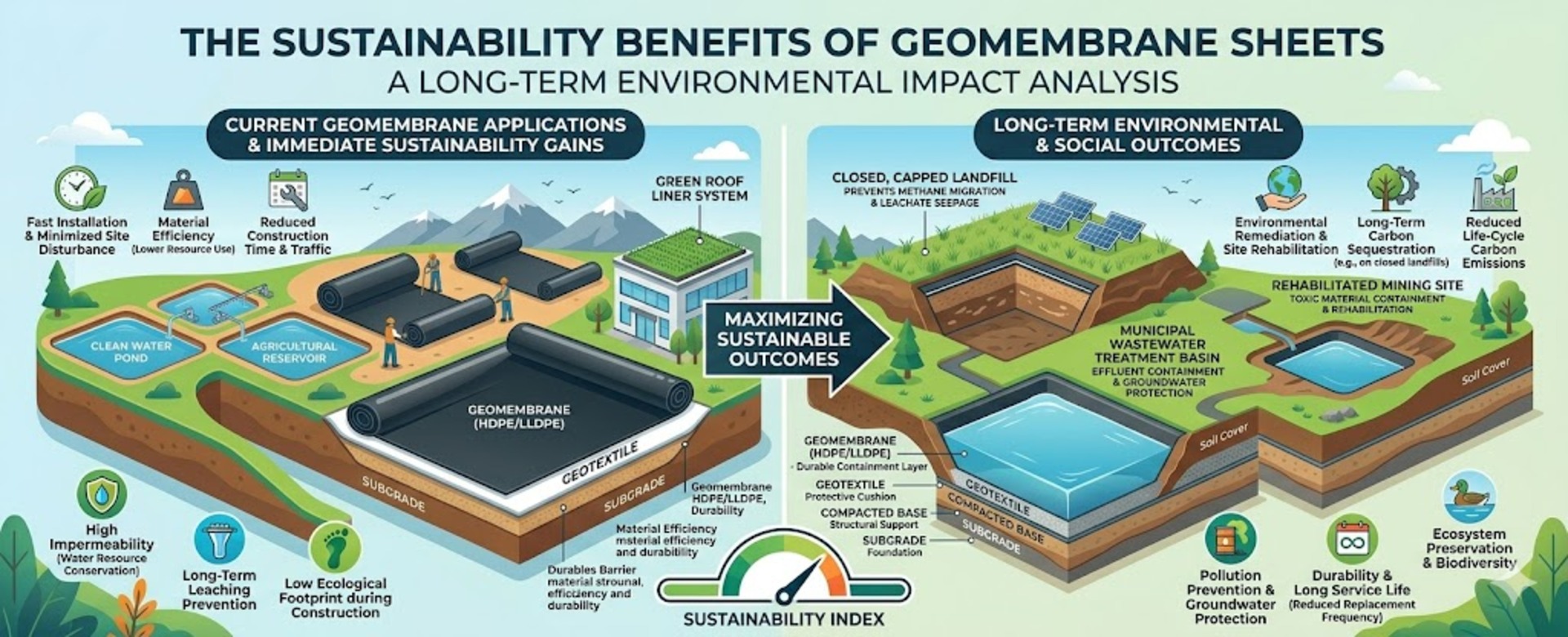
- Landfill Caps and Covers: In landfill projects, geomembranes are used as caps and covers to prevent the escape of gases, such as methane, and to control the infiltration of water into the waste. The geomembrane layer helps prevent the contamination of surrounding soil and groundwater, while also reducing the environmental impact of landfill operations. Geomembranes are a key component of landfill closure and remediation projects.
- Drainage Control: Geomembranes are often used in drainage control applications to prevent water from seeping into areas where it could cause damage or instability. By providing an impermeable layer, geomembranes help control water flow and direct it to appropriate drainage systems, reducing the risk of flooding and soil erosion.
By improving soil stability, enhancing drainage, and preventing contamination, geomembrane sheets play a crucial role in various ground improvement techniques, contributing to the success of construction projects and ensuring long-term structural integrity.