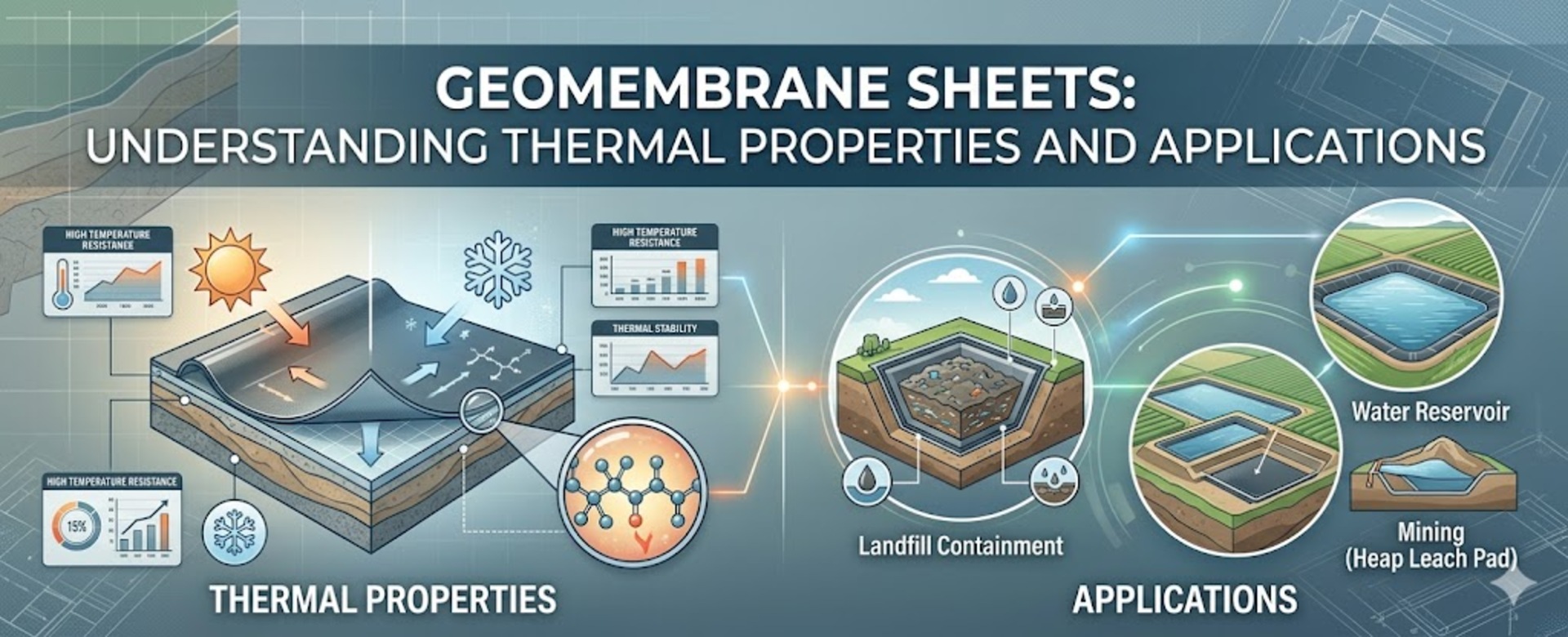

The thermal properties of geomembranes are a critical factor in their performance, particularly in applications where temperature fluctuations or extreme heat are prevalent. Geomembranes must be able to withstand a range of temperatures without losing their structural integrity, flexibility, or impermeability. Understanding the thermal characteristics of geomembranes helps ensure they are chosen and used appropriately for specific applications.
Key Thermal Properties:
- Thermal Stability
Geomembranes are designed to maintain their physical properties over a wide range of temperatures. Materials such as HDPE and EPDM are known for their ability to retain flexibility in low temperatures and resist deformation in high temperatures. This thermal stability is crucial for geomembranes used in outdoor applications, such as landfill liners, ponds, and reservoirs, where exposure to extreme temperatures is common. - Coefficient of Thermal Expansion (CTE) The coefficient of thermal expansion (CTE) is a measure of how much a material expands or contracts when subjected to temperature changes. Geomembranes with a low CTE are less likely to deform or become stressed under temperature fluctuations, ensuring their durability and longevity. This is particularly important in applications where geomembranes are exposed to significant temperature variations, such as in mining or energy production.
- Thermal Resistance to UV Degradation
Geomembranes that are exposed to the sun for long periods must have excellent thermal resistance to UV degradation. UV radiation can cause the material to become brittle and break down over time. To counter this, geomembranes are often treated with UV stabilizers, antioxidants, or carbon black to improve their resistance to UV degradation and extend their useful life in harsh environments.
Applications of Thermal Properties:
- Landfill Liners: Geomembranes used in landfills must withstand both high temperatures from waste decomposition and low temperatures in colder climates. HDPE geomembranes are ideal for these applications due to their thermal stability.
- Pond and Reservoir Liners: Geomembranes used in pond and reservoir liners must be able to tolerate temperature fluctuations without cracking or losing their impermeability. EPDM geomembranes are commonly used in these applications for their excellent flexibility in low temperatures and heat resistance.
- Mining and Tailing Storage: In mining applications, geomembranes are used to line tailing ponds and waste containment areas. The thermal resistance of the geomembrane ensures that it can withstand the heat from mining byproducts and high-temperature weather conditions.
Understanding the thermal properties of geomembranes allows for their effective application in environments where temperature extremes are a concern, ensuring long-term performance and durability.