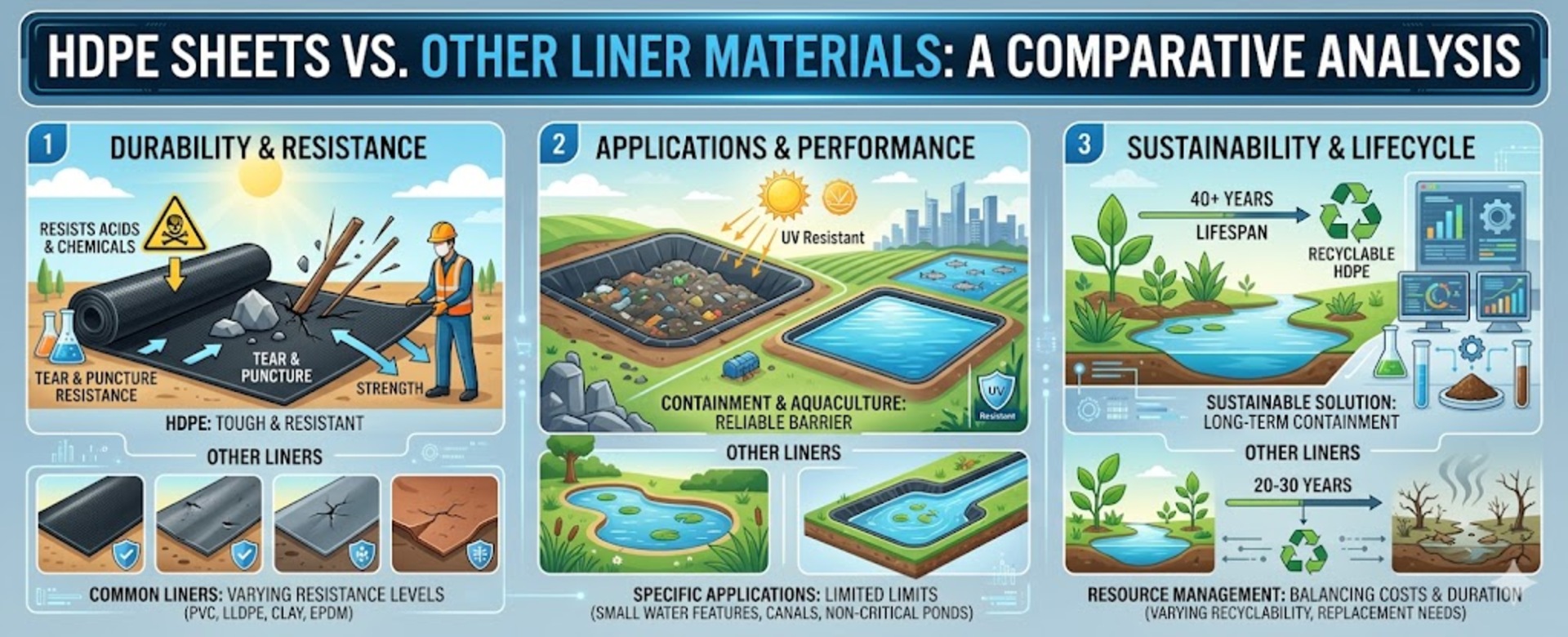

When selecting the appropriate liner material for a construction or environmental project, it’s essential to consider the specific requirements of the application, including factors such as strength, flexibility, chemical resistance, and durability. HDPE sheets are one of the most commonly used materials for geomembranes, but how do they compare to other liner materials like PVC, EPDM, and LDPE? Below is a comparative analysis of HDPE sheets and other popular liner materials.
1. HDPE vs. PVC (Polyvinyl Chloride):
- Chemical Resistance:
HDPE has superior chemical resistance, particularly to oils, acids, and alkalis, making it ideal for hazardous waste containment and mining applications. PVC, on the other hand, is more prone to degradation when exposed to harsh chemicals over time. - Flexibility:
PVC is more flexible than HDPE, making it easier to install in some applications, particularly in irregularly shaped areas like ponds or reservoirs. However, HDPE’s rigidity offers better durability and resistance to punctures, which is advantageous in high-stress environments. - UV Resistance:
HDPE is highly resistant to UV radiation, while PVC can degrade more quickly when exposed to UV light. HDPE is the better option for long-term outdoor applications, particularly in areas with intense sunlight. - Cost:
PVC is generally less expensive than HDPE, making it a more budget-friendly option for less demanding applications.
2. HDPE vs. EPDM (Ethylene Propylene Diene Monomer):
- Temperature Resistance:
EPDM is more flexible and performs better in extreme temperatures, making it a better choice for projects with significant temperature variations, such as roofing applications. HDPE, while still temperature-resistant, performs better in applications where mechanical strength is crucial, like landfills or mining projects. - Chemical Resistance:
HDPE generally has superior chemical resistance compared to EPDM, particularly for oils and solvents. EPDM is better suited for applications where flexibility and weather resistance are more important than chemical exposure. - Installation:
EPDM is easier to install in situations where flexibility and stretching are required. HDPE, however, requires more careful handling and installation, especially with respect to welding seams.
3. HDPE vs. LDPE (Low-Density Polyethylene):
- Strength and Durability:
HDPE is stronger and more durable than LDPE, making it more suitable for applications that require high tensile strength and resistance to punctures. LDPE, however, is more flexible, which can make it easier to handle and install in applications such as pond liners. - Chemical and Temperature Resistance:
Both HDPE and LDPE offer good chemical resistance, but HDPE has superior resistance to a wider range of chemicals. Additionally, HDPE has better high-temperature resistance compared to LDPE. - Cost:
LDPE is typically less expensive than HDPE, which makes it a more cost-effective option for less demanding applications, such as in low-stress agricultural projects or as a liner for temporary containment.
In conclusion, while HDPE sheets offer superior durability, chemical resistance, and strength, other materials like PVC, EPDM, and LDPE may be more suitable for specific applications that require greater flexibility, ease of installation, or budget-friendly options. Understanding the unique properties of each material helps in selecting the most appropriate liner material for any given project.