
High-Density Polyethylene (HDPE) sheets offer numerous environmental benefits, making them a preferred material in many applications related to waste management, water conservation, and land protection. HDPE is a versatile, durable material that not only contributes to the protection of natural resources but also supports sustainability through its long lifespan and recyclability.
Key Environmental Benefits of HDPE Sheets:
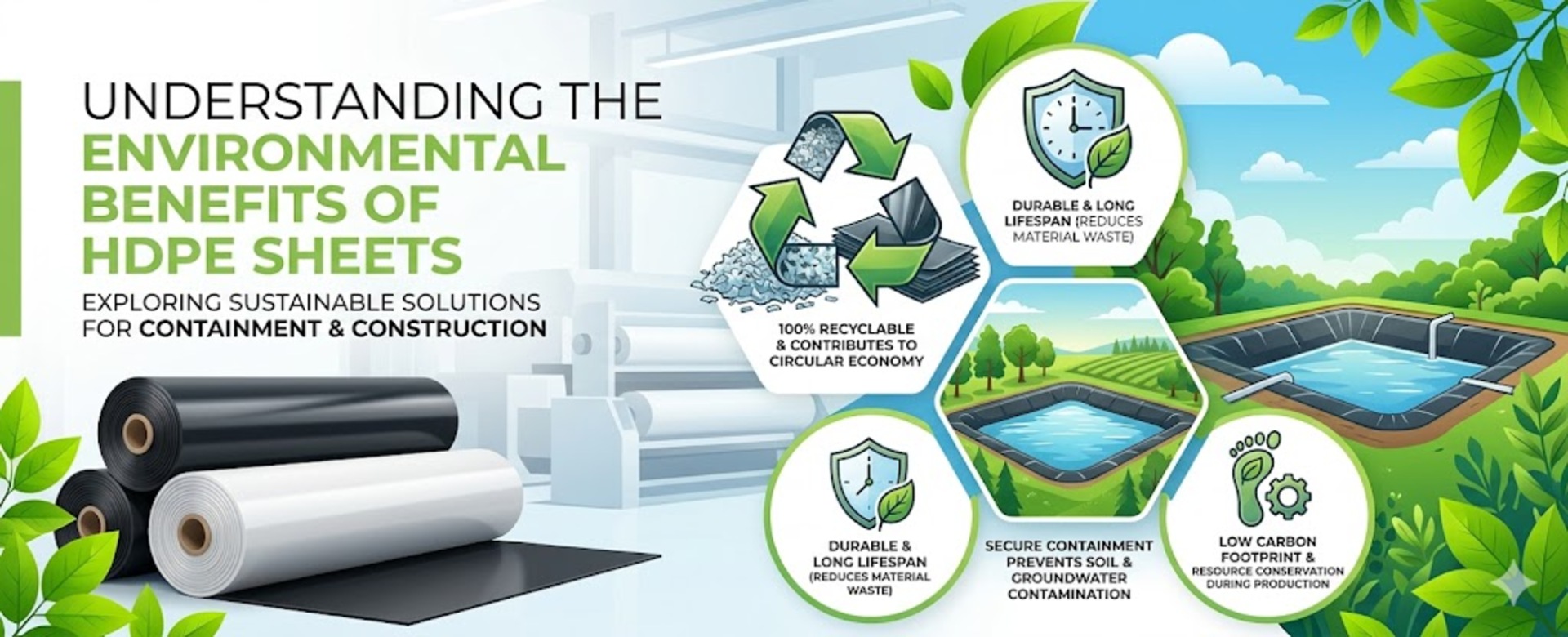
- Sustainability and Recyclability: One of the most significant environmental benefits of HDPE sheets is their recyclability. HDPE is one of the most widely recycled plastics, and products made from HDPE can often be recycled into new sheets or other products. This reduces the overall environmental impact by decreasing the need for new raw materials and reducing plastic waste in landfills.
- Durability and Long Lifespan: HDPE sheets are known for their exceptional durability. When used in applications like landfill liners, pond liners, and wastewater treatment plants, HDPE sheets have a long service life. Their ability to resist wear, UV degradation, and chemical attacks ensures that they remain functional for decades, preventing the need for frequent replacements and reducing overall material consumption.
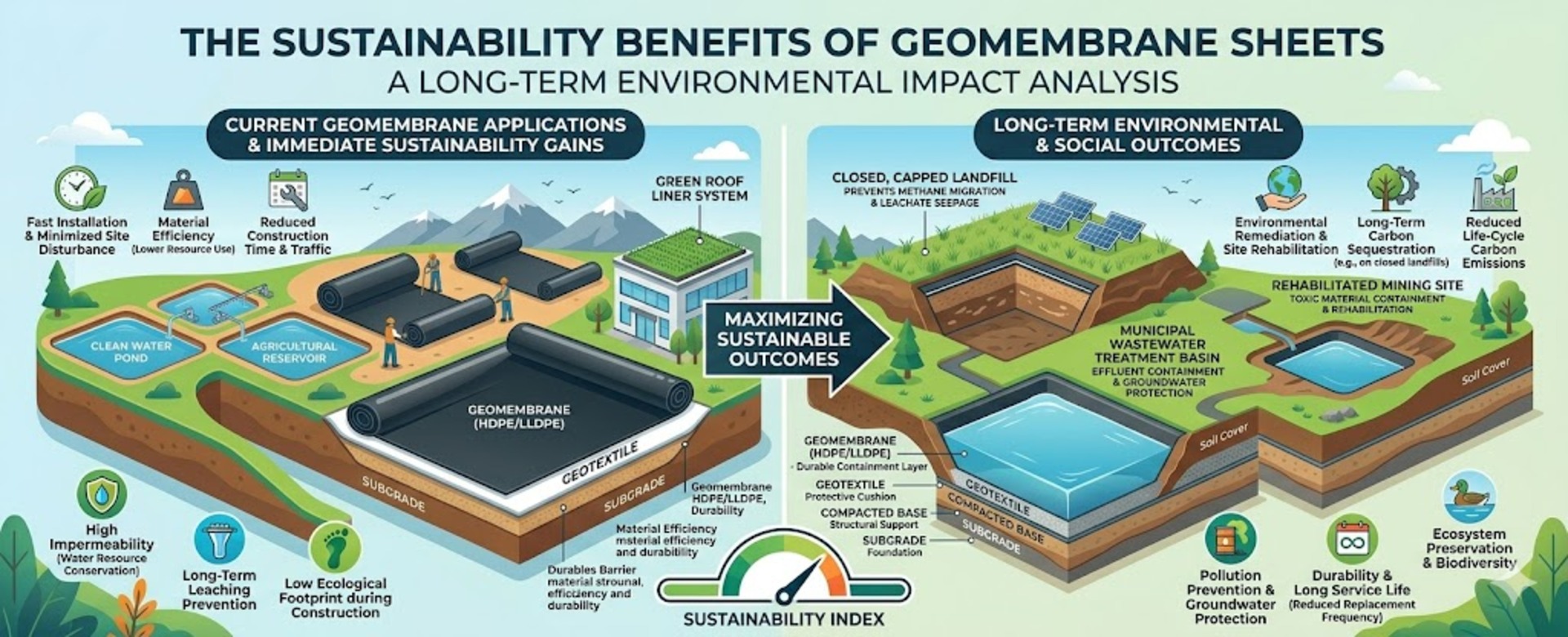
- Reduced Pollution and Contamination: HDPE geomembranes are often used to line landfills and waste containment areas. These liners help prevent the leaching of hazardous substances into surrounding soil and groundwater, minimizing the risk of pollution and contamination. By providing a barrier between waste materials and the environment, HDPE sheets help protect ecosystems, public health, and water supplies.
- Water Conservation: In applications such as agricultural ponds, reservoirs, and irrigation systems, HDPE sheets help minimize water loss through seepage, ensuring that water remains stored and available for use. In regions facing water scarcity, these applications help conserve precious water resources by preventing wasteful leaks and seepage.
- Energy Efficiency: The production of HDPE sheets is energy-efficient compared to other materials. The manufacturing process uses less energy, and the material itself has a low carbon footprint, contributing to a reduction in overall environmental impact. Additionally, HDPE sheets’ longevity reduces the need for frequent maintenance, which further conserves energy and resources over time.
By offering a sustainable, durable, and environmentally friendly solution, HDPE sheets play a vital role in reducing pollution, conserving natural resources, and supporting long-term environmental protection.