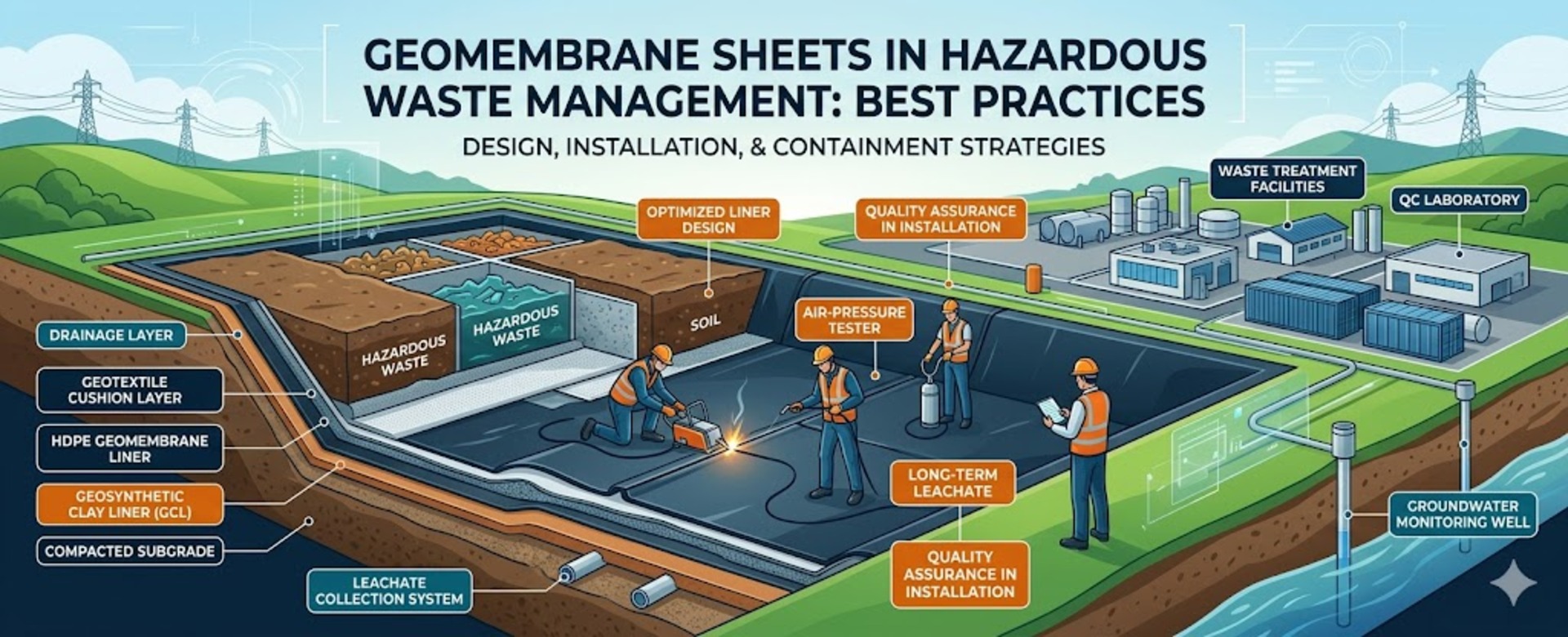

Geomembrane sheets are an essential component in hazardous waste management. Their primary function is to create a barrier that prevents contaminants from leaching into the surrounding environment, protecting soil, water, and air from hazardous chemicals. When applied correctly, geomembranes can effectively contain hazardous waste, reduce the risk of pollution, and help meet environmental regulations.
Here are the best practices for using geomembrane sheets in hazardous waste management:
- Site Preparation
Proper site preparation is key to ensuring the effectiveness of geomembrane sheets in hazardous waste containment. The installation site must be cleared of debris, sharp objects, and other materials that could potentially damage the geomembrane. The substrate should be compacted and smooth to ensure the geomembrane sits securely, minimizing the risk of punctures or leaks. - Selecting the Appropriate Material
Choosing the right geomembrane material is critical. HDPE is often the material of choice for hazardous waste containment due to its excellent chemical resistance. For applications where flexibility is required, LDPE or PVC geomembranes might be preferred. Understanding the chemical composition of the waste material and the potential exposure to extreme weather conditions will help determine the best geomembrane for the job. - Proper Installation Techniques
The geomembrane sheets must be installed with precision. Seams and joints should be welded or chemically bonded to ensure leak-proof seals. Special care should be taken when welding the seams, as improper welding can compromise the geomembrane’s integrity. Consideration of environmental factors such as temperature and moisture during installation is also important for ensuring successful adhesion. - Quality Control and Inspection
Continuous monitoring and inspection are vital for ensuring that geomembranes remain intact throughout their service life. Regular checks for punctures, leaks, or any other damage are essential, particularly in high-risk areas where hazardous materials are stored. In addition, implementing leak detection systems can further enhance the safety and performance of the geomembrane. - Ongoing Maintenance
After installation, maintenance of the geomembrane is essential. If any damage or wear is detected, it should be addressed immediately to prevent contamination. The lifespan of geomembranes can be extended with regular inspections, proper maintenance, and repairs when necessary.
By following these best practices, geomembrane sheets can provide long-term, effective containment for hazardous waste, reducing environmental risks and supporting regulatory compliance.