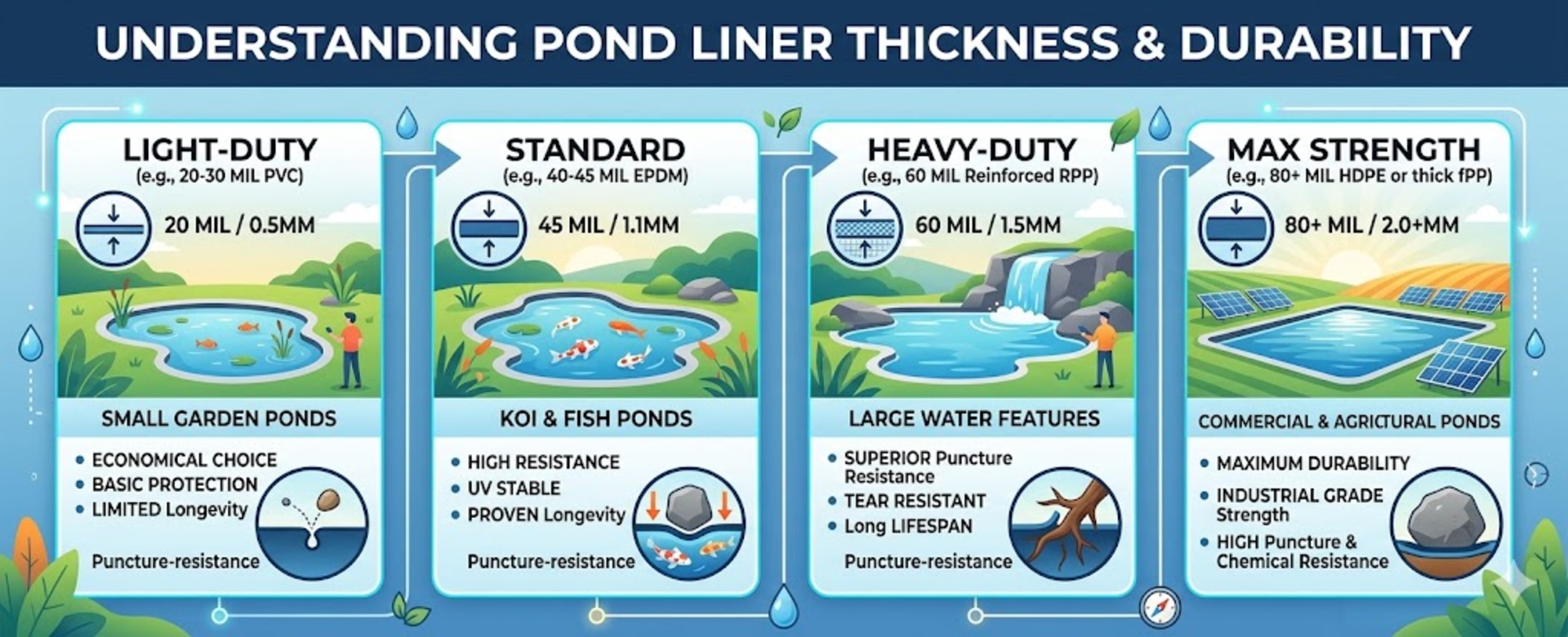

The thickness and durability of pond liners are critical factors that determine their performance, lifespan, and suitability for different applications. Choosing the right thickness ensures that the liner can withstand environmental stressors, water pressure, and physical wear.
Factors Influencing Thickness and Durability:
- Application Requirements:
- Thicker liners are needed for applications involving heavy loads, high water pressure, or rough terrain.
- Example: A 40-mil (1 mm) liner is suitable for decorative ponds, while a 60-mil (1.5 mm) liner is ideal for industrial or agricultural use.
- Soil and Surface Conditions:
- Rough or rocky surfaces require thicker liners to prevent punctures and tears. Adding a geotextile underlayment can provide extra protection.
- Tip: For uneven surfaces, use liners of at least 45-mil thickness.
- UV Resistance:
- Thicker liners often include UV stabilizers, making them more resistant to sunlight and extending their lifespan in outdoor installations.
- Example: HDPE liners with UV resistance can last 20+ years in exposed conditions.
- Chemical Exposure:
- In applications where liners come into contact with chemicals, durability depends on both material composition and thickness.
- Example: 60-mil HDPE liners are used for hazardous waste containment.
- Environmental Stressors:
- Liners in areas prone to freezing temperatures, strong winds, or heavy rainfall need to be durable and flexible to withstand these conditions.
- Tip: EPDM liners are highly flexible and suitable for cold climates.
Durability Enhancements:
- Underlayment: Prevents punctures and extends the liner’s lifespan.
- UV Stabilizers: Protect against sunlight degradation.
- Multi-Layer Liners: Combine flexibility and strength for enhanced performance.
By selecting the appropriate thickness and durability features, pond liners can meet the specific demands of any project, ensuring long-term reliability and cost-effectiveness.