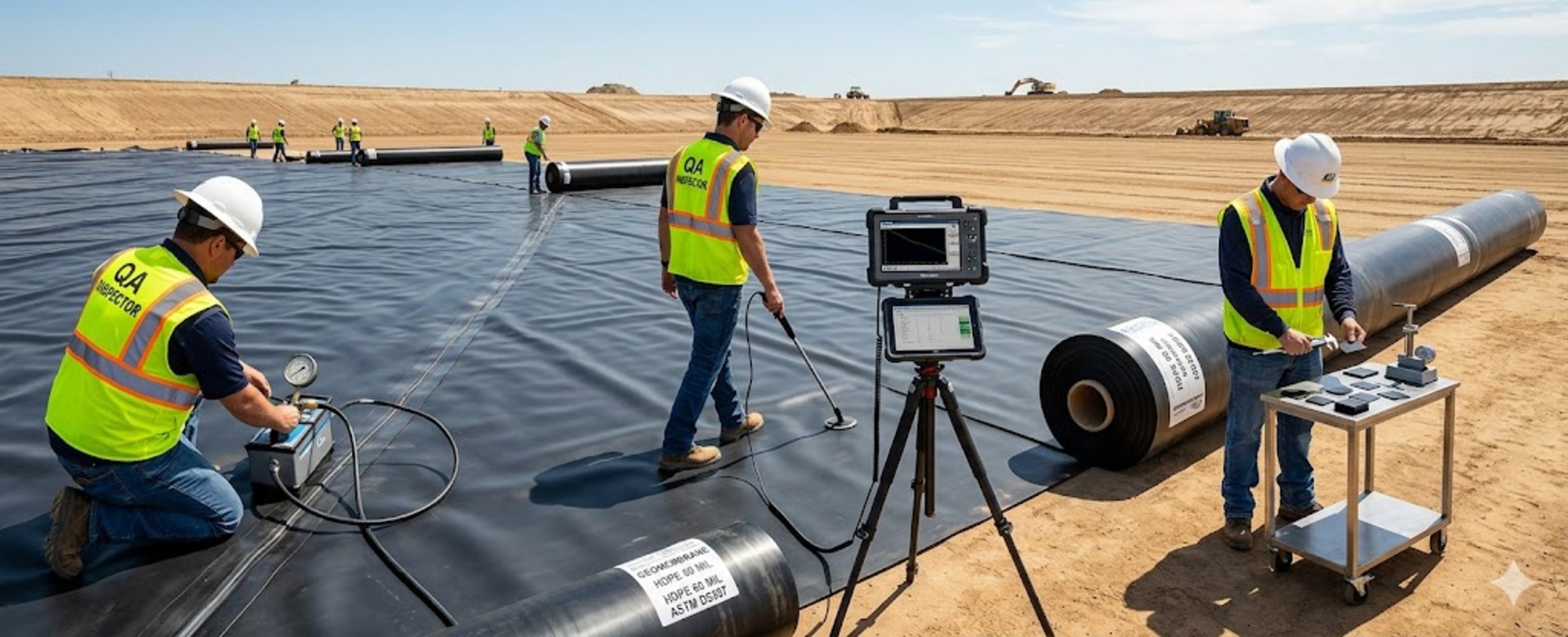

Quality assurance and testing are critical steps in ensuring that geomembrane sheets perform effectively in their designated applications, such as waste containment, erosion control, and water management. These sheets are designed to provide long-lasting durability, but their performance can be compromised without proper testing during production and installation. Various testing methods are employed to evaluate key properties like thickness, tensile strength, elongation, chemical resistance, and impermeability.
Common Testing Methods for Geomembrane Sheets:
- Thickness Measurement
Thickness is a fundamental property that directly impacts the strength and durability of geomembranes. Geomembranes are typically tested using either micrometers or electronic thickness gauges to measure the uniformity of the material across its surface. Consistent thickness ensures the membrane can withstand environmental stresses and chemical exposures without premature failure. - Tensile Strength and Elongation Testing
Tensile strength tests measure the geomembrane’s resistance to stretching or breaking under tension. Elongation testing gauges the material’s ability to stretch without rupturing. These tests help determine how well the geomembrane will perform under physical stress, such as soil movement, temperature fluctuations, and pressure from stored materials. - Chemical Resistance Testing
Given the variety of applications in which geomembranes are used, chemical resistance is a critical property. Geomembranes are exposed to various chemicals like oils, acids, alkalis, and other hazardous substances. Specific tests, such as immersion tests or exposure to chemical environments, assess the geomembrane’s ability to resist degradation when exposed to chemicals. - Ozone and UV Resistance Testing
Geomembranes exposed to outdoor conditions must withstand the degradation caused by UV radiation and ozone exposure. UV weathering tests simulate prolonged exposure to sunlight to measure how the material maintains its physical and chemical properties over time. - Leak Detection Testing
To ensure that geomembranes provide an impermeable barrier, they must undergo leak detection testing. Methods like vacuum testing or electrical leak location methods are employed to identify any defects or potential leaks in the seams or material.
Quality Assurance Procedures:
In addition to laboratory testing, quality assurance during the production and installation phases is essential. Quality control checks should include:
- Inspection of Material Consistency: Ensuring that the raw materials used meet the required specifications before production.
- Inspection of Seam Integrity: Checking the welding or fusion seams for any defects to ensure the geomembrane remains leak-proof.
- On-Site Inspections: Conducting visual and mechanical inspections during installation to ensure proper handling and installation techniques.
- Documentation and Reporting: Maintaining detailed records of testing results and inspections for traceability and regulatory compliance.
Through rigorous testing and consistent quality assurance procedures, geomembrane sheets can reliably perform their function and provide long-term environmental protection.