
Geomembrane sheets are playing an increasingly important role in renewable energy infrastructure projects, particularly in solar, wind, and hydroelectric energy applications. These sheets provide a range of functions, including water containment, erosion control, and environmental protection. As the demand for sustainable and green energy sources grows, the use of geomembranes in renewable energy projects continues to expand due to their durability, versatility, and eco-friendly properties.
Geomembranes in Solar Energy:
Solar energy installations often require large areas of land to be cleared for solar panel arrays. Geomembranes are used to line landfills, ponds, or even areas with potential groundwater contamination to prevent soil erosion, maintain water quality, and improve land management. For example, solar farms built on former landfill sites use geomembranes to contain leachate and protect the surrounding environment from contamination.
Geomembranes can also be used to line ponds or tanks used in cleaning or maintaining solar panels, ensuring that any water runoff or chemicals are contained and not released into the surrounding ecosystem.
Geomembranes in Wind Energy:
Wind energy projects involve the construction of large turbines, which require proper foundation preparation. Geomembranes can be employed in wind turbine installation to prevent erosion around the foundation sites and control water runoff, ensuring that the surrounding soil and nearby water bodies are not adversely affected.
Geomembranes are also used in managing stormwater around wind farms, protecting soil integrity and reducing the risk of erosion in remote, high-wind areas where construction is challenging.
Geomembranes in Hydroelectric Energy:
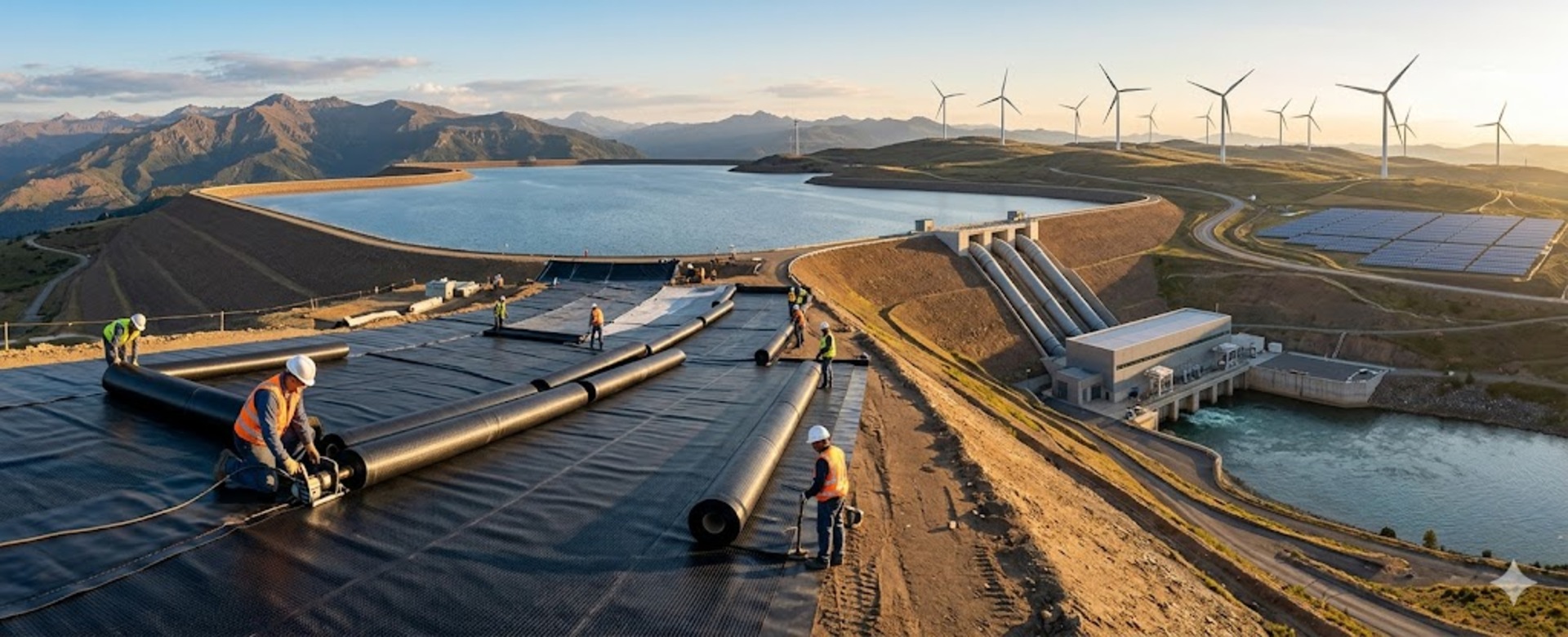
In hydroelectric power plants, geomembranes are used to line reservoirs, dams, and water containment areas. These liners serve to reduce water loss due to seepage and ensure the stability of the water bodies. Geomembranes help to prevent erosion and soil contamination, ensuring that water reservoirs remain intact and unaffected by surrounding soil conditions.
For dams and hydroelectric installations, geomembranes are also used to prevent soil contamination from chemicals used in maintenance or construction. By providing a barrier between the contaminated materials and the surrounding environment, geomembranes contribute to the sustainability of these renewable energy sources.
Benefits of Geomembranes in Renewable Energy Projects:
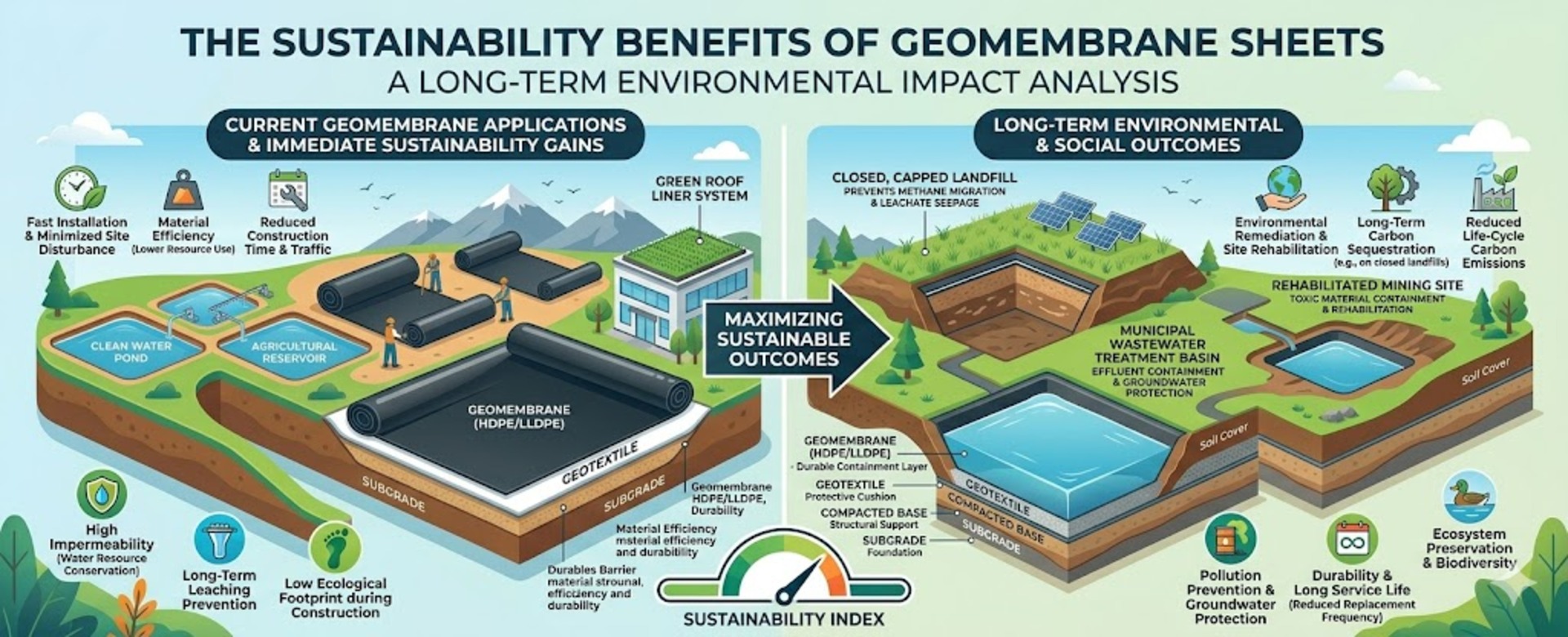
- Environmental Protection: Geomembranes safeguard the environment by preventing chemical leakage, erosion, and contamination.
- Durability and Longevity: Geomembranes provide long-term protection, making them suitable for renewable energy projects that require infrastructure to last decades.
- Cost-Effective Solutions: The use of geomembranes reduces the need for costly soil remediation and erosion control measures, making them an affordable option for renewable energy projects.
- Sustainability: Made from recyclable materials such as HDPE, geomembranes align with the green goals of renewable energy projects by promoting eco-friendly practices.