
Lining systems are critical in industries like waste management, agriculture, and construction, where effective containment and waterproofing are required. Historically, traditional liner systems, such as compacted clay liners (CCLs) and concrete, were widely used. However, with advancements in material science, geomembrane sheets have emerged as a superior alternative. This article provides a comparative analysis of geomembrane sheets and traditional liner systems, highlighting their strengths, limitations, and applications.
1. Material Composition and Structure
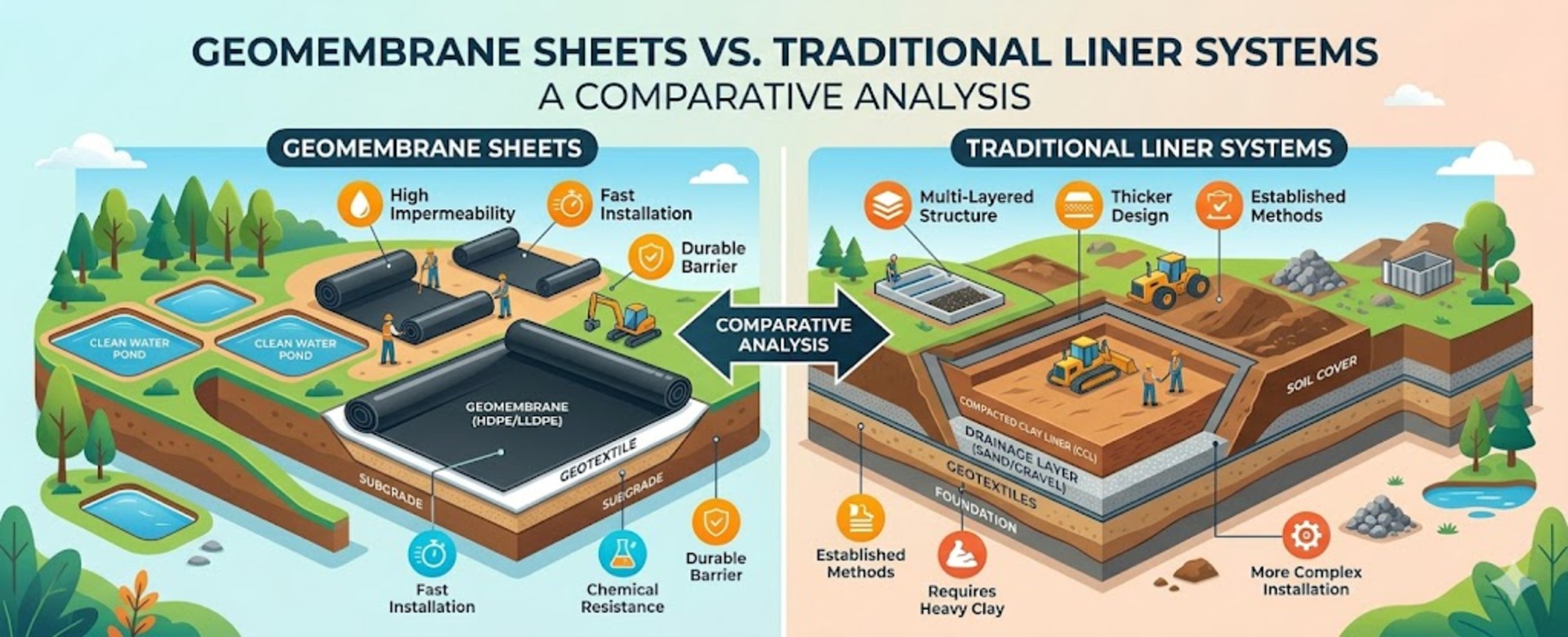
Traditional liner systems like compacted clay liners rely on natural materials such as clay or concrete. While effective in creating barriers, these systems are porous to some extent and prone to cracking or weathering over time.
Geomembrane sheets, on the other hand, are synthetic liners made from polymers like HDPE (High-Density Polyethylene), LDPE (Low-Density Polyethylene), and PVC (Polyvinyl Chloride). These materials are engineered for impermeability, flexibility, and resistance to chemicals and environmental stressors, making them highly durable.
2. Impermeability
One of the key differences between geomembranes and traditional liners is their impermeability. Traditional systems, especially clay liners, depend on compaction to minimize permeability, but they may still allow some seepage, particularly under high hydraulic pressure.
Geomembrane sheets, however, provide near-complete impermeability, ensuring that liquids and gases are contained. This makes them ideal for applications like landfill liners, wastewater treatment plants, and mining operations, where even minimal seepage can cause significant environmental harm.
3. Durability and Longevity
Traditional liners are vulnerable to cracking, weathering, and erosion over time, especially in extreme temperatures or under heavy loads. Concrete liners, for example, may develop cracks due to thermal expansion or contraction.
Geomembrane sheets are designed to withstand harsh conditions, including UV exposure, chemicals, and fluctuating temperatures. With proper installation and maintenance, they can last decades without compromising performance, offering long-term reliability.
4. Ease of Installation
Installing traditional liner systems can be labor-intensive and time-consuming. Clay liners require precise compaction, and concrete liners involve extensive groundwork and curing times.
In contrast, geomembrane sheets are lightweight and easy to transport. They can be rolled out and installed quickly, significantly reducing labor costs and construction timelines. This ease of installation makes geomembranes a preferred choice for large-scale projects.
5. Cost-Effectiveness
While traditional liners may seem less expensive initially, their long-term maintenance and repair costs can add up. Clay liners, for instance, may require regular inspections and repairs to address seepage or erosion.
Geomembrane sheets, though slightly more expensive upfront, offer cost savings in the long run due to their durability, reduced maintenance requirements, and extended lifespan. Their ability to prevent leaks and contamination also avoids costly environmental remediation.