
High-Density Polyethylene (HDPE) geomembrane sheets are a cornerstone of modern landfill construction, offering unmatched durability, chemical resistance, and impermeability. These sheets play a critical role in waste containment, environmental protection, and compliance with regulatory standards.
Key Roles of HDPE Geomembrane Sheets in Landfills:
- Leachate Containment:
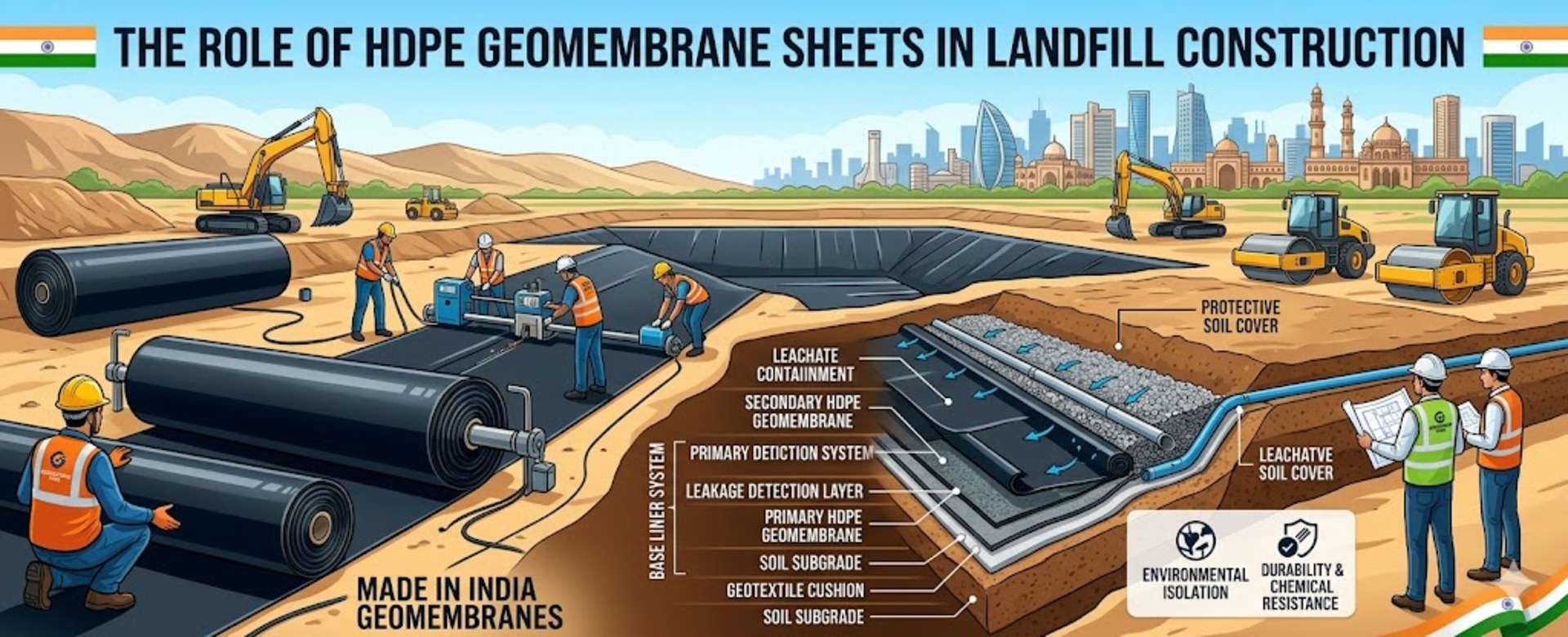
- HDPE sheets form a reliable barrier that prevents leachate—liquid produced from waste decomposition—from seeping into the soil and groundwater.
- Benefit: Protects water resources and complies with environmental regulations.
- Gas Containment:
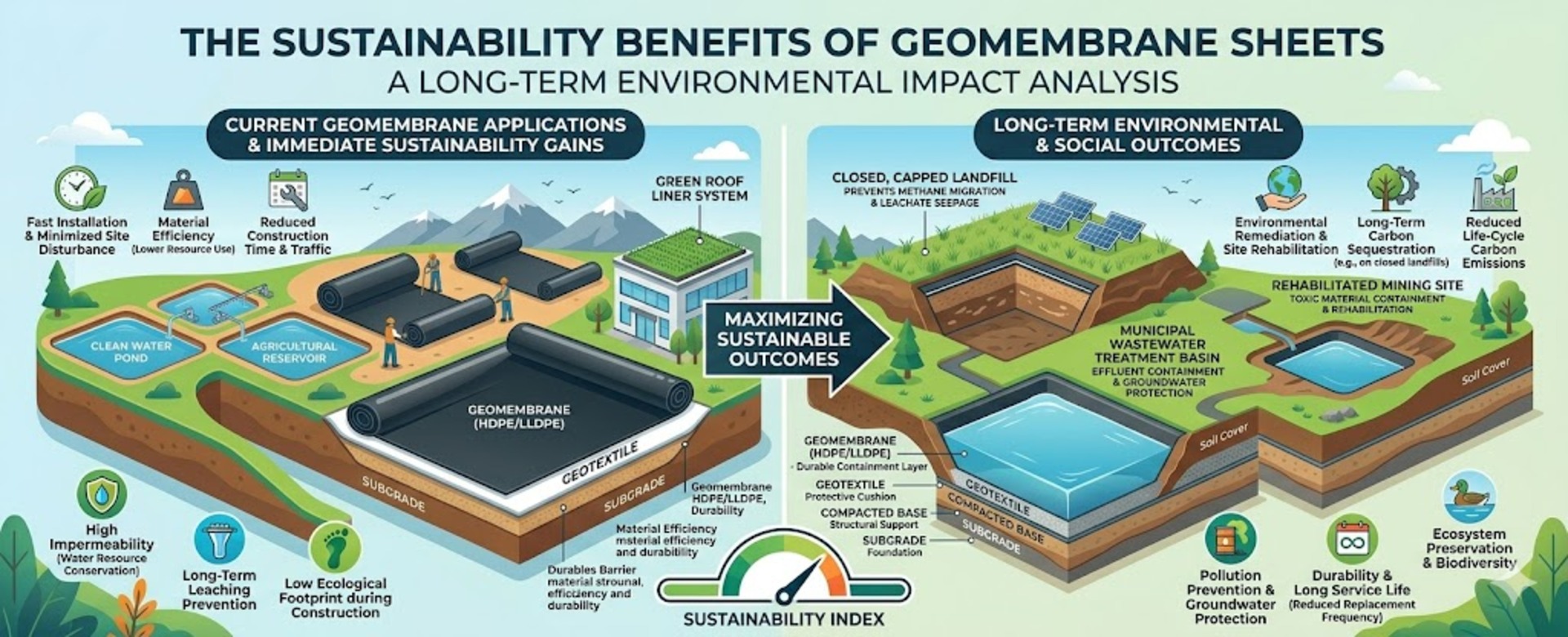
- In landfills, HDPE geomembranes trap harmful gases like methane, which can then be collected and processed for energy generation.
- Benefit: Reduces greenhouse gas emissions and promotes sustainable energy use.
- Durability in Harsh Environments:
- HDPE sheets resist chemical exposure, UV radiation, and temperature fluctuations, ensuring long-term performance in challenging landfill conditions.
- Benefit: Minimizes maintenance and replacement costs.
- Structural Integrity:
- Geomembranes stabilize the landfill base and cap, preventing erosion and settlement caused by waste movement.
- Benefit: Maintains landfill safety and functionality.
- Regulatory Compliance:
- HDPE sheets meet stringent environmental and safety standards, making them an industry-standard material for waste management.
- Benefit: Ensures legal compliance and reduces liability.
Applications in Landfill Construction:
- Bottom Liners: Prevent contamination by isolating waste from the soil.
- Capping Systems: Seal landfills to prevent water infiltration and control gas emissions.
- Leachate Collection Ponds: Line containment ponds for safe leachate storage and treatment.
HDPE geomembrane sheets are essential for constructing safe, efficient, and environmentally responsible landfills.