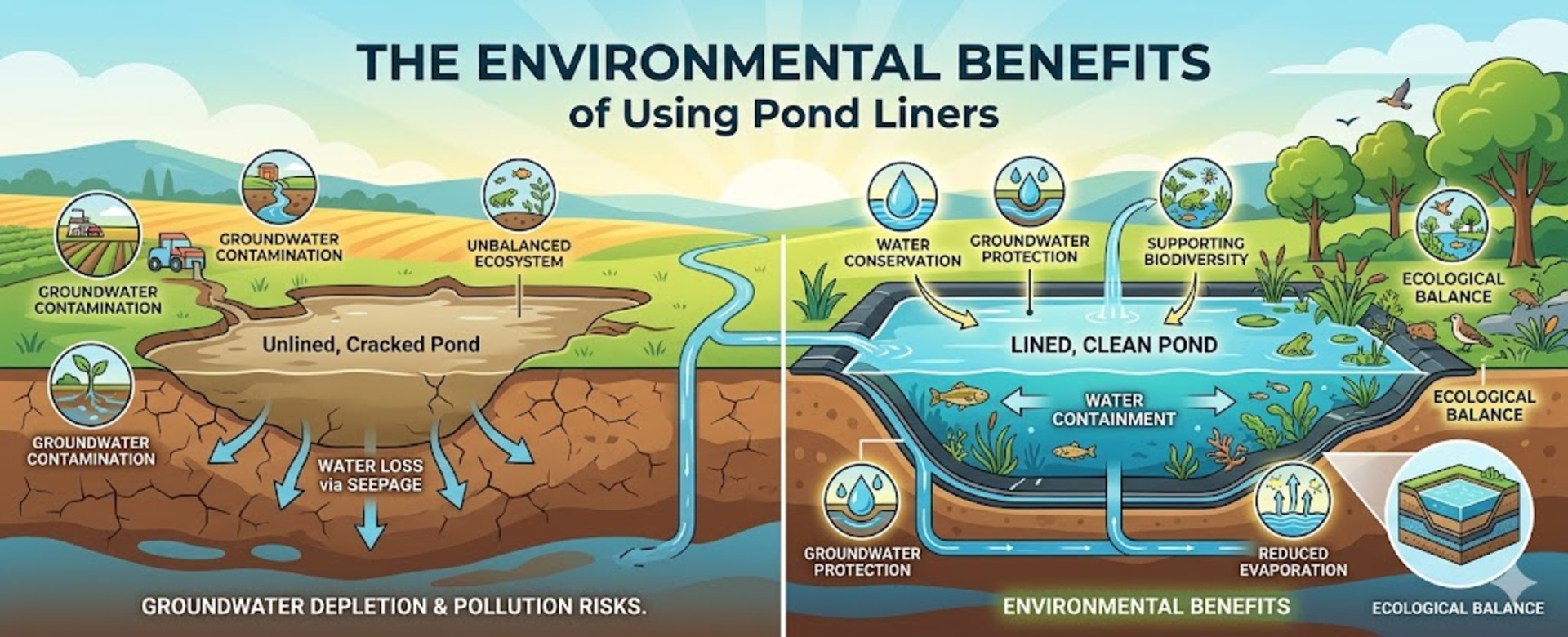

Pond liners are essential tools in modern water management and environmental conservation. By preventing water seepage and maintaining the structural integrity of ponds, these liners contribute significantly to protecting natural resources, reducing waste, and minimizing environmental impact.
Key Environmental Benefits of Using Pond Liners:
- Water Conservation:
- Pond liners create an impermeable barrier that prevents water from seeping into the surrounding soil. This ensures consistent water levels, reducing the need for frequent refilling.
- Impact: Saves water, particularly in arid regions or during droughts.
- Erosion Prevention:
- Liners stabilize the pond bed and walls, preventing soil erosion caused by water movement, rainfall, or heavy use.
- Impact: Preserves surrounding landscapes and reduces sediment pollution in nearby water sources.
- Groundwater Protection:
- By containing pond water, liners prevent chemicals, fertilizers, or waste products from infiltrating the soil and contaminating groundwater.
- Impact: Maintains clean and safe groundwater supplies, protecting ecosystems and human health.
- Support for Biodiversity:
- Fish-safe and plant-compatible liners provide a controlled environment for aquatic ecosystems, promoting the health and diversity of species in decorative or functional ponds.
- Impact: Enhances local biodiversity and supports habitat restoration.
- Reduction in Algal Blooms:
- Liners limit nutrient seepage from the surrounding soil into the pond, reducing the likelihood of algal blooms that can harm aquatic life.
- Impact: Maintains better water quality for aquatic ecosystems.
- Eco-Friendly Materials:
- Many modern pond liners, such as HDPE and EPDM, are recyclable and have a long lifespan, reducing the need for frequent replacements and waste generation.
- Impact: Minimizes environmental footprint and supports sustainability.
- Efficient Rainwater Harvesting:
- Lined ponds are ideal for collecting and storing rainwater for agricultural, industrial, or residential use, reducing reliance on municipal water supplies.
- Impact: Promotes sustainable water management practices.
By using pond liners, individuals and industries can conserve water, protect the environment, and create sustainable, eco-friendly solutions for water storage and management.