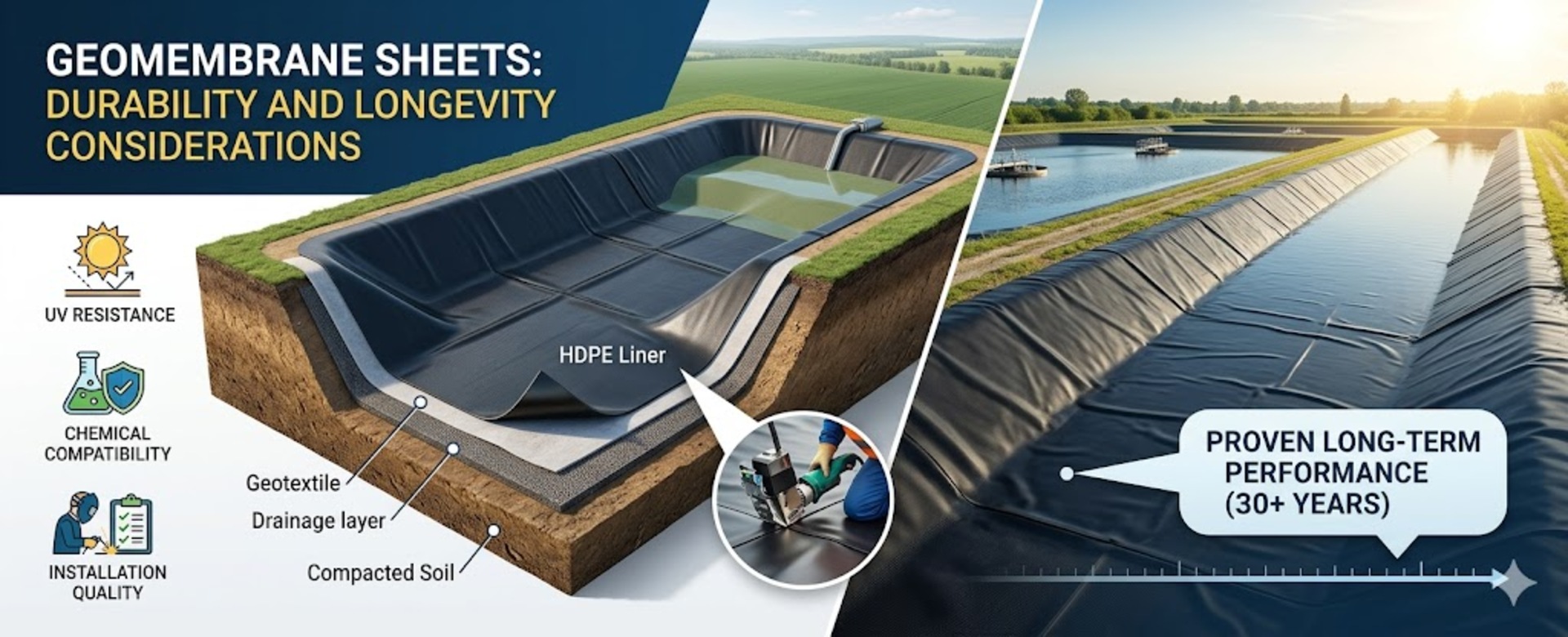

The durability and longevity of geomembrane sheets are crucial factors in ensuring their performance in various applications, such as waste containment, water management, and erosion control. These synthetic liners are designed to withstand harsh environmental conditions and provide long-term protection, but their lifespan can be influenced by several factors including material selection, installation quality, and environmental exposure.
Factors Influencing Durability and Longevity:
- Material Composition
The material used to manufacture geomembrane sheets plays a significant role in their overall durability. Materials like HDPE (High-Density Polyethylene) and EPDM (Ethylene Propylene Diene Monomer) are known for their excellent resistance to UV radiation, ozone degradation, and temperature fluctuations, which are critical for outdoor applications. The ability of the material to withstand exposure to chemicals, such as acids and oils, is also an important consideration for waste management projects. - UV and Ozone Resistance
Geomembranes used outdoors must be resistant to UV radiation, which can cause material degradation over time. The inclusion of UV stabilizers in geomembrane materials helps extend their lifespan. For instance, HDPE geomembranes are often treated with carbon black to protect against UV degradation. Additionally, exposure to ozone in the atmosphere can cause certain materials to crack and deteriorate, so ensuring that the geomembrane material is ozone-resistant is essential for long-term performance. - Temperature Extremes
Geomembranes are often exposed to temperature variations, from freezing cold to extreme heat. Materials like EPDM and PVC are known for their flexibility and resilience under temperature fluctuations. In contrast, some geomembrane materials may become brittle in cold climates or deform in hot conditions. The choice of material must be aligned with the temperature range in which the geomembrane will operate. - Chemical Resistance
Many geomembranes are used in applications involving the containment of chemicals, such as landfills and wastewater treatment facilities. The material’s resistance to chemical exposure—such as acids, bases, and oils—directly impacts its durability. HDPE, for instance, is known for its high resistance to a wide range of chemicals, making it a go-to material for hazardous waste containment. - Installation Quality
Even the most durable geomembrane materials will not perform effectively if installed improperly. Ensuring that seams are welded correctly and that the membrane is free from punctures or tears is essential for maximizing its lifespan. Installation procedures should follow industry standards to ensure the integrity of the geomembrane over time.
In general, geomembrane sheets, when properly selected and installed, can last 20-50 years or more, depending on environmental conditions and material properties.