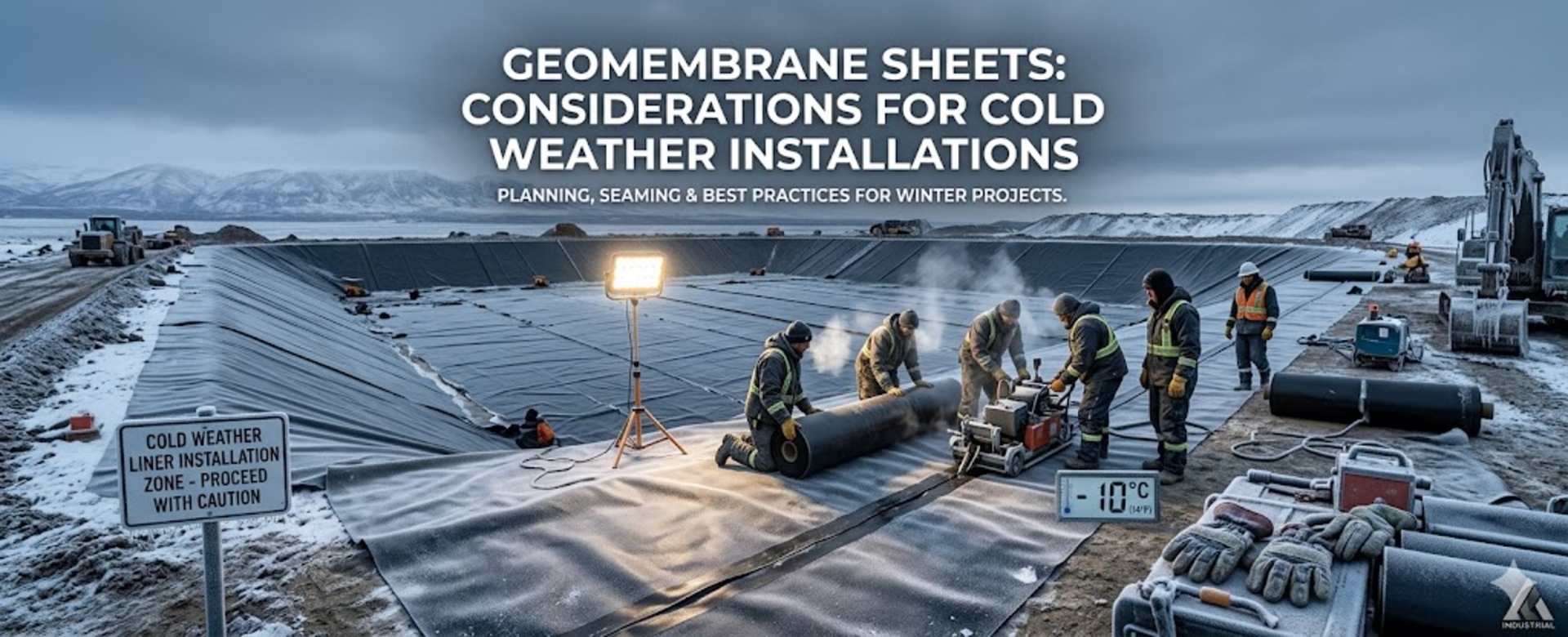

Installing geomembrane sheets in cold weather conditions presents a unique set of challenges that require special considerations to ensure optimal performance and durability. Cold temperatures can affect the flexibility, weldability, and overall handling of geomembranes, particularly those made from materials such as HDPE, PVC, and EPDM. To ensure successful installation, project managers and contractors must take steps to adapt to these conditions.
Key Considerations for Cold Weather Installation:
- Material Flexibility and Handling
In cold temperatures, some geomembrane materials become less flexible and more prone to cracking or breaking. Materials like HDPE can become brittle at low temperatures, making them harder to handle and manipulate during installation. It is essential to store geomembranes in a temperature-controlled environment before installation to maintain their flexibility. Additionally, installation should be delayed until the weather improves or additional warming methods are used on-site. - Welding and Seaming
Cold weather can affect the effectiveness of welding techniques, as the material becomes more difficult to fuse. Cold temperatures can slow down the welding process, leading to poor seam integrity. To prevent issues, the welding equipment should be pre-heated, and the surface of the geomembrane should be properly warmed before the welding process. Specialized welding techniques or heated extrusion may be necessary to ensure strong, durable seams. - Site Preparation
In cold weather, it is particularly important to ensure that the substrate is prepared adequately for geomembrane installation. Frost, ice, and snow can interfere with the proper bonding of the geomembrane to the substrate. Site preparation may involve removing snow and ice and ensuring the surface is clean and dry before laying the geomembrane. Adequate drainage should also be ensured to prevent water from accumulating beneath the geomembrane. - Wind Protection
Cold weather installations often involve high winds, which can make handling and positioning geomembranes difficult. Wind can cause damage to the geomembrane material or cause the sheets to shift during installation. Wind protection barriers or tents should be used to shield the geomembrane sheets from direct exposure to the wind, ensuring proper placement and reducing the risk of damage. - Monitoring and Quality Control
Cold weather conditions require additional monitoring during installation. Inspections should be more frequent to ensure that the geomembrane is properly sealed, free from damage, and securely installed. Any signs of material deformation or seam failure should be addressed immediately to prevent long-term issues.
By accounting for these cold weather considerations, the installation of geomembranes in low temperatures can be successful, providing reliable containment and protection over time.