
Geomembrane sheets are highly effective solutions for containment and waterproofing across industries such as waste management, mining, and agriculture. However, the performance of geomembrane sheets heavily depends on proper installation. Mistakes during the installation process can compromise their integrity, leading to costly repairs, environmental contamination, and system failure. Here are some common mistakes to avoid when installing geomembrane sheets to ensure optimal performance and longevity.
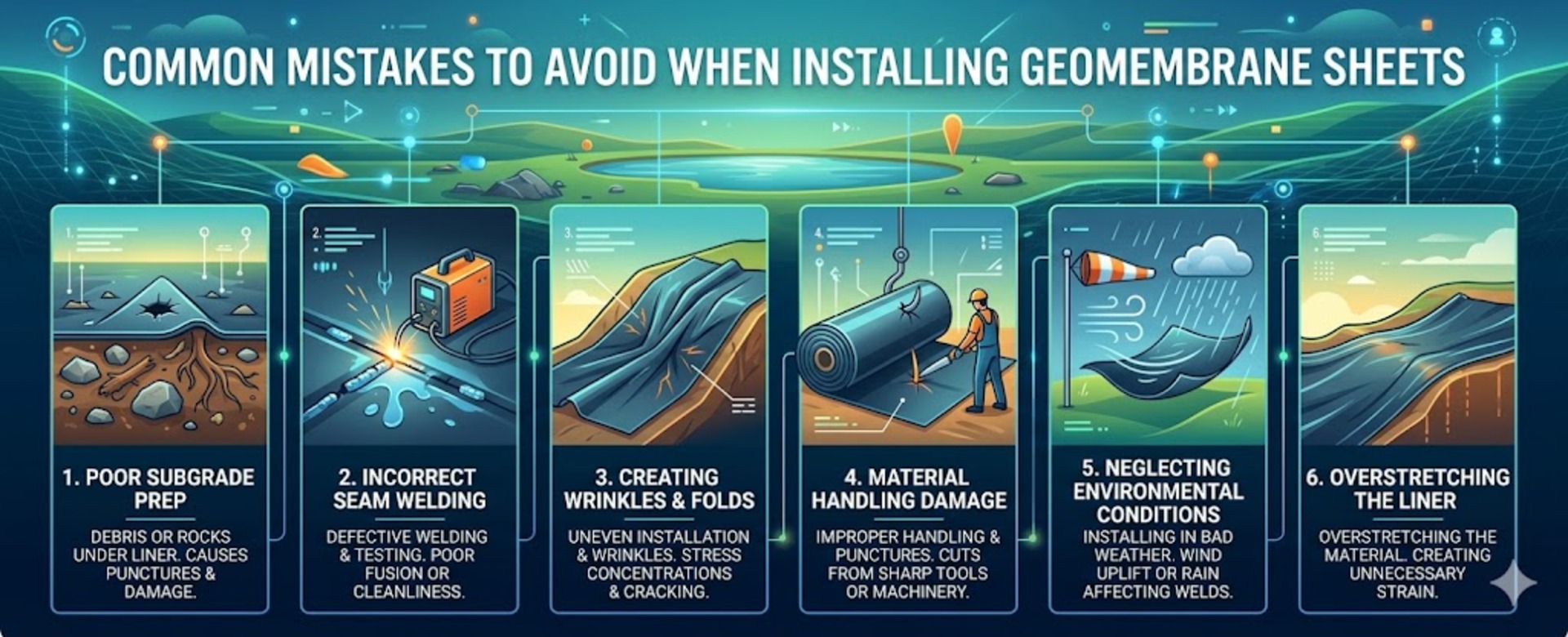
1. Inadequate Surface Preparation
A common mistake is failing to prepare the surface properly before installing geomembrane sheets. Uneven surfaces with sharp rocks, debris, or roots can puncture the sheet, compromising its impermeability.
Solution: Ensure that the substrate is smooth, compacted, and free from any objects that could damage the geomembrane. Adding a layer of geotextile fabric beneath the geomembrane can provide additional protection.
2. Using the Wrong Type of Geomembrane
Choosing the wrong type of geomembrane for a specific application is a frequent error. For example, using a geomembrane with insufficient chemical resistance in an industrial setting or one with inadequate UV stability for outdoor use can result in premature failure.
Solution: Select the appropriate material—such as HDPE, LDPE, or PVC—based on factors like exposure to UV radiation, chemical compatibility, and operational temperature range.
3. Incorrect Welding Techniques
Welding geomembrane sheets together is a critical part of installation, but improper welding techniques can lead to weak seams, leaks, and failure under pressure. Errors such as insufficient heat, uneven pressure, or contamination at the welding site can compromise the welds.
Solution: Use the correct welding equipment and follow manufacturer guidelines for temperature and pressure settings. Ensure that the welding area is clean and free of dust, moisture, and debris.
4. Overstretching the Geomembrane
Overstretching the geomembrane during installation can weaken the material and lead to tears, especially during thermal expansion or contraction.
Solution: Allow for proper slack during installation to accommodate temperature fluctuations. The geomembrane should lie flat without excessive tension while still maintaining proper alignment.
5. Poor Quality Control During Installation
Skipping or overlooking quality control checks during installation is a significant mistake. Even minor defects, such as small tears, wrinkles, or improperly welded seams, can lead to major failures over time.
Solution: Conduct thorough inspections at every stage of installation. Test welded seams using methods like air pressure testing or vacuum box testing to ensure they are secure and watertight.