
Pond liner installation can be a straightforward process, but several challenges may arise, potentially affecting the liner’s performance and longevity. Addressing these challenges through proper planning, material selection, and installation techniques ensures a successful project.
Common Challenges and Solutions:
- Site Preparation Issues:
- Challenge: Sharp rocks, debris, or uneven surfaces can puncture the liner during installation.
- Solution: Clear the site thoroughly, remove debris, and level the ground. Add a layer of sand or geotextile underlayment to provide cushioning and protect the liner.
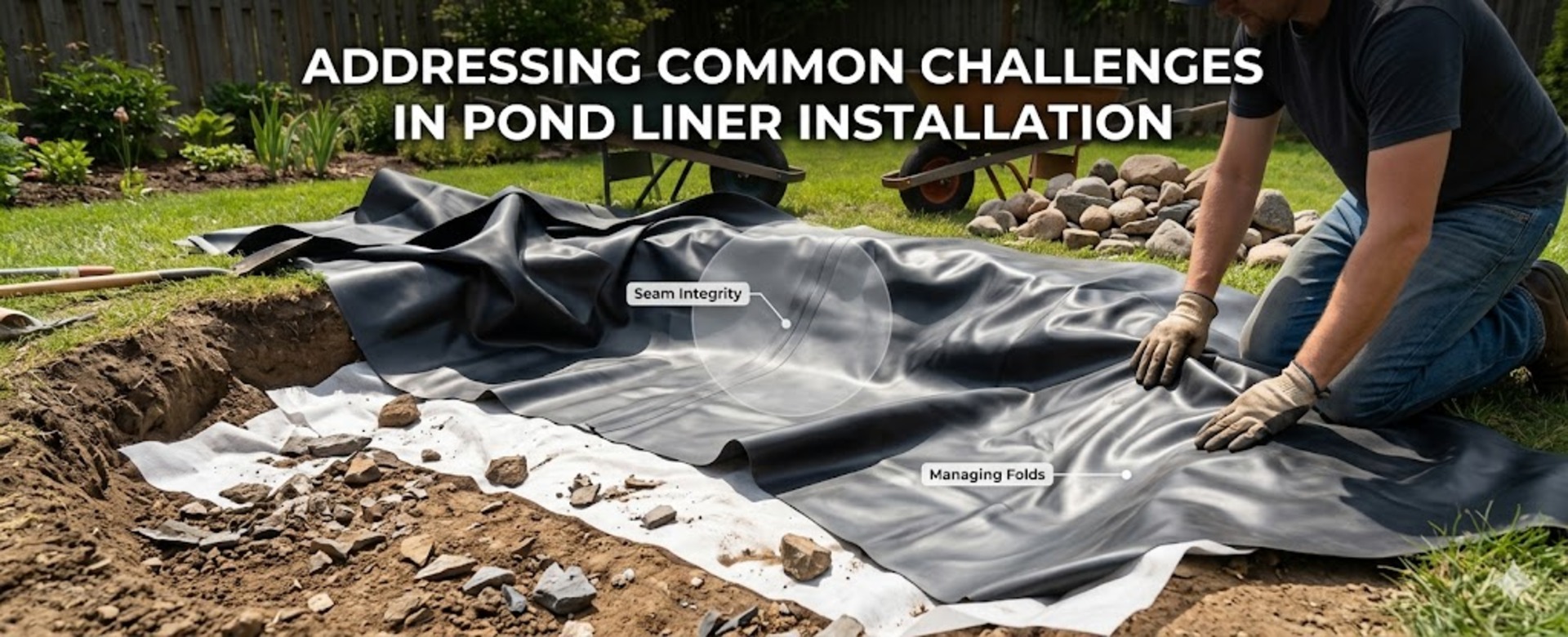
- Improper Liner Placement:
- Challenge: Wrinkles or folds in the liner can lead to uneven coverage, leaks, or structural instability.
- Solution: Allow the liner to acclimate to the site’s temperature before installation. Unroll it slowly and smooth out wrinkles as you lay it down.
- Seam Sealing Difficulties:
- Challenge: In larger projects, multiple liner sheets may need to be joined. Poorly sealed seams can lead to leaks.
- Solution: Use compatible adhesives, tapes, or welding techniques to create strong, leak-proof seams. Conduct leak tests to ensure proper sealing.
- Handling During Installation:
- Challenge: Heavy or large liners may be difficult to maneuver, leading to tears or improper placement.
- Solution: Use enough manpower or equipment to handle the liner without dragging it. Lift and position it carefully to avoid damage.
- Exposure to Weather:
- Challenge: Strong winds, rain, or extreme temperatures during installation can complicate the process and compromise the liner’s performance.
- Solution: Schedule installation during favorable weather conditions. Secure the liner with temporary weights to prevent movement during windy conditions.
- UV Degradation:
- Challenge: Prolonged exposure to sunlight can weaken certain liner materials, reducing their lifespan.
- Solution: Choose UV-resistant liners such as HDPE or EPDM and cover exposed areas with soil, rocks, or vegetation.
- Incorrect Liner Sizing:
- Challenge: A liner that is too small or improperly cut will not fit the pond accurately, leading to gaps or tension points.
- Solution: Measure the pond carefully, accounting for depth, slope, and overhang. Always order slightly larger liners to allow for adjustments.
By addressing these challenges proactively, pond liner installations can be completed efficiently, ensuring long-lasting performance and water retention.