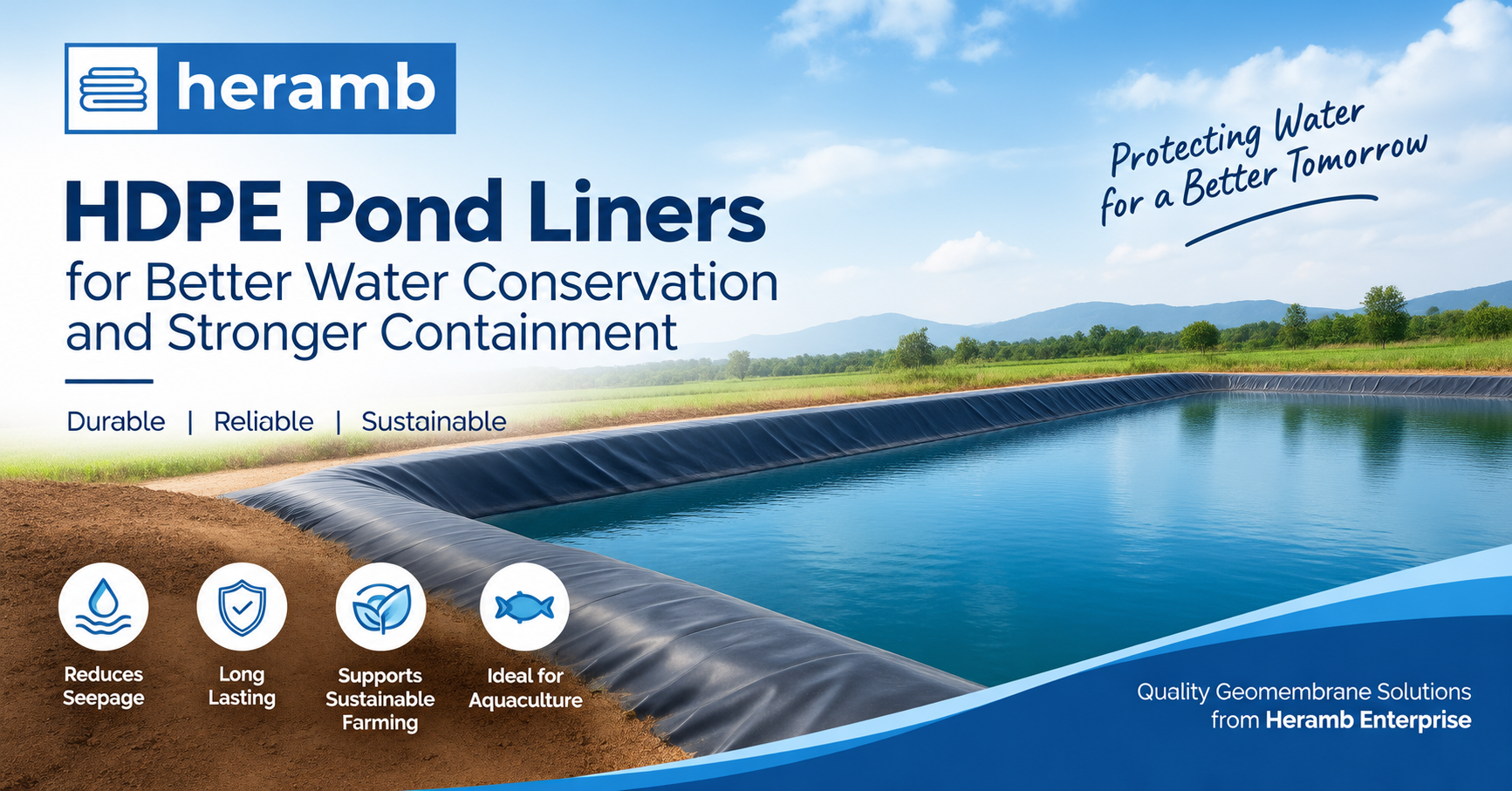
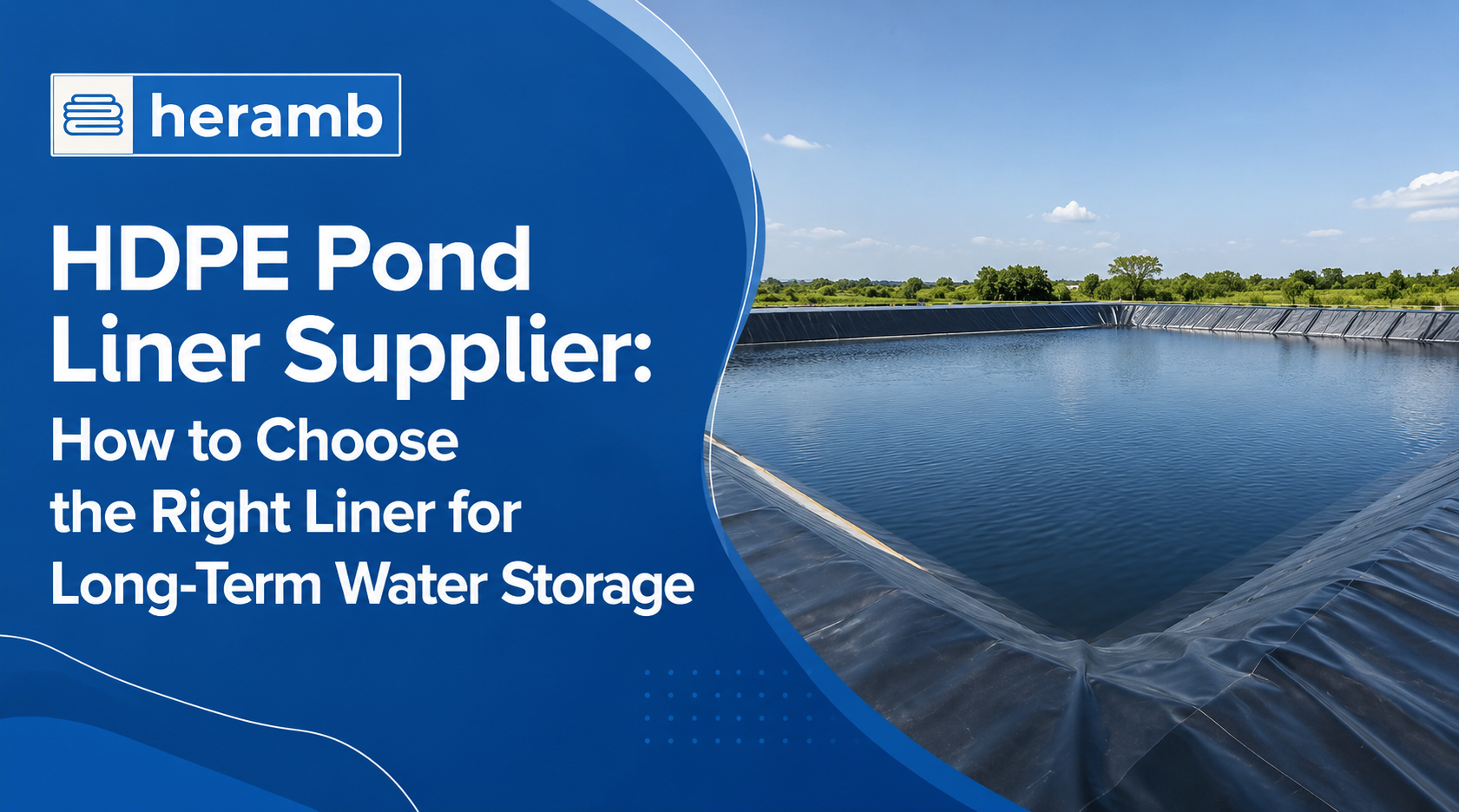

Long-term water storage systems are more complex than choosing the right size or shape of a pond. A pond liner is a crucial component of the system, responsible for retaining water, preventing seepage, and maintaining reliable performance over time. High-density polyethylene, or HDPE, pond liners are highly durable, UV-resistant, and widely used in geomembrane applications where long-term performance and low maintenance are important. Heramb Geomembrane provides quality geomembrane solutions designed to meet the practical requirements of different water storage and management applications.
When evaluating HDPE Pond Liner Suppliers, taking price into consideration is not the only factor. There are many other factors to consider. These factors include material quality, thickness, sheet dimensions, technical specs, industry standards and application requirements, along with the level of support offered for installation. The same evaluation factors hold true for HDPE Pond Liners sheet in India suitable for agriculture water storage, reservoirs, aquaculture ponds and other water management applications.
What Is an HDPE Pond Liner?
An HDPE Pond Liner is an artificial membrane made of high-density polyethylene used to create a barrier between a stored water body and the surrounding soil. It helps to reduce seepage and helps to retain water.
HDPE pond liners are meant to cater to larger and more critical water containment systems. The information provided also states resistance to the following: punctures, tears, exposure to the environment and to chemicals and fertilizers, UV radiation, and all sorts of weather. The long-term performance and low maintenance of their products are also clearly stated.
Why Are HDPE Pond Liners Used for Water Storage?
Effective Water Retention
The main purpose of a pond liner is to create a waterproof barrier. HDPE pond liners help reduce water loss caused by seepage into the surrounding soil. This can be particularly useful for irrigation ponds, reservoirs and rainwater harvesting systems where retaining stored water is an important part of the application.
Durability in Outdoor Conditions
Outdoor conditions are unpredictable, and pond liners may have to be exposed to various changes. HDPE pond liners have several features for resistance to extreme temperatures, UV sunlight, punctures, and tears. This makes the material strong and useful for many outdoor applications.
Chemical and UV Resistance
Information for the product states some resistance to chemicals and UV rays. This can be useful in situations involving extended exposure of storage liners to UV sunlight, or where there could be contact with chemicals related to the application or use of the liner.
Low Maintenance
HDPE pond liners provide long-lasting structure with low maintenance. With good installation and maintenance practices, Heramb Geomembrane has stated that the lifespan of their HDPE pond liner is greater than 20 years.
Versatile Water-Containment Applications
HDPE pond liners are applicable for water storage in many industries and for farms, landscaping applications, and protection of the environment. Some examples of use for these liners and systems include water storage for irrigation, harvesting rainwater, garden and pond construction, evaporation, and retention.
How to Choose the Right HDPE Pond Liner
The right liner should be selected according to the requirements of the project rather than simply choosing whatever product is readily available. If you are comparing suppliers, the following factors can help narrow down the options.
1. Check the Material
The material of the product is the first specification to check. The HDPE geomembrane should be of high density and contain virgin polymer and UV stabilized carbon black.
Knowing the material of the liner gives the purchaser a better idea of whether the liner will survive the environmental and operational conditions the liner will be subject to.
2. Select the Appropriate Thickness
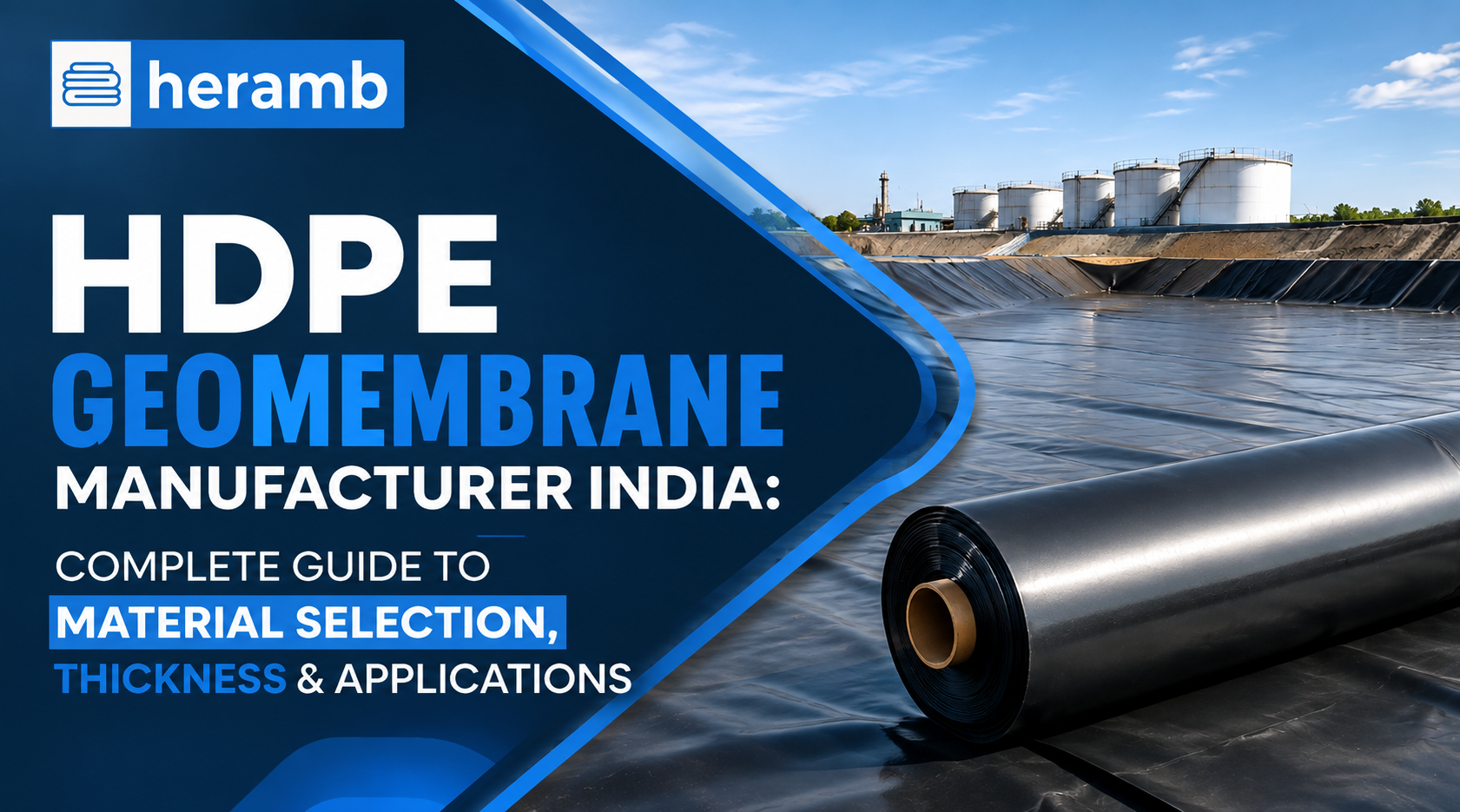
Thickness is an important consideration because different projects may require different levels of liner performance. The available HDPE geomembrane range includes 0.50 mm, 0.75 mm, 1.00 mm, 1.50 mm, 2.00 mm, 2.50 mm, and 3.00 mm options. The pond-liner product information lists a thickness range of 0.5 mm to 3.0 mm.
The thickest liner is not automatically the best choice for every project. The intended application, site conditions, installation requirements and performance expectations should be considered when selecting the thickness.
3. Consider Sheet Width and Length
Large ponds and reservoirs may require sheets with specific dimensions. According to the available product information, widths can reach up to 8 metres, while lengths can be customized according to project requirements.
When comparing HDPE pond liners sheet in India, ask the supplier whether the available sheet dimensions are suitable for the pond layout. Selecting practical sheet sizes can also make handling, positioning and installation easier.
4. Review the Physical Properties
Technical specifications provide useful information when comparing liner options. The listed specifications include a density of at least 0.940 g/cm, high-performance tensile strength, excellent tear resistance, superior puncture resistance and excellent UV resistance.
These properties should be considered together rather than looking at a single specification in isolation. The right combination depends on the conditions in which the liner will be used.
5. Check Quality and Certification
Quality assurance becomes particularly important when a liner is expected to perform for many years. Heramb Geomembrane states that its HDPE geomembranes comply with international quality standards and that its products are tested and certified.
When evaluating an HDPE Pond Liner Supplier, buyers should ask for relevant product specifications and test reports where required. This provides a clearer understanding of whether the material matches the requirements of the intended application.
Preparing the Pond for Liner Installation
Even a high-quality liner needs a properly prepared installation surface to perform effectively. Site preparation is therefore an important part of the process.
The installation guidance recommends clearing the site of debris and sharp objects before placing the liner. Once the surface is ready, the liner can be carefully unrolled and positioned over the prepared area.
The seams can then be secured using heat welding or adhesive techniques. After installation, the liner should be inspected for leaks or visible imperfections before the pond is filled.
Proper preparation and installation can help protect the liner from avoidable damage and support better long-term performance.
Matching the Liner to the Application
The purpose of the pond should also influence the liner selection.
Agricultural Water Storage
HDPE pond liners are listed for irrigation ponds, reservoirs, rainwater harvesting systems, and livestock watering applications. Their waterproofing function helps reduce seepage and supports the retention of stored water.
Aquaculture and Fish Farming
Fish farming and aquaculture are among the listed applications for HDPE pond liners. For these projects, the liner should provide dependable containment and appropriate performance for the intended environment.
Industrial and Environmental Applications
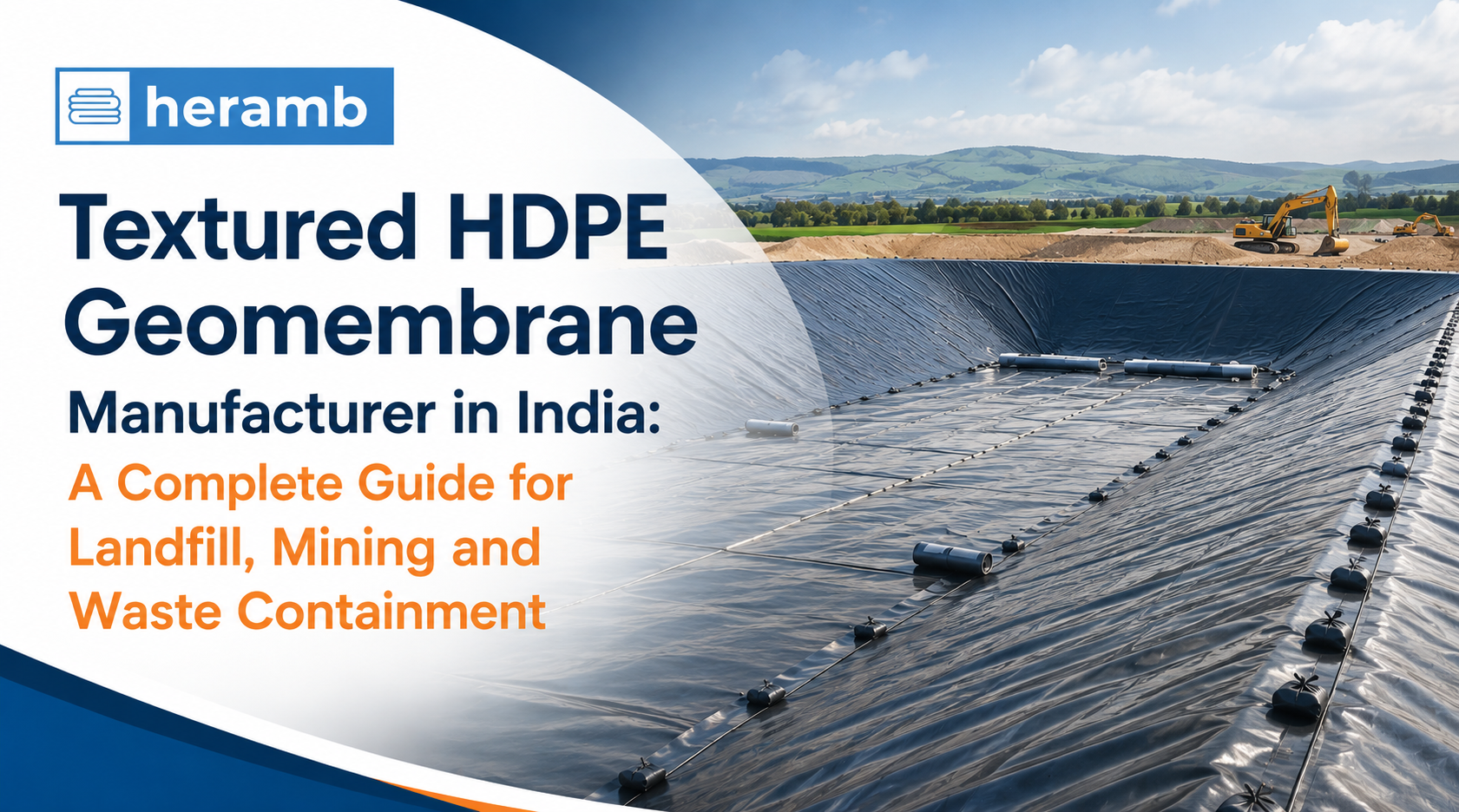
HDPE geomembranes are also listed for applications such as evaporation ponds, chemical containment areas, wastewater management, landfills, hazardous waste containment systems, and reservoirs.
Because these applications can have different requirements, product specifications should always be matched to the specific use rather than treating every project in the same way.
Decorative Ponds and Landscaping
HDPE pond liners can also be used for garden ponds, fountains and other water features. In these applications, appropriate sizing and reliable water containment are important considerations.
What Makes an HDPE Pond Liner Supplier Suitable for Long-Term Projects?
A supplier’s ability to meet project-specific requirements can be just as important as the product itself. Pond-liner requirements can vary considerably depending on the size, purpose, location and installation conditions of the project.
When comparing suppliers, look for clear information about:
- Material composition
- Available thicknesses
- Sheet width and length
- Physical properties
- Quality standards and testing
- Customization options
- Installation guidance
- Technical support
- Delivery capabilities
Heramb Geomembrane provides HDPE geomembrane solutions manufactured using advanced production technology and states that its products are tested and certified. The company also offers customized geomembrane solutions and technical guidance for installation. These capabilities can be useful when a project requires a particular thickness, size, or configuration.
For buyers searching for HDPE pond liners sheet in India, delivery capability is another practical consideration. Heramb Geomembrane states that its HDPE pond liners can be delivered across India, supporting projects in different locations.
Why Product Specifications Matter More Than Price Alone
Price is naturally an important part of any purchasing decision, but the lowest quote is not necessarily the most suitable option for long-term water storage.
A liner should first meet the technical requirements of the project. Comparing material quality, thickness, dimensions, durability, resistance characteristics, quality assurance, and overall cost provides a more useful basis for selecting a product.
A slightly different product specification may have a significant impact on whether the liner is appropriate for the intended application. That is why technical suitability should come before price when comparing suppliers.
FAQ
What is an HDPE pond liner used for?
An HDPE pond liner creates an impermeable barrier that helps reduce water seepage. It is listed for applications including irrigation ponds, reservoirs, rainwater harvesting systems, fish farming, aquaculture, and other water-containment projects.
What thicknesses are available for HDPE pond liners?
The listed HDPE geomembrane thickness options range from 0.50 mm to 3.00 mm. Available options include 0.75 mm, 1.00 mm, 1.50 mm, 2.00 mm, and 2.50 mm.
How wide can an HDPE pond liner be?
According to the product information, HDPE pond liner widths can be up to 8 metres. The length can be customized according to project requirements.
Are HDPE pond liners resistant to UV exposure?
Yes. The product information specifies excellent UV resistance, which supports the use of HDPE pond liners in outdoor applications involving prolonged sunlight exposure.
Can HDPE pond liners be customized?
Yes. Heramb Geomembrane states that its HDPE geomembrane solutions can be customized according to specific project requirements, including size and thickness options.
Conclusion
Redundancy in water storage systems is achieved by using the appropriate pond liner. HDPE liner systems provide a water storage barrier that is resistant to UV light, ozone, chemical damage, pond liner punctures, and tears. HDPE liner systems are also designed to provide options for liner thickness from 0.5 to 3 mm, a maximum liner width of 8 meters and lengths that can be customized for project specific requirements.
The best HDPE Pond Liner Supplier is the one that offers a specific product description along with options for various thicknesses and sizes, assurance on quality, customization, and offers assistance for installation.
Looking for a reliable HDPE pond liner for your project? Contact Heramb Geomembrane today to discuss your water-storage requirements and get the right HDPE geomembrane solution based on your project’s specific needs.