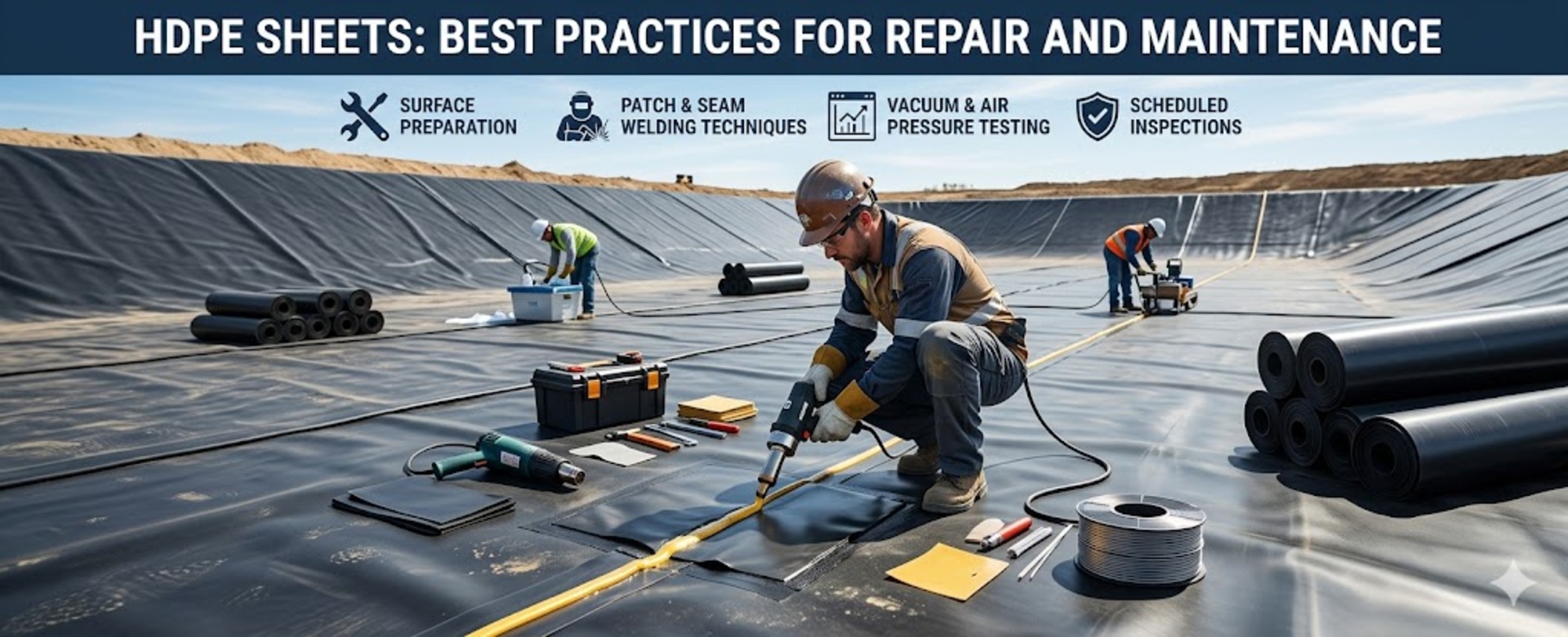

While HDPE sheets are highly durable, regular maintenance and timely repairs are essential to ensure their long-term performance. Proper care minimizes the risk of leaks, punctures, and degradation, extending the lifespan of the geomembrane.
Best Practices for Repairing HDPE Sheets:
- Regular Inspections:
- Conduct routine visual inspections to identify tears, punctures, or seam failures. Focus on high-stress areas such as seams and anchor points.
- Tip: Use advanced leak detection methods, such as electrical leak location (ELL) testing, for precise monitoring.
- Immediate Repairs:
- Address any damage promptly to prevent further deterioration. Use compatible repair materials and techniques, such as extrusion welding or patching.
- Tip: Always clean and prepare the damaged area thoroughly before applying a patch or welding.
- Seam Integrity Testing:
- Test seams regularly using non-destructive methods like vacuum box testing to ensure they remain leak-proof.
- Tip: Retest seams after any repair work to confirm integrity.
- UV Protection:
- If the HDPE sheet is exposed to sunlight, consider adding a protective layer or UV-resistant coating to prevent degradation.
- Tip: Use ballast materials, such as geotextiles or sand, to cover exposed areas.
- Preventive Maintenance:
- Regularly clean the surface to remove debris, sediments, or chemicals that may cause abrasion or damage.
- Tip: Avoid using harsh cleaning agents that could degrade the material.
By following these best practices, HDPE sheets can deliver reliable performance for decades with minimal maintenance.