
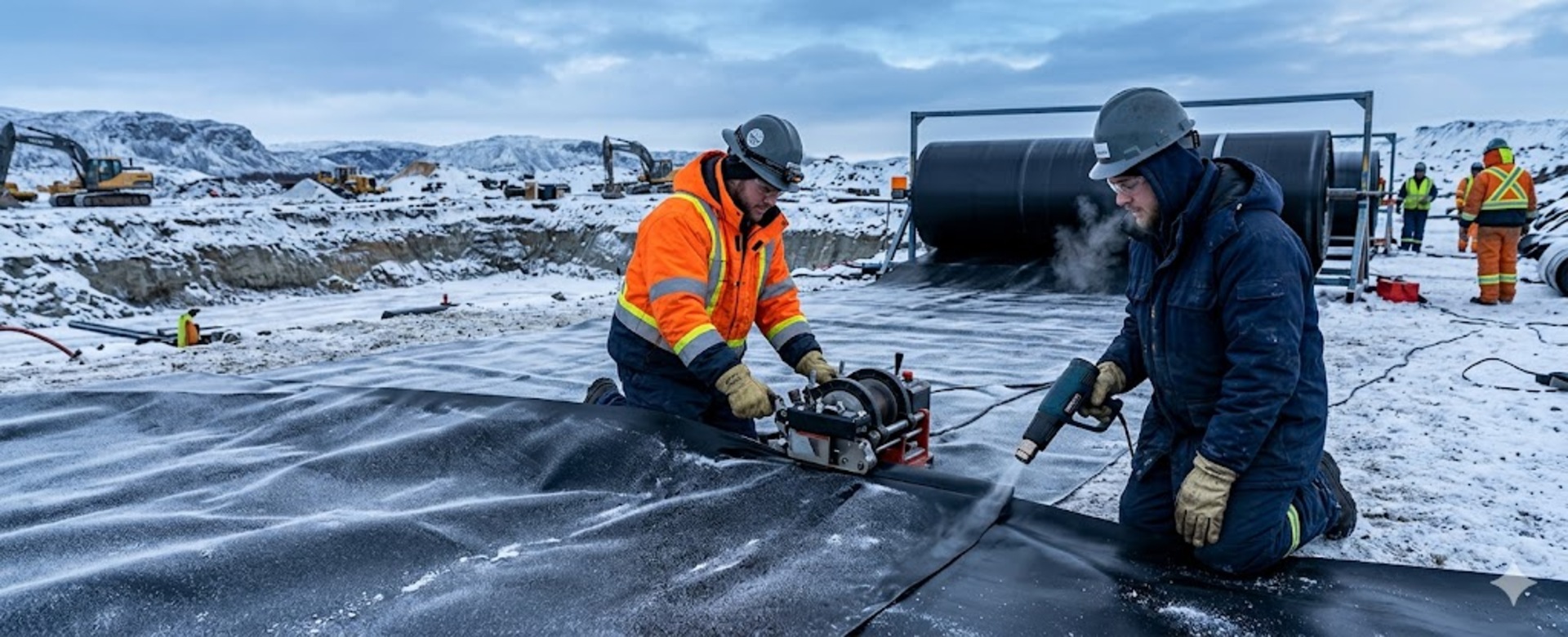

Installing HDPE sheets in cold weather conditions presents unique challenges, as low temperatures can affect the material’s flexibility, welding, and handling. Proper preparation and specialized techniques are essential to ensure the successful installation of HDPE sheets in cold climates.
Challenges of Cold Weather Installations:
- Material Brittleness:
- At low temperatures, HDPE sheets can become less flexible and more brittle, increasing the risk of cracking or tearing during installation.
- Solution: Store HDPE sheets in a temperature-controlled environment before installation to maintain flexibility. Avoid sharp bends or folds when handling the material.
- Seam Welding Difficulties:
- Cold weather can make welding seams more challenging, as the material may not melt uniformly at low temperatures. This can lead to weak or incomplete seams.
- Solution: Use preheated welding equipment and ensure the sheets are warmed to the appropriate temperature before welding. Consider using extrusion welding techniques, which are more effective in cold conditions.
- Reduced Adhesion:
- Adhesion between HDPE sheets and subgrade materials may be compromised in freezing temperatures.
- Solution: Ensure the subgrade is free of frost, ice, or moisture before installing the geomembrane. A geotextile layer can also be added for additional protection.
- Handling and Transportation Issues:
- Cold weather makes HDPE sheets stiffer, making them harder to unroll and position.
- Solution: Plan for additional manpower or equipment to handle the sheets during installation. Lay the sheets carefully to avoid stress on the material.
- Time Constraints:
- Shorter daylight hours and freezing conditions can slow down installation timelines.
- Solution: Schedule installation during warmer periods of the day and use temporary heating solutions to improve working conditions.
By taking these precautions and using appropriate installation methods, HDPE sheets can be effectively installed in cold weather without compromising their performance or integrity.