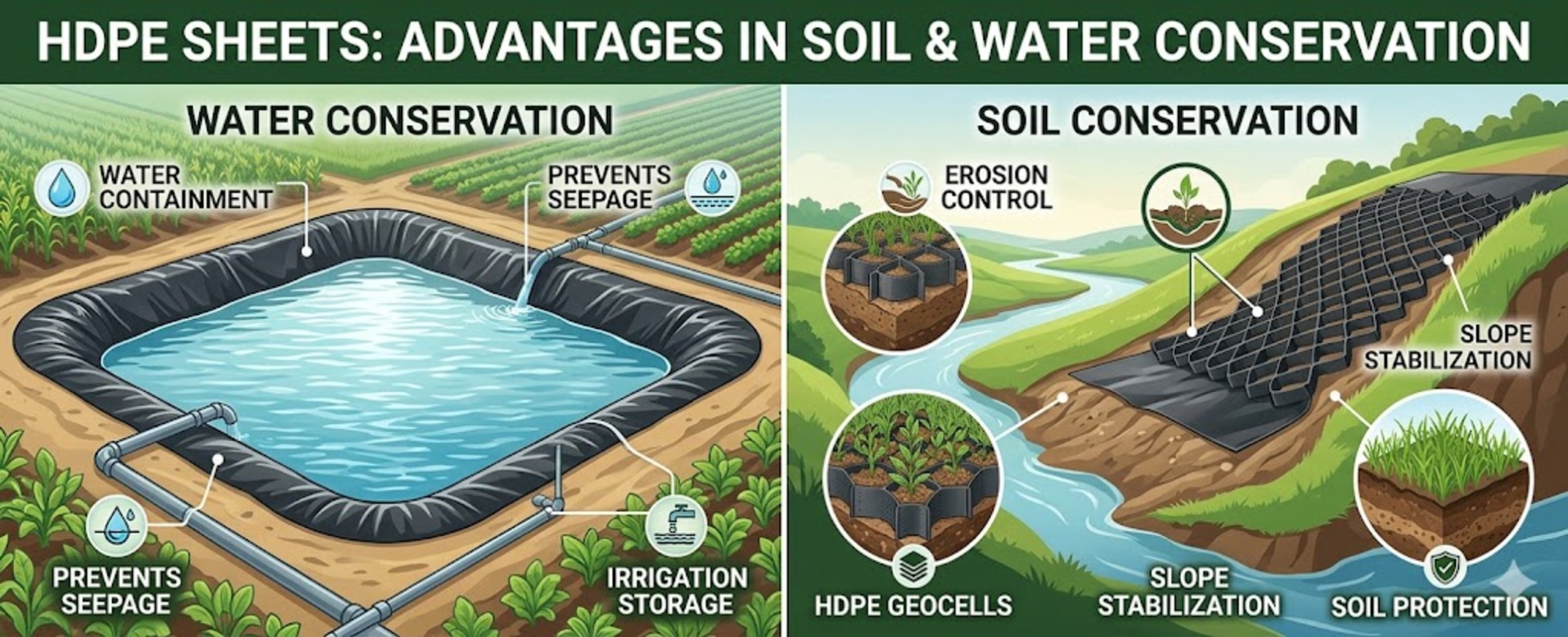

Soil and water conservation are critical components of sustainable land management, particularly in agricultural and environmental projects. HDPE sheets are increasingly being used as effective tools for conserving soil and water, as they help prevent erosion, retain water, and improve water quality.
Key Advantages of HDPE Sheets in Soil and Water Conservation:
- Prevention of Soil Erosion: HDPE geomembranes provide a protective barrier against soil erosion caused by wind and water. By covering exposed soil surfaces, HDPE sheets help stabilize the soil and prevent the loss of valuable topsoil. This is particularly important in areas with steep slopes or regions prone to heavy rainfall. Geomembranes can also be used in conjunction with vegetation to enhance soil stability and reduce erosion further.
- Water Retention and Efficiency: HDPE sheets are highly impermeable, making them ideal for water retention in agricultural ponds, irrigation canals, and reservoirs. By preventing water from seeping into the ground, these sheets help conserve water resources, which is especially important in areas facing water scarcity. This efficient use of water ensures that crops and vegetation receive the necessary hydration, reducing the need for excessive irrigation.
- Protection of Water Quality: In water conservation applications, HDPE sheets help protect water quality by preventing soil, chemicals, and pollutants from contaminating water sources. In agricultural settings, for instance, HDPE liners are used to prevent runoff from fertilizers and pesticides from leaching into water bodies, thus protecting aquatic ecosystems and ensuring the safety of drinking water supplies.
- Reduction in Evaporation Loss: In regions with hot climates, evaporation can lead to significant water loss in reservoirs and irrigation systems. HDPE sheets help reduce evaporation by forming an impermeable cover that prevents water from escaping into the atmosphere. This water conservation method helps maximize the use of stored water, ensuring it remains available for irrigation and other agricultural purposes.
- Improvement in Irrigation Efficiency: In irrigation systems, HDPE pipes and geomembranes are used to improve water flow and minimize leaks, ensuring that water is directed where it is needed most. These systems reduce the amount of water lost due to seepage and surface runoff, allowing farmers to use water more efficiently and reduce waste.
- Sustainable Agricultural Practices: HDPE sheets are an essential component of sustainable agricultural practices, helping conserve water, protect soil, and enhance crop yields. By ensuring efficient water use and preventing erosion, HDPE geomembranes support long-term soil health and contribute to sustainable farming practices that benefit both the environment and agricultural productivity.
In soil and water conservation, HDPE sheets offer a reliable and cost-effective solution that enhances water retention, reduces erosion, and protects water quality, helping to promote sustainability and improve land management practices.