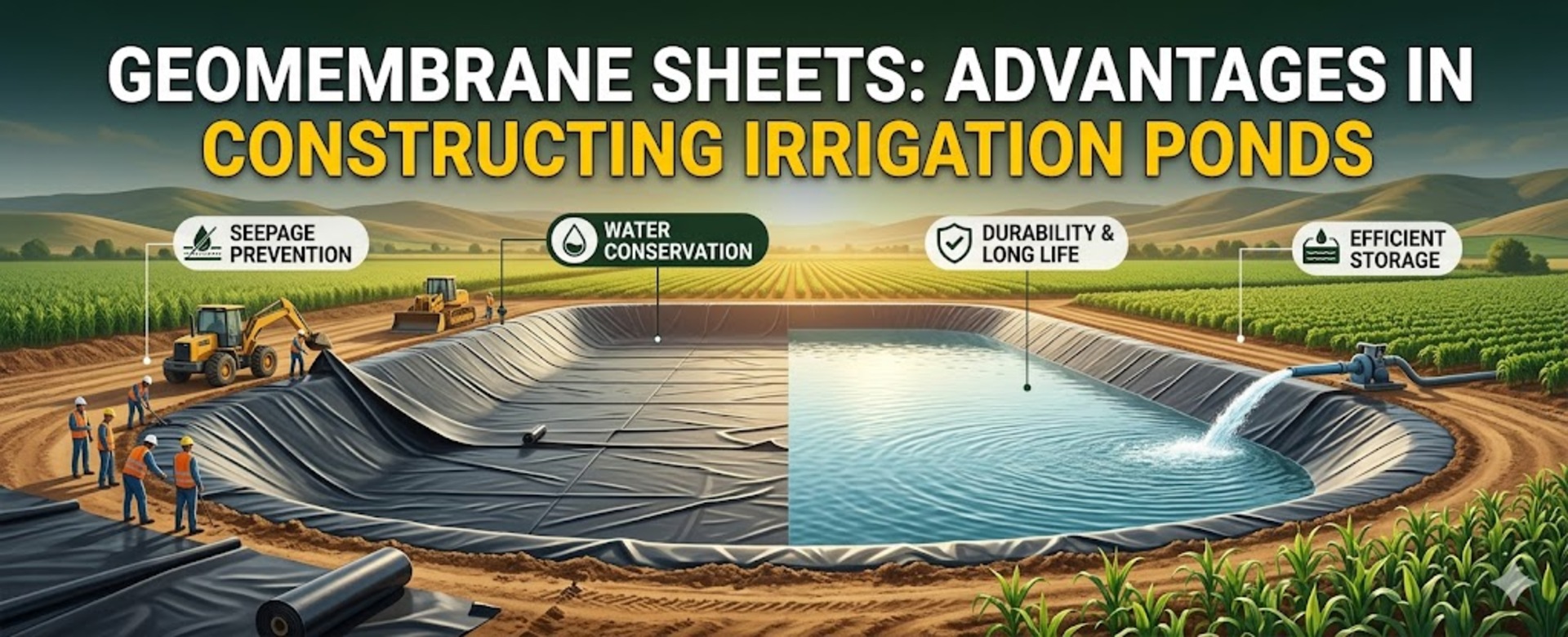

Irrigation is a critical component of modern agriculture, particularly in regions where water resources are scarce. Geomembrane sheets offer significant advantages when it comes to constructing irrigation ponds, providing a durable and cost-effective solution for water storage, distribution, and conservation. These applications are particularly important for agricultural projects that rely on efficient water management to maximize crop yields and minimize water wastage.
Key Advantages of Geomembranes in Irrigation Ponds:
- Water Conservation: One of the primary advantages of using geomembrane sheets in irrigation ponds is their ability to minimize water loss due to seepage. By creating an impermeable barrier, geomembranes prevent water from escaping into the surrounding soil, ensuring that stored water remains contained for irrigation purposes. This is especially crucial in regions with limited water availability, where every drop counts.
- Cost-Effective Solution: Building an irrigation pond with a geomembrane liner is often more cost-effective than other methods, such as compacted clay or concrete lining. Geomembranes are lightweight, easy to transport, and quick to install, reducing both labor and material costs. Additionally, the durability and low maintenance requirements of geomembranes contribute to long-term cost savings, as they reduce the need for repairs and replacements.
- Improved Water Quality: Geomembranes not only prevent water loss but also help maintain water quality by preventing contamination from surrounding soil, chemicals, or runoff. This is particularly important for irrigation ponds used to store water for agricultural purposes, where maintaining clean water is essential for crop health and soil fertility.
- Durability and Longevity: Geomembranes are designed to withstand harsh environmental conditions, including UV radiation, temperature fluctuations, and chemical exposure. In irrigation pond applications, geomembranes can last for decades, providing long-term protection against leaks and ensuring that the pond continues to function as intended.
- Flexibility and Adaptability: Geomembranes are available in a range of materials and thicknesses, allowing them to be customized to suit specific irrigation pond requirements. Whether the pond is large or small, geomembranes can be tailored to meet the size and environmental conditions of the project. Additionally, geomembranes are highly flexible and can conform to uneven surfaces, ensuring a perfect fit in irregularly shaped ponds.
- Sustainability: Using geomembranes in irrigation ponds contributes to sustainable water management practices by reducing water loss and improving efficiency. Geomembranes made from recyclable materials, such as HDPE, align with sustainable agricultural practices by promoting water conservation and reducing the environmental impact of irrigation systems.
By enhancing water retention, reducing costs, and improving water quality, geomembrane sheets play a vital role in constructing efficient and sustainable irrigation ponds that support agriculture in water-scarce regions.