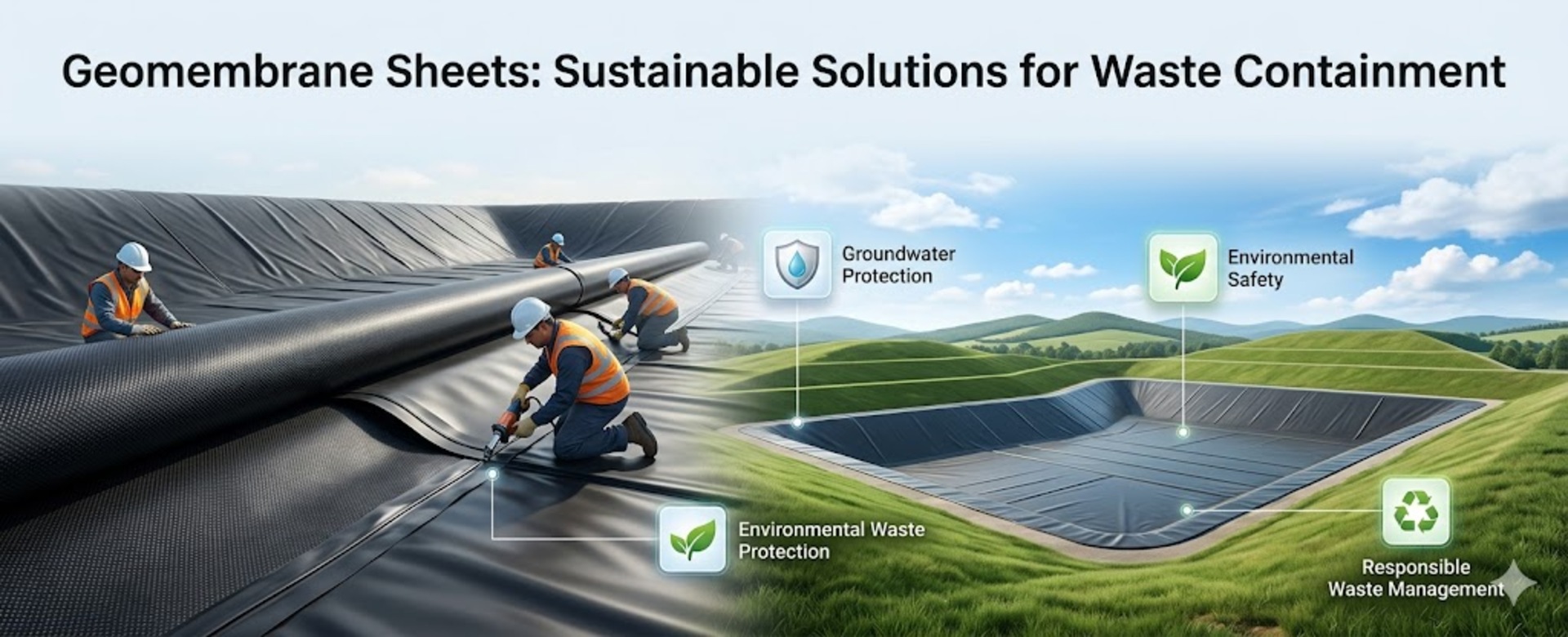

The growing global concern over waste management and environmental sustainability has highlighted the need for more effective and eco-friendly solutions in waste containment. Geomembrane sheets offer a sustainable approach to waste management by providing durable, impermeable barriers that prevent contamination and minimize environmental impact.
Benefits of Geomembranes in Waste Containment:
- Environmental Protection: Geomembrane sheets help contain hazardous and non-hazardous waste in landfills, mining tailing ponds, and waste storage facilities. By acting as a barrier to leachate, these geomembranes prevent harmful substances from seeping into the soil and groundwater. This helps protect surrounding ecosystems, reduce pollution, and ensure that waste does not negatively impact public health or the environment.
- Long-Term Durability: Geomembranes are designed to be highly durable, with materials like HDPE and PVC providing resistance to chemicals, UV radiation, and physical wear. This durability ensures that waste containment systems remain effective over the long term, providing a reliable solution for managing waste while reducing the need for costly repairs or replacements. The long lifespan of geomembranes makes them a sustainable option for waste containment projects.
- Resource Conservation: By preventing waste from contaminating the surrounding environment, geomembranes help preserve natural resources such as water and soil. These liners also help prevent the loss of valuable materials that could otherwise be wasted through seepage. For example, in mining operations, geomembranes help contain tailings and prevent the loss of valuable minerals, making the process more efficient and environmentally responsible.
- Waste-to-Energy and Recycling: In waste management systems, geomembranes are used in areas where waste-to-energy processes occur, such as landfill gas collection systems. These systems capture methane gas from landfills, which can be used to generate energy, reducing reliance on fossil fuels and minimizing greenhouse gas emissions. Geomembranes also help to contain recyclable materials and prevent contamination, making recycling programs more effective and sustainable.
- Cost-Effective and Low Maintenance: Geomembrane sheets are cost-effective solutions for waste containment, particularly in large-scale applications. Their low maintenance requirements reduce ongoing costs, making them an affordable long-term solution for managing waste. In addition, the use of geomembranes can help industries comply with environmental regulations, avoiding costly fines and penalties associated with contamination and pollution.
- Sustainable Materials: Many geomembranes are made from recyclable materials, such as HDPE, which can be reused at the end of their service life. This further enhances their sustainability by reducing the need for new raw materials and reducing waste in landfills.
By providing effective containment and reducing environmental impact, geomembrane sheets offer a sustainable and cost-effective solution for waste management, making them an essential tool for industries and municipalities committed to environmental protection.