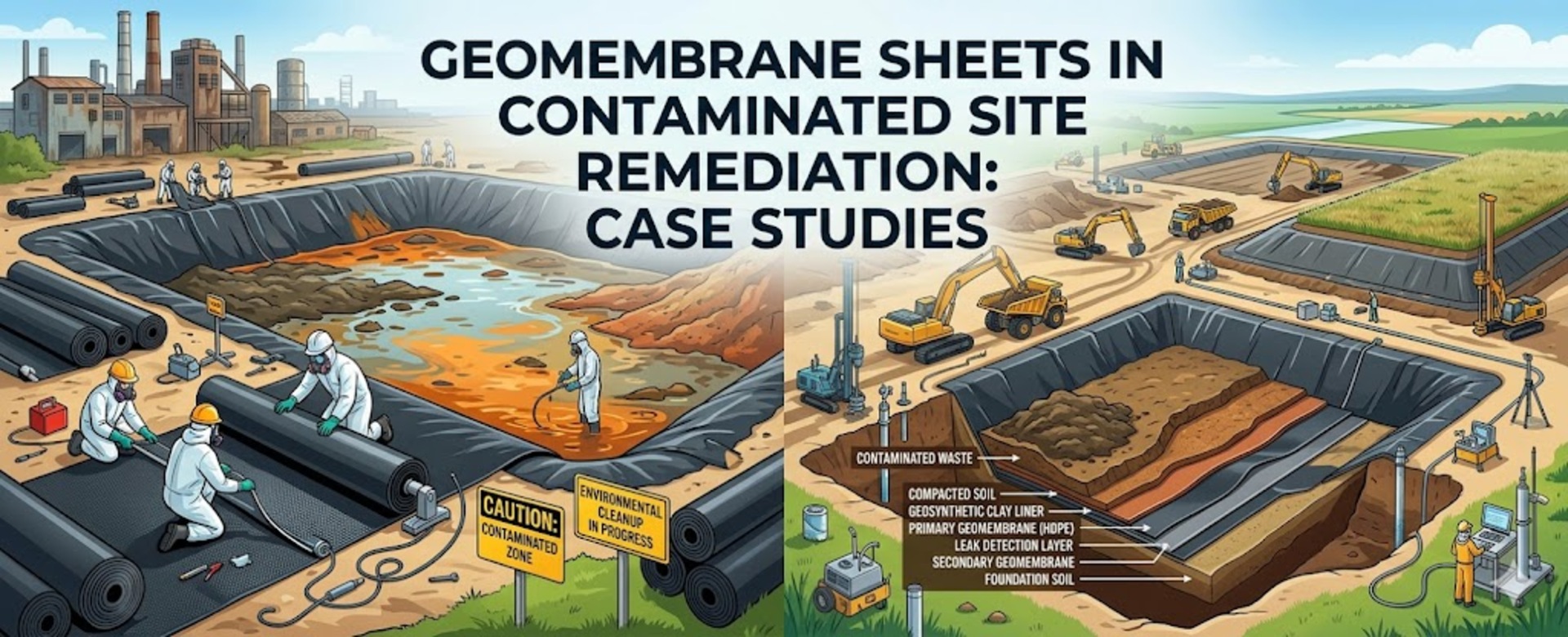

Geomembrane sheets are often employed in contaminated site remediation projects to contain hazardous materials, prevent contamination from spreading, and restore environmental balance. By providing a durable, impermeable barrier, geomembranes ensure that contaminants do not leach into surrounding ecosystems or water sources. Several case studies highlight the effective use of geomembranes in these projects.
Case Study 1: Landfill Remediation
In a large municipal landfill in a highly populated area, geomembranes were used to cap and seal the site to prevent the migration of landfill gas and leachate. The geomembrane liner was placed over the top of the landfill, covering the waste materials to prevent rainwater from infiltrating and causing contamination. The geomembrane also reduced the release of harmful gases into the atmosphere. The project successfully minimized the risk of groundwater contamination and reduced environmental and health risks to the surrounding community.
Case Study 2: Mining Site Remediation
In a mining operation, contaminated soils were treated using a combination of geomembranes and bioremediation techniques. The geomembrane was used to line contaminated ponds and tailing basins, preventing hazardous materials from leaching into nearby groundwater. The liner also helped to contain contaminated water, enabling it to be treated before release. This remediation project not only improved the quality of local water sources but also reduced the environmental impact of the mining activities.
Case Study 3: Brownfield Redevelopment
A brownfield site previously used for industrial purposes required extensive remediation to address contamination from heavy metals and chemicals. Geomembranes were used in the remediation process to contain the contaminants and prevent them from migrating into surrounding soil and water. In this case, the geomembrane was part of a broader strategy to clean up the site, including soil washing and chemical treatment. After the contaminants were contained, the site was redeveloped for commercial use, restoring the land for productive purposes.
These case studies demonstrate how geomembranes provide an effective solution for contaminated site remediation by preventing the spread of hazardous materials and enabling sustainable redevelopment.