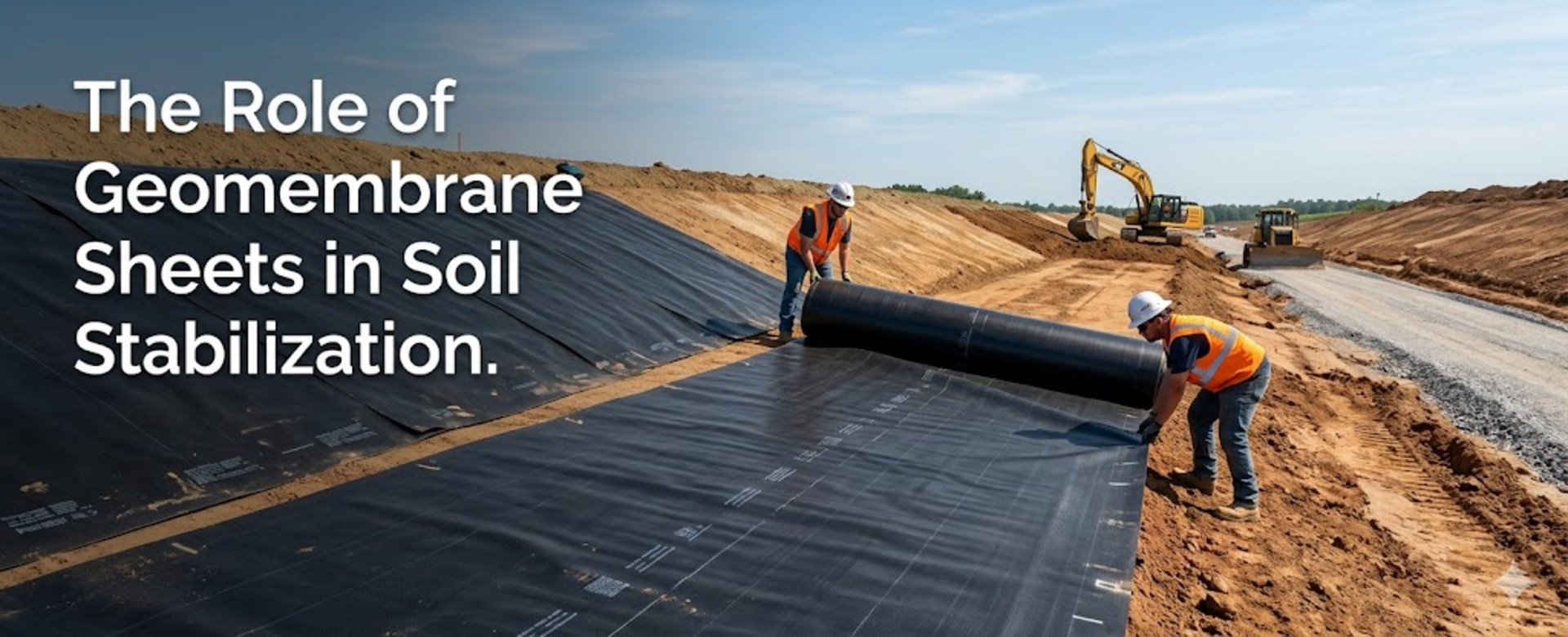

Geomembrane sheets are also effective tools for soil stabilization, providing support and preventing erosion in a variety of construction, agricultural, and environmental applications. Soil erosion caused by wind, water, and human activity can result in significant environmental damage, leading to habitat destruction, water quality degradation, and the loss of valuable farmland. By stabilizing the soil, geomembranes help maintain soil integrity and reduce the impact of erosion.
How Geomembranes Contribute to Soil Stabilization:
- Preventing Erosion in Construction Projects
During construction projects, the disturbance of soil can leave areas vulnerable to erosion by wind and rain. Geomembranes are often used to cover exposed soil, acting as a barrier to prevent water from washing away the soil surface. This is especially important in areas with steep slopes or where the soil is particularly prone to erosion. By preventing erosion, geomembranes protect the construction site and surrounding areas. - Stabilizing Agricultural Land
In agriculture, geomembranes help stabilize the soil by controlling water flow and preventing runoff, which can wash away topsoil and nutrients. When used in conjunction with proper irrigation systems or drainage, geomembranes help preserve the integrity of the land, ensuring that crops receive adequate water while reducing soil erosion. This contributes to increased agricultural productivity and long-term soil health. - Landfills and Waste Management
Landfills and waste disposal sites can be prone to soil degradation and erosion, particularly in areas with heavy rainfall or extreme weather conditions. Geomembranes are used to stabilize the soil on landfill covers, preventing erosion and maintaining the integrity of the waste containment system. This helps prevent contaminants from leaching into the surrounding environment and reduces the risk of groundwater contamination. - Slope Protection in Mining and Civil Engineering
Geomembranes are widely used in mining operations and civil engineering projects, where steep slopes are often involved. They provide a protective layer that prevents soil movement and helps stabilize the terrain. In mining, this application is particularly important for tailings ponds and mining dumps, where the risk of soil erosion is high. Geomembranes reduce the risk of landslides and soil loss, improving the safety and sustainability of these projects. - Coastal and Riverbank Protection
Geomembranes are also used to stabilize soils in coastal and riverbank areas, where erosion caused by waves, tides, and currents can threaten land integrity. By lining these areas with geomembranes, the soil is protected from the erosive forces of water, helping to preserve coastlines and prevent land loss. These applications are particularly important for preserving habitats and preventing the destruction of valuable coastal or riverbank ecosystems.
Geomembranes are a cost-effective and efficient solution for stabilizing soils, protecting land from erosion, and maintaining the integrity of the ecosystem. Their versatility makes them a valuable tool in a wide range of applications, from construction sites to agricultural fields.