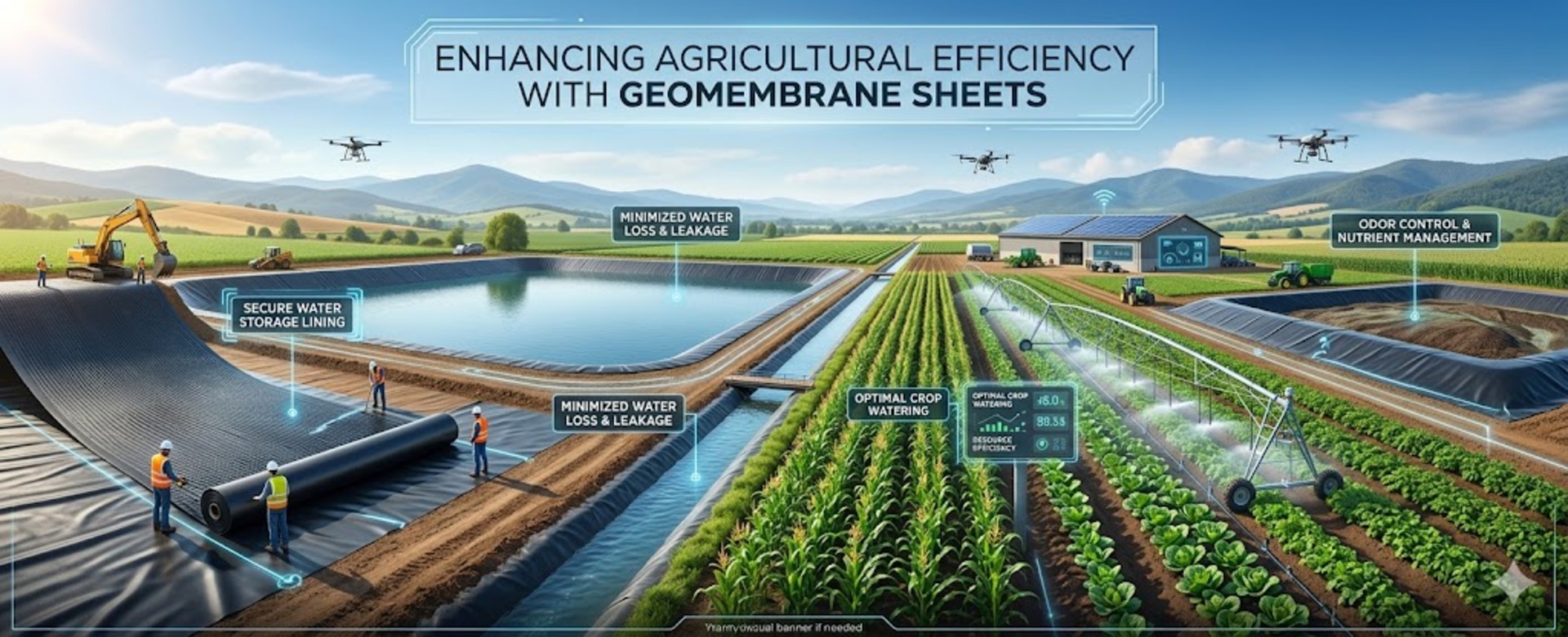

Agriculture, the backbone of many economies, requires innovative solutions to ensure sustainability and efficiency. Geomembrane sheets have emerged as a transformative tool in modern agriculture, addressing key challenges such as water conservation, soil erosion, and crop protection. These impermeable sheets, crafted from materials like HDPE, LDPE, and PVC, offer unmatched durability and versatility, making them a preferred choice for farmers worldwide.
Water Conservation
In water-scarce regions, geomembrane sheets play a pivotal role in water storage and management. They are extensively used in constructing farm ponds, irrigation canals, and reservoirs. By preventing water seepage, these sheets ensure optimal water utilization, helping farmers maintain consistent irrigation schedules. This not only boosts crop yield but also reduces dependence on erratic rainfall.
Soil Protection
Geomembrane sheets act as a barrier, preventing the leaching of essential nutrients from the soil. They also protect agricultural land from contamination caused by industrial effluents or saline water intrusion. With better soil quality, farmers can achieve healthier and more abundant crops.
Cost-Effective Solution
Though an initial investment, geomembrane sheets prove cost-effective in the long run. Their durability reduces the need for frequent replacements, and their efficiency in water management leads to significant savings on irrigation expenses.
Eco-Friendly Farming
By reducing water wastage and protecting the soil, geomembrane sheets promote eco-friendly farming practices. They align with sustainable agriculture goals, ensuring that farming remains viable for future generations.
From small-scale farms to large agricultural enterprises, geomembrane sheets are revolutionizing the way we cultivate and manage resources. Their role in enhancing agricultural efficiency cannot be overstated, making them an indispensable asset in modern farming.
Geomembrane Sheets in Infrastructure Development: Challenges and Opportunities
Infrastructure development is the cornerstone of economic growth, and geomembrane sheets have become integral to this sector. These versatile materials are widely used in construction projects for their strength, durability, and resistance to environmental factors. However, their application comes with unique challenges and opportunities.
Applications in Infrastructure
- Waste Management Systems: Geomembrane sheets are crucial in the construction of landfills, acting as liners to prevent leachate from contaminating groundwater.
- Waterproofing: In building foundations, tunnels, and bridges, these sheets provide effective waterproofing, extending the lifespan of structures.
- Road Construction: They are used to stabilize soil, prevent erosion, and enhance road durability.
Challenges
- High Initial Costs: The installation of geomembrane sheets requires skilled labor and advanced equipment, leading to higher upfront expenses.
- Material Selection: Choosing the right material based on project-specific requirements can be complex.
- Environmental Concerns: Disposal of geomembrane sheets after their lifecycle raises questions about environmental impact.
Opportunities
- Technological Advancements: Innovations in material science are leading to the development of more sustainable and cost-effective geomembrane solutions.
- Government Initiatives: Infrastructure projects supported by government funding are creating a growing demand for geomembrane sheets.
- Increased Awareness: The rising emphasis on sustainable construction practices is driving the adoption of geomembrane sheets.
Despite the challenges, the future of geomembrane sheets in infrastructure development looks promising. By addressing these hurdles, the industry can unlock new opportunities for growth and innovation.