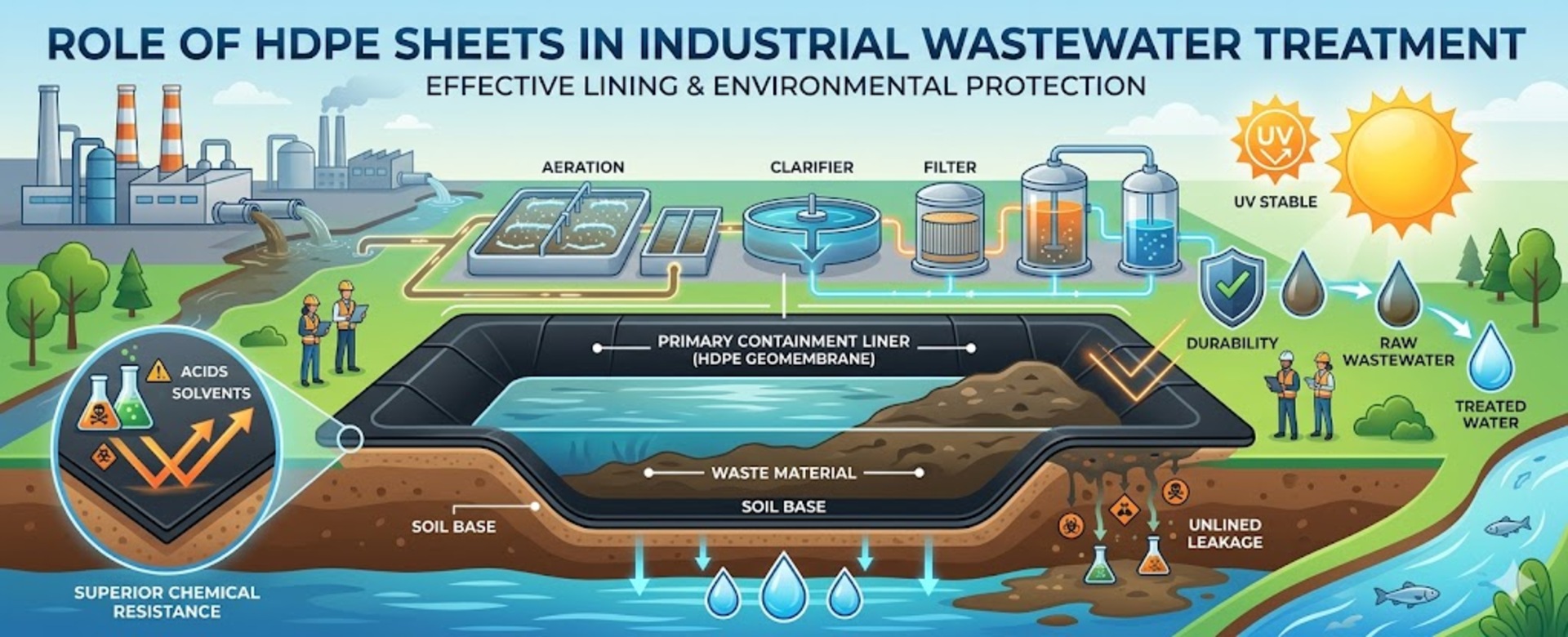

Industrial wastewater treatment is an essential process for maintaining environmental health and complying with regulatory standards. HDPE sheets play a vital role in many aspects of industrial wastewater treatment, from containment and storage to filtration and separation. Due to their durability, chemical resistance, and impermeability, HDPE geomembranes are commonly used in the construction of treatment facilities.
Key Applications of HDPE Sheets in Industrial Wastewater Treatment:
- Lining of Treatment Ponds and Lagoons: HDPE geomembranes are used to line wastewater treatment ponds and lagoons, ensuring that treated or untreated water does not seep into the surrounding soil. The impermeable nature of HDPE prevents contamination of groundwater and surrounding ecosystems, making it an essential material for wastewater containment in industries such as petrochemicals, food processing, and mining.
- Leachate Collection Systems: In industries that generate wastewater containing harmful chemicals, HDPE sheets are used in the construction of leachate collection systems. These systems collect and safely contain any liquid waste that may escape during the treatment process. HDPE’s chemical resistance ensures that it remains effective in handling aggressive substances and maintaining the safety of surrounding areas.
- Secondary Containment Systems: For industries dealing with hazardous chemicals or wastewater that may contain toxic substances, HDPE sheets are often used to create secondary containment systems. These systems prevent spills and leaks from reaching the surrounding environment, ensuring that any accidental release of wastewater is safely contained and does not lead to contamination.
- Chemical Resistance in Treatment Facilities: Many industrial wastewater treatment processes involve the use of harsh chemicals, such as acids or solvents. HDPE is highly resistant to a wide range of chemicals, making it an ideal material for lining tanks, channels, and pipes in treatment facilities. This ensures that the wastewater is processed without the risk of chemical degradation or leakage from the containment system.
- Efficient Filtration and Separation: HDPE geomembranes can also be used as part of filtration or separation systems in wastewater treatment plants. These sheets can help filter out solids and particulate matter, improving the overall efficiency of the treatment process and ensuring that only clean water is released into the environment.
By providing reliable containment, resistance to chemicals, and long-lasting performance, HDPE sheets are crucial in ensuring the safe and effective treatment of industrial wastewater. Their use helps industries meet environmental standards while minimizing their impact on surrounding ecosystems.