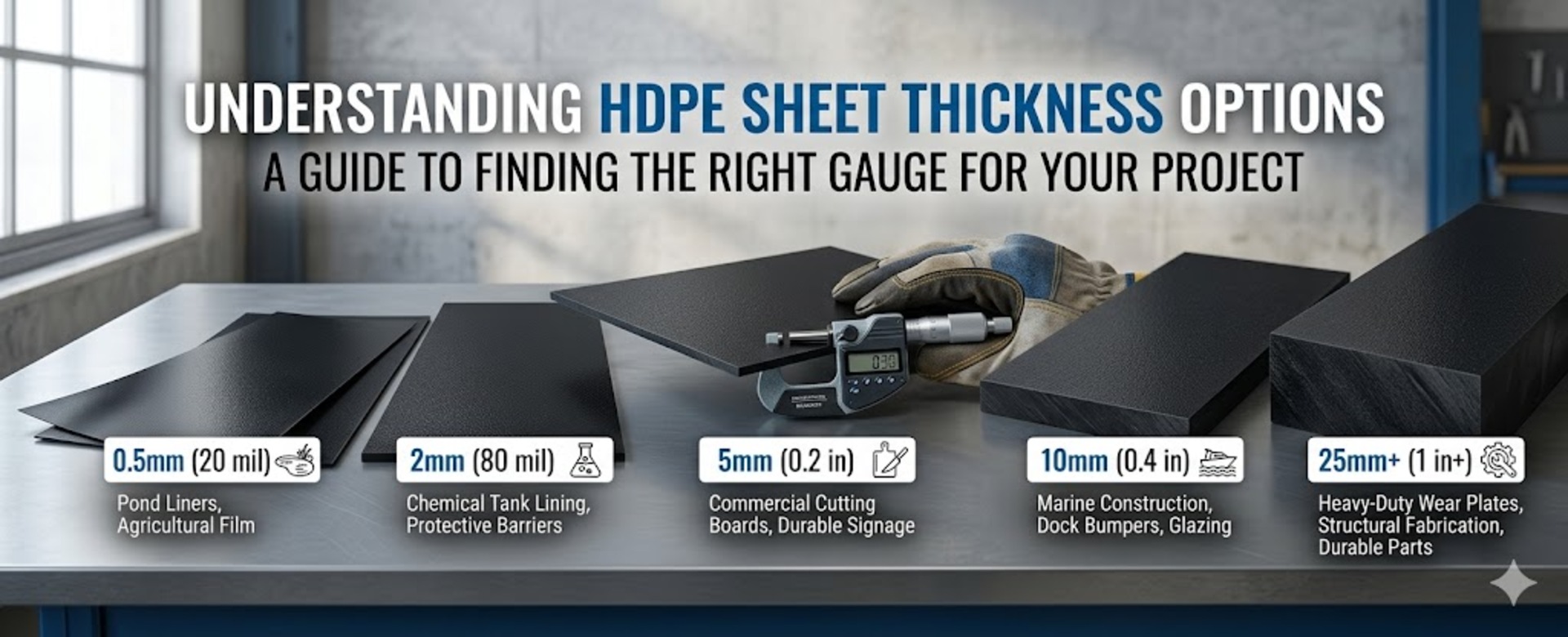

High-Density Polyethylene (HDPE) sheets are available in various thicknesses, each designed to meet the specific needs of a wide range of applications. The choice of thickness plays a crucial role in the sheet’s durability, flexibility, and performance. Understanding the different thickness options and their applications is essential to selecting the right HDPE sheet for your project.
Common Thickness Options for HDPE Sheets:
- Thin Sheets (0.5 mm to 1 mm):
- Applications:
Thin HDPE sheets are commonly used for applications where flexibility is required, such as pond liners, irrigation channels, and temporary covers. These sheets are lightweight, easy to handle, and cost-effective for projects that do not require heavy-duty containment. - Advantages:
- Lightweight and easy to install.
- Suitable for small-scale projects or temporary solutions.
- Limitations:
- Less resistant to punctures and abrasion.
- May not be suitable for high-stress or long-term applications.
- Medium Thickness Sheets (1.5 mm to 3 mm):
- Applications:
These sheets are widely used in applications such as landfill liners, wastewater treatment facilities, and secondary containment systems. The additional thickness provides enhanced durability and resistance to mechanical stress. - Advantages:
- Greater puncture resistance than thinner sheets.
- Suitable for moderate to heavy-duty applications.
- Limitations:
- Slightly less flexible than thinner sheets, requiring careful handling during installation.
- Thick Sheets (3.5 mm to 5 mm and above):
- Applications:
Thick HDPE sheets are ideal for high-stress environments such as mining operations, chemical containment, and industrial wastewater treatment. These sheets offer maximum durability and resistance to extreme conditions. - Advantages:
- Superior strength and long-term performance.
- Highly resistant to punctures, chemical exposure, and UV radiation.
- Limitations:
- Heavier and more challenging to install.
- Higher initial cost compared to thinner sheets.
Factors to Consider When Choosing Thickness:
- Application Requirements: The specific use case, such as chemical containment or erosion control, determines the required thickness.
- Environmental Conditions: Consider factors like temperature fluctuations, UV exposure, and mechanical stress when selecting the thickness.
- Budget Constraints: While thicker sheets offer more durability, they also come at a higher cost. Evaluate the project’s budget and long-term requirements.
By understanding the various thickness options, you can choose the HDPE sheet that balances durability, flexibility, and cost-effectiveness for your specific application.