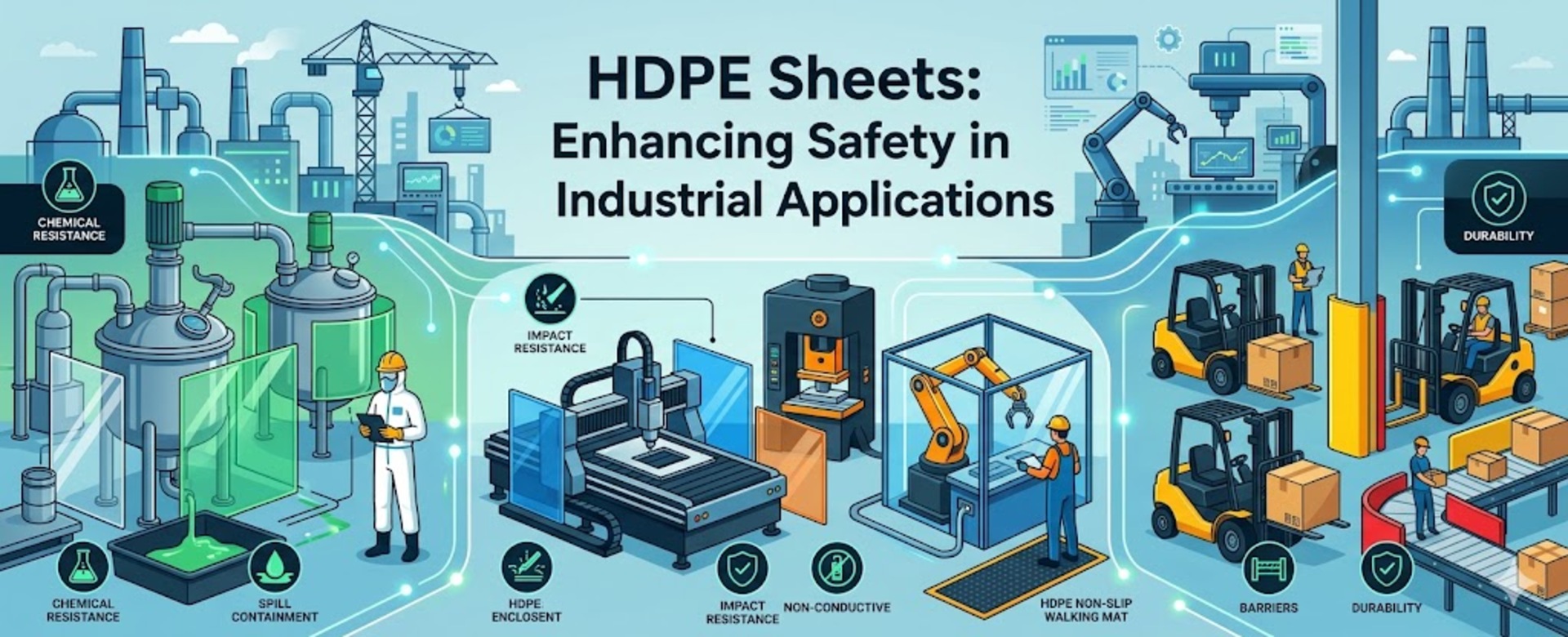

Safety is a top priority in industrial operations, particularly in sectors that handle hazardous materials, high-pressure systems, or chemical processes. HDPE sheets enhance safety by providing reliable containment, resistance to harsh conditions, and durability in critical applications.
How HDPE Sheets Enhance Industrial Safety:
- Chemical Containment:
- HDPE sheets are highly resistant to a wide range of chemicals, including acids, alkalis, and hydrocarbons. This makes them ideal for lining storage tanks, containment pits, and secondary containment systems, ensuring that hazardous substances remain safely contained.
- Applications: Oil refineries, chemical plants, and industrial wastewater facilities.
- Leak Prevention:
- The impermeable nature of HDPE sheets prevents leaks in systems that store or transport hazardous liquids. Proper installation and seam welding ensure that the sheets form a continuous, leak-proof barrier.
- Applications: Landfills, hazardous waste storage, and secondary spill containment.
- Fire Resistance:
- Certain HDPE formulations include fire-resistant additives, making them suitable for use in environments where flammability is a concern.
- Applications: Industrial zones with exposure to high heat or flammable chemicals.
- Workplace Safety:
- By providing reliable containment, HDPE sheets help minimize risks to workers, such as exposure to toxic chemicals or dangerous leaks. In water and waste systems, they also prevent contamination, safeguarding the health of employees and surrounding communities.
- Environmental Protection:
- HDPE sheets play a critical role in preventing contamination of soil and water, reducing the risk of regulatory violations and fines.
- Applications: Industrial wastewater treatment, mining operations, and stormwater management.
By offering durability, chemical resistance, and flexibility, HDPE sheets contribute significantly to creating safer industrial environments.