
Proper installation and seaming are critical to ensuring the long-term performance and durability of HDPE geomembranes. Whether used for landfills, water containment systems, or industrial applications, HDPE sheets must be installed correctly to avoid issues such as leaks, punctures, and seam failures. Below are best practices for the installation and seaming of HDPE sheets to ensure maximum effectiveness.
Best Practices for HDPE Sheet Installation:
- Site Preparation: Before installing HDPE geomembranes, the site must be thoroughly prepared. This includes removing any sharp objects, debris, or rocks that could puncture or damage the material. The surface should be smooth and free from irregularities that could affect the geomembrane’s performance. In some cases, a cushioning layer of sand or geotextile fabric is used to protect the geomembrane from mechanical stress or punctures.
- Material Storage: HDPE geomembranes should be stored in a shaded area, protected from UV exposure, and kept off the ground to prevent dirt or moisture contamination. Prolonged exposure to direct sunlight can degrade the material, reducing its strength and flexibility. HDPE sheets should be stored in rolls and unrolled carefully to avoid creasing or damaging the material.
- Proper Handling: Handling HDPE geomembranes requires care to prevent damage. Sheets should be unrolled slowly and evenly, avoiding any sharp bends or kinks. The geomembrane should not be dragged over rough surfaces, as this can cause abrasions and weaken the material. It is important to ensure that the geomembrane is laid out smoothly to ensure proper sealing during installation.
- Temperature Considerations: HDPE sheets are best installed in temperatures within the recommended range set by the manufacturer. Extreme cold or hot temperatures can affect the material’s flexibility and welding performance. In cold weather, the geomembrane may become brittle, while in hot weather, it may become more prone to stretching. If necessary, heating equipment can be used to warm the material before installation.
Best Practices for Seaming HDPE Sheets:
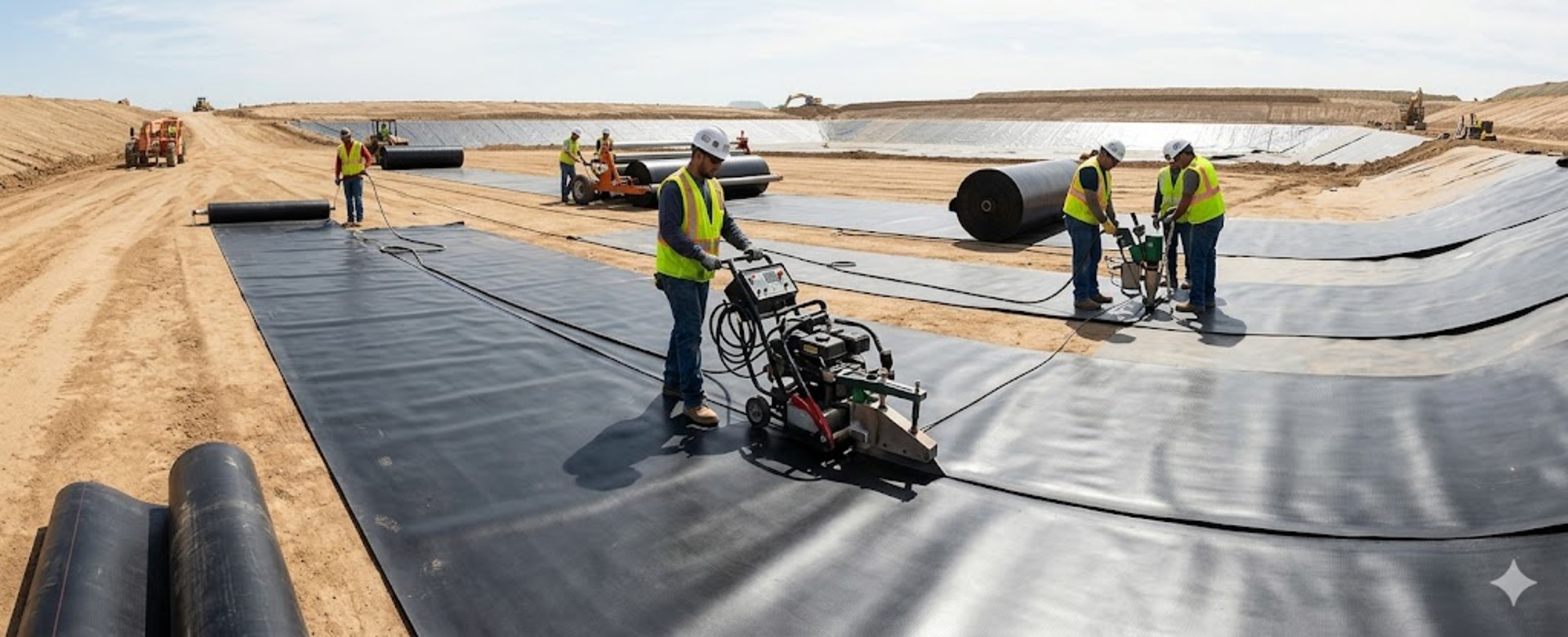
- Seam Welding: The most common method for joining HDPE sheets is heat fusion welding, which involves melting the edges of the sheets and then pressing them together to create a strong, leak-proof seam. For high-quality seams, ensure that the welding equipment is calibrated correctly, and that the temperature and pressure are optimized to form a solid bond.
- Quality Control and Testing: Seams should be tested for quality to ensure that they are free of defects and leaks. Common testing methods include vacuum box testing, spark testing, and electrical leak location (ELL) testing. These methods help identify weak points in the seams that may not be immediately visible and allow for corrective action before installation is complete.
- Overlap and Alignment: When joining two HDPE sheets, the edges should overlap slightly to ensure that the seams are aligned correctly. Proper alignment is critical to prevent gaps or misalignments that could compromise the integrity of the geomembrane. The overlap should be consistent to ensure that the heat fusion welding process creates a continuous, uniform bond along the seam.
- Seam Protection: After welding, the seams should be inspected and protected from environmental damage. In some cases, additional protective covers, such as sandbags or geotextile fabric, are placed over seams to prevent UV exposure or physical damage. This protection helps extend the lifespan of the seams and ensures that the geomembrane remains intact.
By following these best practices for installation and seaming, HDPE geomembranes can provide reliable, long-lasting performance in various applications, minimizing the risk of leaks, damage, and environmental contamination.