
Contaminated site remediation is a critical process for restoring polluted land to safe and usable conditions. High-Density Polyethylene (HDPE) sheets are a preferred material in many remediation projects due to their ability to contain hazardous substances and prevent further environmental damage.
Advantages of HDPE Sheets in Site Remediation:
- Effective Containment of Contaminants:
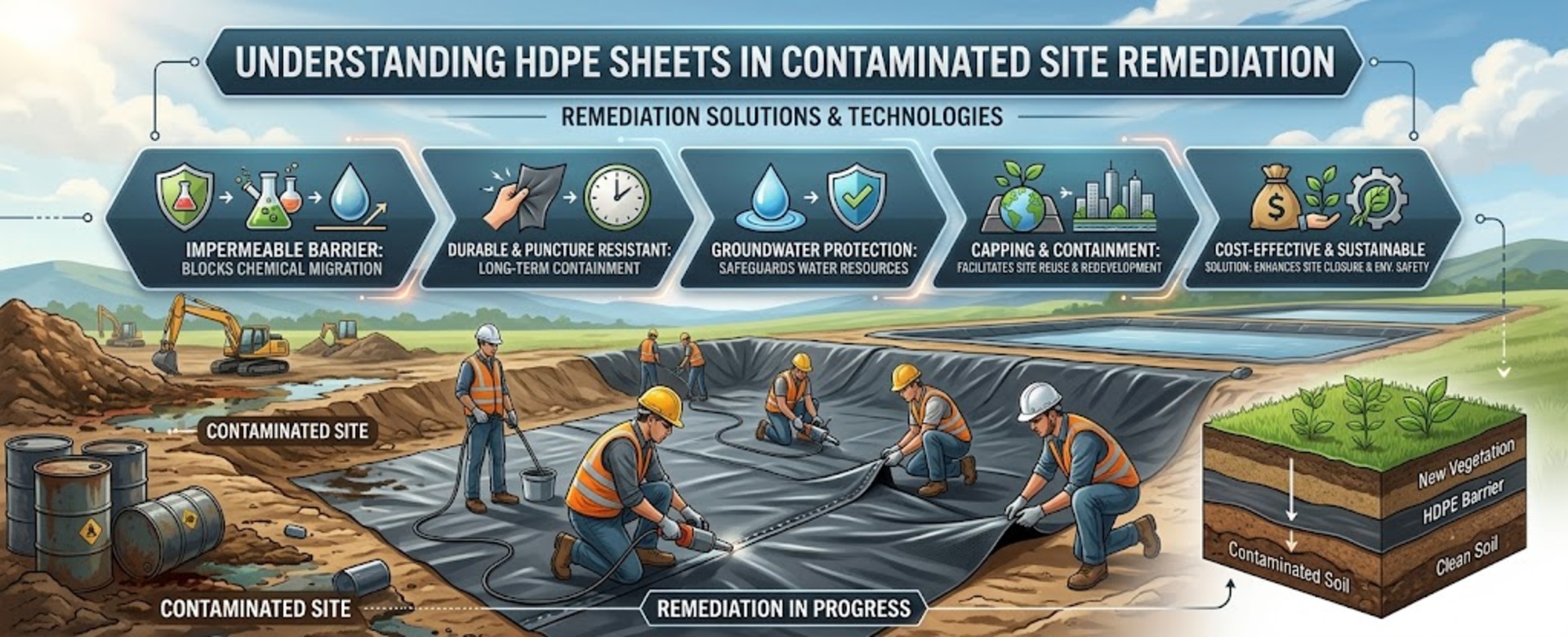
- HDPE sheets create an impermeable barrier that prevents the migration of contaminants into surrounding soil and groundwater. This is especially important in sites contaminated with hazardous chemicals, heavy metals, or hydrocarbons.
- Chemical Resistance:
- HDPE is highly resistant to a wide range of chemicals, including acids, alkalis, and solvents. This ensures that the geomembrane remains intact even in harsh environments, providing long-term protection during remediation efforts.
- Durability in Harsh Conditions:
- Contaminated sites often involve challenging conditions such as exposure to UV radiation, temperature fluctuations, or mechanical stress. HDPE sheets are designed to withstand these conditions, ensuring reliable performance throughout the remediation process.
- Flexibility for Custom Applications:
- HDPE sheets can be customized to fit the specific requirements of a remediation project. Whether used as liners for containment cells, capping systems for landfills, or barriers to isolate contaminants, HDPE sheets offer versatility for a wide range of applications.
- Cost-Effective Solution:
- The long lifespan and low maintenance requirements of HDPE sheets make them a cost-effective choice for contaminated site remediation. Their durability minimizes the need for replacement or repairs, reducing overall project costs.
- Ease of Installation:
- HDPE geomembranes are lightweight and easy to handle, allowing for quick and efficient installation. This helps expedite remediation projects, reducing downtime and associated costs.
- Support for Sustainable Redevelopment:
- By effectively containing and isolating contaminants, HDPE sheets enable the safe redevelopment of previously polluted sites. This supports sustainable land use and economic revitalization in areas affected by contamination.
Applications in Site Remediation:
- Landfill Caps and Covers: Used to seal off contaminated waste and prevent the release of harmful gases or leachate.
- Groundwater Protection: Lining systems prevent contaminated water from spreading to surrounding areas.
- Soil Isolation: Barriers are used to separate clean soil from polluted layers, preventing cross-contamination.
With their durability, chemical resistance, and versatility, HDPE sheets are an indispensable tool in contaminated site remediation, enabling safe, efficient, and sustainable restoration efforts.