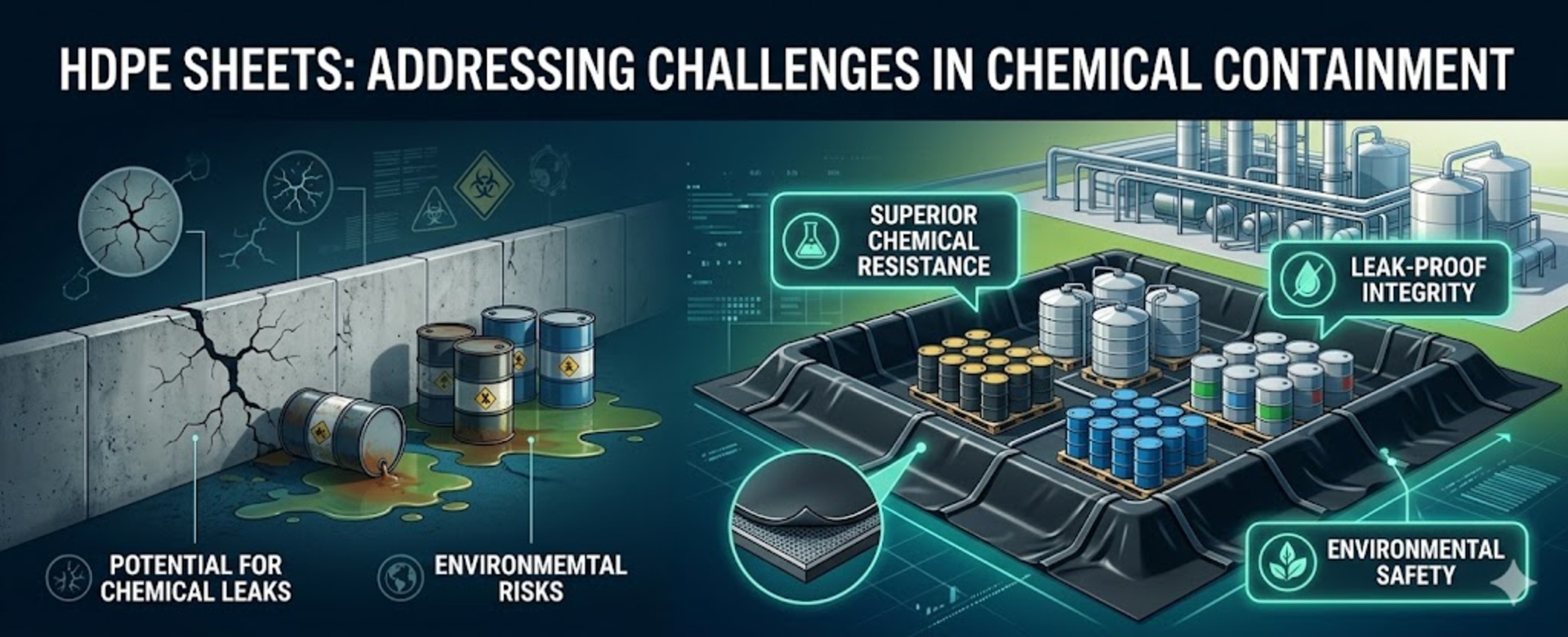

Chemical containment is a critical concern in various industries, including manufacturing, mining, and waste management. HDPE sheets offer a reliable solution for containing chemicals safely, preventing contamination, and protecting the environment from hazardous substances. However, like any material, HDPE geomembranes face challenges that must be addressed to ensure their effectiveness in chemical containment applications.
Challenges in Chemical Containment with HDPE Sheets:
- Compatibility with Aggressive Chemicals: While HDPE is highly resistant to many chemicals, it may not be suitable for applications involving extremely aggressive or highly reactive chemicals, such as certain strong acids, alkalis, or organic solvents. In such cases, selecting a more chemically resistant material like PVC or EPDM may be necessary to ensure the integrity of the containment system.
- Temperature Variations and Chemical Reactions: Changes in temperature can affect the performance of HDPE geomembranes. High temperatures may cause the material to soften, potentially leading to deformation or leakage, while low temperatures may make it more brittle and prone to cracking. For chemical containment applications that involve temperature fluctuations, it’s important to choose HDPE sheets that are specifically formulated to withstand the operating temperature range.
- Mechanical Stress and Abrasion: In chemical containment systems that involve constant movement or mechanical stress, HDPE sheets may experience wear and tear, particularly in areas with heavy equipment or abrasive chemicals. While HDPE is generally resistant to mechanical stress, reinforcing it with additional layers or combining it with geotextiles can help improve its durability in high-stress environments.
- Seam Integrity and Welding: One of the most critical aspects of chemical containment is the integrity of the seams. Any weakness or failure at the seams can lead to leakage of hazardous chemicals. HDPE geomembranes must be carefully welded using high-quality welding techniques, such as heat fusion or extrusion welding, to ensure strong, durable seams. Regular inspection and testing of seams are crucial for identifying potential issues before they lead to failures.
- Environmental Impact of Containment Failure: Even with the best materials, containment failures can still occur if installation, maintenance, or monitoring is not properly carried out. The environmental consequences of a chemical spill can be severe, ranging from groundwater contamination to harm to local wildlife and ecosystems. Comprehensive monitoring systems and leak detection technologies should be incorporated into chemical containment systems to detect issues early and prevent widespread damage.
Solutions and Mitigating Strategies:
- Material Selection for Compatibility: When selecting HDPE for chemical containment, it is essential to choose the right grade and formulation that can withstand the specific chemicals involved. Consulting chemical resistance charts and working with manufacturers to select the most appropriate product is key to ensuring a successful installation.
- Reinforced Geomembranes: In applications where mechanical stress or temperature fluctuations are a concern, reinforced HDPE geomembranes can be used to provide additional strength and flexibility. These reinforced geomembranes combine HDPE with other materials, such as geogrids or geotextiles, to improve their overall performance.
- Seam Quality Assurance: Ensuring proper welding techniques and using advanced seam testing methods, such as electrical leak location or vacuum box testing, can help prevent seam failures. Regular maintenance and inspections are also essential to detecting any early signs of damage before they escalate.
- Leak Detection Systems: Integrating leak detection systems, such as pressure monitoring or electrical leak location methods, helps identify small leaks or weaknesses in the system. Early detection allows for prompt repairs, preventing significant environmental damage.
By addressing these challenges through careful design, material selection, and quality control, HDPE sheets provide an effective solution for chemical containment, ensuring that hazardous materials are safely managed and environmental risks are minimized.