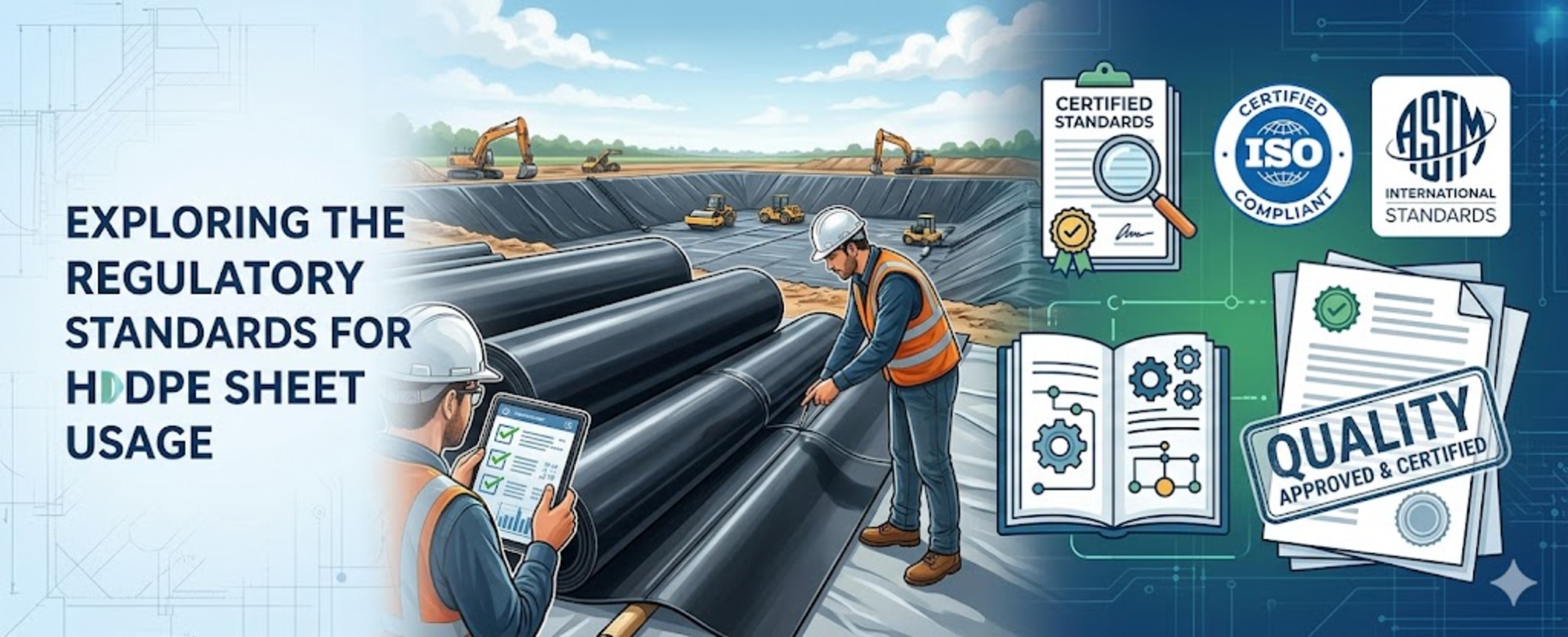

The use of HDPE geomembranes is governed by a set of regulatory standards designed to ensure their safety, effectiveness, and environmental compliance. These standards cover various aspects of HDPE sheet production, installation, and use in applications such as landfills, wastewater treatment, and chemical containment.
Key Regulatory Standards for HDPE Sheet Usage:
- ASTM Standards: The American Society for Testing and Materials (ASTM) provides several standards for HDPE geomembranes, including ASTM D7176 (Standard Guide for Selection of Geomembranes for Hazardous Waste Containment) and ASTM D6392 (Standard Test Method for Determining the Integrity of Field Seams of Geomembranes). These standards outline the performance characteristics of HDPE geomembranes, including their strength, resistance to chemicals, and permeability, ensuring that the materials meet industry requirements.
- ISO Standards: International Organization for Standardization (ISO) provides global standards for geomembrane products. ISO 9001 sets guidelines for quality management, while ISO 13434 focuses on the specification and testing of geomembranes. These standards help ensure that HDPE geomembranes are produced consistently, with rigorous quality control throughout the manufacturing process.
- EPA Regulations: In the United States, the Environmental Protection Agency (EPA) has regulations governing the use of geomembranes in landfills and waste containment systems. For example, the EPA’s Subtitle D regulations for municipal solid waste landfills require the use of geomembrane liners to prevent leachate and gas migration. These regulations ensure that HDPE geomembranes meet the necessary environmental protection standards.
- EU Standards and Regulations: In the European Union, HDPE geomembranes must comply with CE marking requirements, which indicate that the product meets the essential health and safety standards for European markets. These regulations cover aspects such as material properties, installation practices, and environmental performance.
- Local and Regional Regulations: In addition to international and national standards, local or regional regulations may govern the use of HDPE geomembranes. For example, in some jurisdictions, additional environmental or safety standards may apply to specific applications, such as the containment of hazardous materials or the construction of water reservoirs.
By adhering to these regulatory standards, manufacturers, contractors, and engineers can ensure that HDPE geomembranes are used effectively and safely, protecting the environment and public health while meeting industry-specific requirements.