
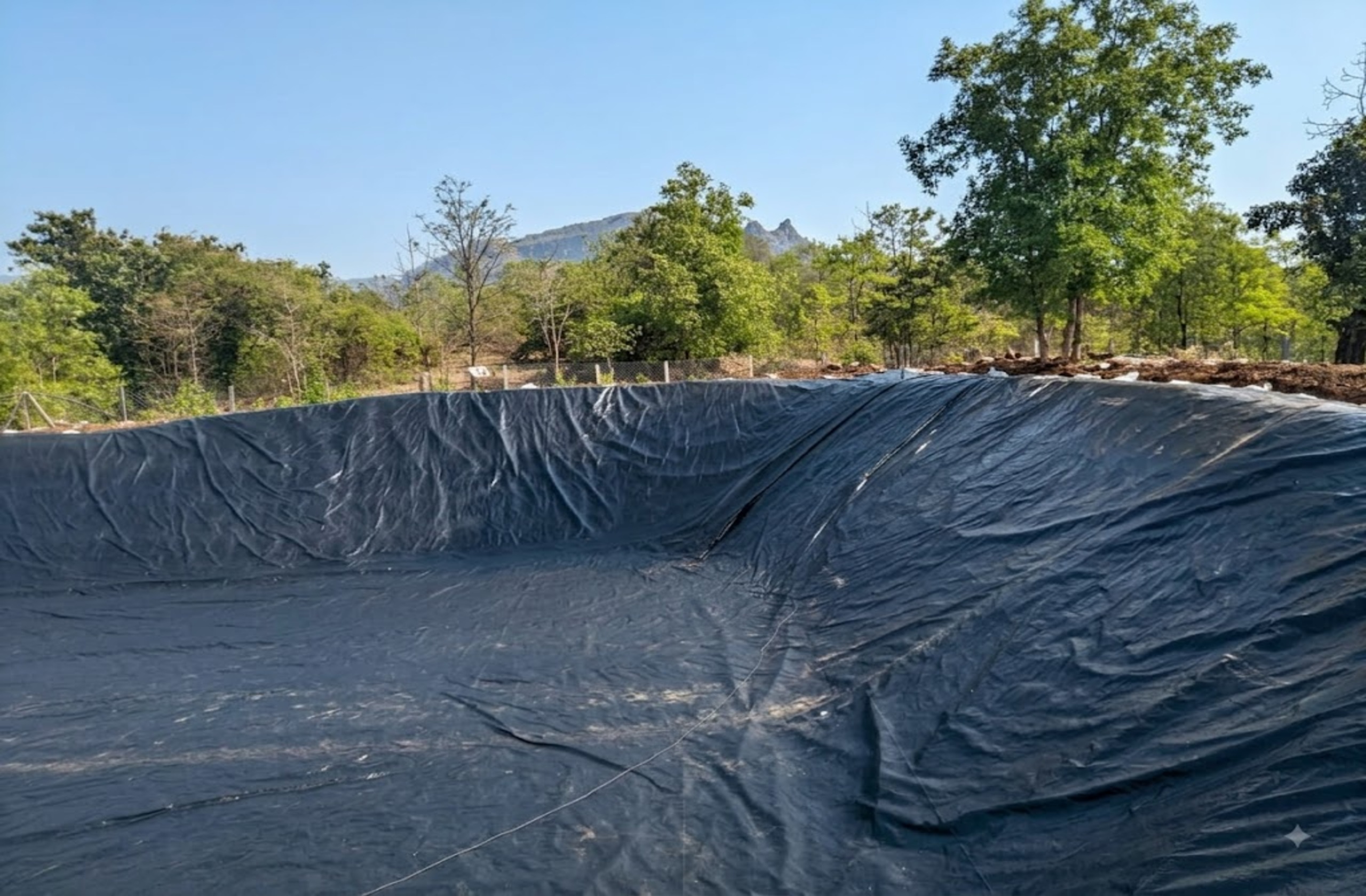
Geomembrane Applications for Water Management, Agriculture and Industry
Every lining project has different requirements. A farm pond must retain water, an industrial containment area may need chemical compatibility, and an engineered waste facility may require a carefully designed barrier system. Selecting a suitable geomembrane starts with understanding the site, the material being contained and the purpose of the installation.
Heramb Geomembrane supplies geomembrane and plastic sheet products for a range of project requirements. We help customers identify relevant product options based on their intended use, required dimensions and project specifications.
Whether you are planning a water storage structure, an agricultural pond or an industrial lining project, share your application details with our team to discuss suitable options.
Geomembrane Solutions by Industry
1. Agricultural Water Storage
Water availability can influence farm productivity, particularly in areas where rainfall is seasonal. A properly designed and lined storage pond can help reduce seepage through the pond base and sides when the selected liner is suitable for the site.
Geomembrane liners may be considered for:
- Farm ponds and irrigation reservoirs
- Rainwater harvesting structures
- Water storage ponds
- Agricultural water conservation projects
- Lined storage areas for farming operations
Project consideration: Soil conditions, water depth, embankment design and installation quality should be evaluated before choosing the liner.
2. Aquaculture and Fish Farming
Aquaculture facilities need pond systems that support the intended water-management practices. A suitable liner can help create a controlled containment surface when used with appropriate pond design and preparation.
Potential applications include:
- Fish farming ponds
- Shrimp cultivation ponds
- Aquaculture water storage
- Nursery and grow-out pond systems
- Lined ponds for controlled water management
Project consideration: Confirm that the selected material is appropriate for the intended aquatic environment and any applicable operational requirements.
3. Reservoirs, Canals and Water Infrastructure
Water infrastructure projects may use geomembranes as part of a designed barrier system to limit seepage and manage water retention.
Potential uses include:
- Water storage reservoirs
- Irrigation canals
- Water distribution structures
- Lined balancing ponds
- Water management facilities
The required liner specification depends on the structure’s geometry, hydraulic conditions, subgrade preparation and installation method.
4. Mining and Mineral Processing
Mining operations may require engineered lining systems for designated water and material containment areas. Geomembranes can form one component of a containment design where the selected polymer is compatible with the process conditions.
Potential applications include:
- Process-water storage ponds
- Mining-related containment areas
- Tailings facilities where specified by the project design
- Industrial water collection areas
- Secondary containment systems
Project consideration: Chemical compatibility, loading, slope stability, subgrade preparation and applicable regulatory requirements must be reviewed by the project’s engineering team.
5. Waste Management and Environmental Protection
Waste-management infrastructure often requires barriers to help control the movement of liquids through the underlying soil. Geomembranes may be incorporated into engineered systems for this purpose.
Potential applications include:
- Landfill lining systems
- Leachate collection and containment areas
- Wastewater storage ponds
- Containment structures for designated waste streams
- Environmental protection projects
The liner alone does not replace the need for appropriate drainage, collection systems, protection layers, installation controls or environmental approvals.
6. Industrial Water and Wastewater Facilities
Industrial sites may need lined structures for water storage, process water and wastewater management. Material selection should reflect the composition and temperature of the liquid, exposure conditions and expected operating requirements.
Potential applications include:
- Effluent treatment plant (ETP) ponds
- Sewage treatment plant (STP) facilities
- Industrial water storage
- Process-water containment
- Wastewater holding ponds
Before ordering, provide the intended liquid, operating conditions and applicable project specification so that material suitability can be reviewed.
7. Construction and Civil Engineering
Geomembranes may be specified in selected civil engineering projects where a low-permeability barrier is needed as part of the overall design.
Examples include:
- Engineered containment structures
- Selected foundation protection systems
- Water-retention structures
- Lined channels and ponds
- Project-specific barrier applications
The appropriate product and installation method must be established by the project designer.
How to Identify the Right Geomembrane for Your Application
The same product should not automatically be specified for every project. Before selecting a liner, consider the following factors.
Intended use: Identify whether the project involves clean water, agricultural water, wastewater, industrial liquids or another material.
Site conditions: Review soil characteristics, ground preparation, slopes, water depth and possible movement or settlement.
Material compatibility: Consider chemical exposure, temperature and outdoor exposure where relevant.
Mechanical requirements: Assess expected loading, puncture risks, protection requirements and installation conditions.
Project specifications: Confirm required thickness, dimensions, applicable testing and any mandatory compliance documentation.
Installation plan: Consider seam welding, inspection, access for installation equipment and protection during construction.
Why Discuss Your Application with Heramb?
Heramb Geomembrane works with customers looking for geomembrane and plastic sheet products for different project requirements. Sharing accurate project information helps the team understand the intended use and prepare a relevant quotation.
When making an enquiry, provide the application, approximate area, preferred material, thickness requirement, roll dimensions, quantity and delivery location.