
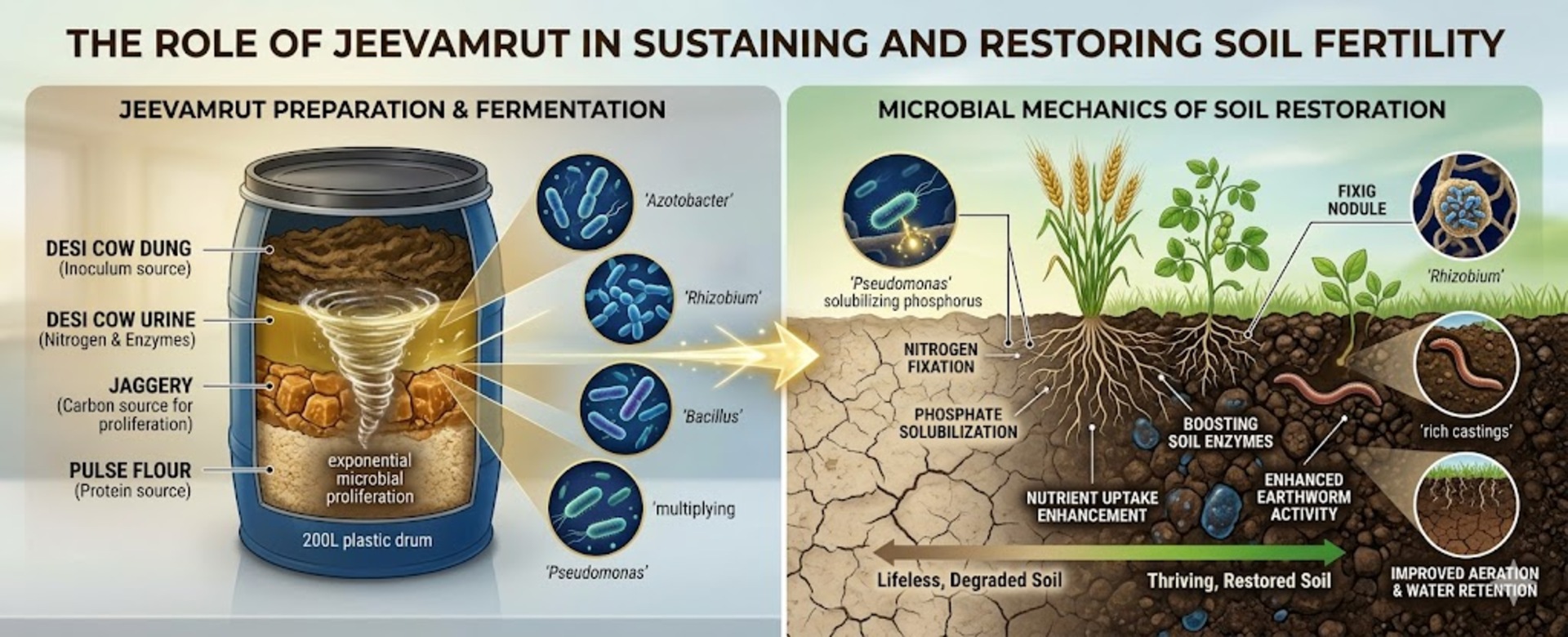

Jeevamrut is an organic liquid fertilizer and soil revitalizer that has gained prominence in sustainable agriculture practices. Rooted in traditional Indian farming knowledge, Jeevamrut is celebrated for its ability to enhance soil fertility, stimulate microbial activity, and promote crop health without the use of chemical fertilizers.
What is Jeevamrut?
Jeevamrut is a fermented mixture made from natural ingredients, including cow dung, cow urine, jaggery, gram flour, and soil from the farm. This eco-friendly concoction is rich in beneficial microorganisms, nutrients, and organic compounds, making it an ideal fertilizer for organic farming.
The Ingredients of Jeevamrut and Their Role:
- Cow Dung:
- Acts as a rich source of organic carbon and microbial life.
- Stimulates the growth of beneficial soil microbes that improve nutrient availability.
- Cow Urine:
- Contains nitrogen, potassium, and other micronutrients essential for plant growth.
- Acts as a natural pest repellent due to its antibacterial properties.
- Jaggery (Unrefined Sugar):
- Provides an energy source for microbes, promoting rapid microbial multiplication.
- Enhances the fermentation process, making nutrients bioavailable to plants.
- Gram Flour (Besan):
- Supplies nitrogen and proteins to support microbial growth.
- Acts as a nutritional booster for soil microorganisms.
- Farm Soil:
- Introduces native soil microbes into the mixture, increasing microbial diversity.
- Helps adapt the fertilizer to the specific conditions of the farm.
The Science Behind Jeevamrut’s Effectiveness:
- Microbial Activity:
- Jeevamrut is a powerhouse of beneficial microorganisms, such as nitrogen-fixing bacteria and phosphate-solubilizing bacteria.
- These microbes decompose organic matter, releasing essential nutrients in forms that plants can absorb.
- Enhanced Soil Fertility:
- The organic matter in Jeevamrut improves soil structure, increases water retention, and boosts nutrient-holding capacity.
- It replenishes depleted soils, enabling sustainable crop production.
- Natural Pest and Disease Control:
- The bioactive compounds and beneficial microbes in Jeevamrut suppress harmful pathogens and pests in the soil.
- Cow urine’s antibacterial properties further contribute to a healthier soil ecosystem.
- Improved Nutrient Cycling:
- Jeevamrut accelerates the decomposition of organic residues in the soil, promoting the cycling of nutrients like nitrogen, phosphorus, and potassium.
- pH Regulation:
- By enhancing microbial activity, Jeevamrut helps maintain soil pH levels, ensuring optimal conditions for plant growth.
Benefits of Jeevamrut in Sustainable Agriculture:
- Eco-Friendly Alternative:
- Jeevamrut eliminates the need for chemical fertilizers, reducing soil and water pollution.
- Cost-Effective Solution:
- Made from readily available farm resources, Jeevamrut is highly affordable for small and marginal farmers.
- Improved Crop Yield and Quality:
- The balanced nutrition and enhanced microbial activity lead to healthier crops with higher yields and superior quality.
- Restoration of Soil Health:
- Regular use of Jeevamrut restores soil fertility, countering the negative effects of intensive farming practices.
- Carbon Sequestration:
- By promoting organic matter in the soil, Jeevamrut contributes to carbon storage, mitigating climate change impacts.
How to Prepare Jeevamrut:
Ingredients:
- 10 kg of fresh cow dung (preferably from indigenous breeds).
- 10 liters of cow urine.
- 1 kg of jaggery.
- 1 kg of gram flour.
- A handful of farm soil.
- 200 liters of water.
Preparation Steps:
- Mix all the ingredients thoroughly in a drum or large container.
- Stir the mixture twice daily for 4–5 days to ensure proper fermentation.
- After fermentation, dilute Jeevamrut with water at a 1:10 ratio before applying it to the soil or as a foliar spray.
Applications of Jeevamrut in Farming:
- Soil Fertilization:
- Apply Jeevamrut to the soil at regular intervals to enrich microbial life and enhance nutrient availability.
- Foliar Spray:
- Spray diluted Jeevamrut on crops to supply nutrients directly to the plants and control pests.
- Compost Accelerator:
- Add Jeevamrut to compost heaps to speed up decomposition and enrich the final compost.
The Role of Jeevamrut in Sustainable Agriculture:
By promoting natural nutrient cycling, improving soil health, and reducing dependency on chemical inputs, Jeevamrut is a cornerstone of sustainable and regenerative agriculture. It empowers farmers to produce healthier crops while preserving the environment for future generations.
Jeevamrut is more than a fertilizer—it’s a holistic approach to farming that harmonizes with nature, ensuring long-term agricultural sustainability and food security.