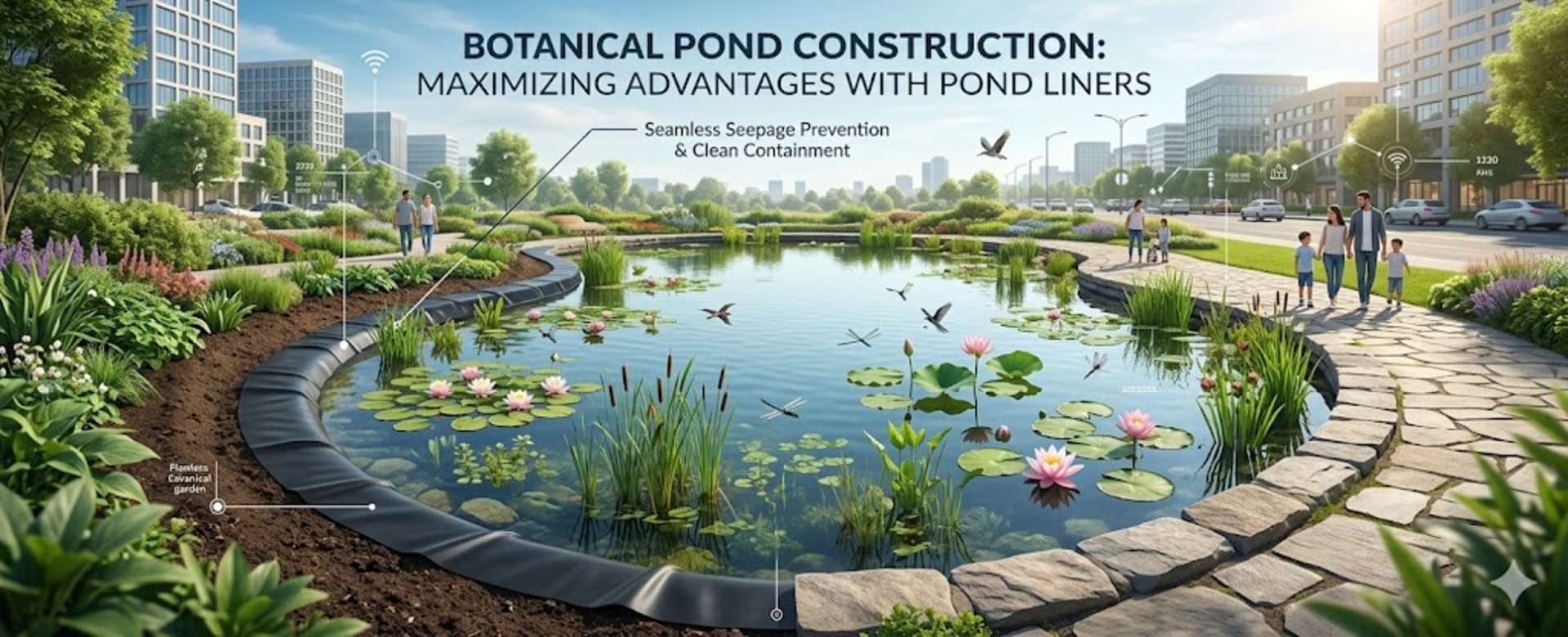

Botanical ponds are key features in gardens, parks, and conservatories, showcasing aquatic plants while adding aesthetic and ecological value. Pond liners play an essential role in constructing botanical ponds by ensuring water retention, supporting plant health, and providing design flexibility.
Advantages of Using Pond Liners in Botanical Ponds:
- Water Retention:
- Pond liners create an impermeable barrier, preventing water loss through seepage and maintaining consistent water levels.
- Benefit: Ensures optimal conditions for aquatic plants and reduces water usage.
- Design Flexibility:
- Liners, especially flexible materials like EPDM, allow for customized shapes and depths to accommodate diverse plant species and artistic designs.
- Benefit: Supports a variety of aquatic environments, from shallow zones for lilies to deeper areas for floating plants.
- Durability:
- High-quality liners like HDPE or EPDM are resistant to UV radiation, temperature changes, and wear, making them suitable for outdoor installations.
- Benefit: Provides a long-lasting solution with minimal maintenance.
- Root Barrier Functionality:
- Pond liners act as root barriers, preventing invasive plant roots from damaging the pond structure.
- Benefit: Preserves the integrity of the pond and reduces maintenance efforts.
- Eco-Friendly Options:
- Non-toxic liners ensure a safe environment for plants and aquatic life.
- Benefit: Promotes biodiversity in botanical gardens and ecological projects.
- Ease of Installation:
- Lightweight and flexible liners simplify the installation process, reducing labor and time requirements.
- Benefit: Cost-effective for both small-scale and large botanical projects.
Applications:
- Ornamental Gardens: Decorative ponds featuring lilies, lotuses, and other aquatic plants.
- Conservatories: Controlled botanical ponds supporting rare or exotic species.
- Public Parks: Large botanical ponds enhancing landscape aesthetics and biodiversity.
By using pond liners, botanical ponds can be designed to thrive, offering beauty, functionality, and sustainability.