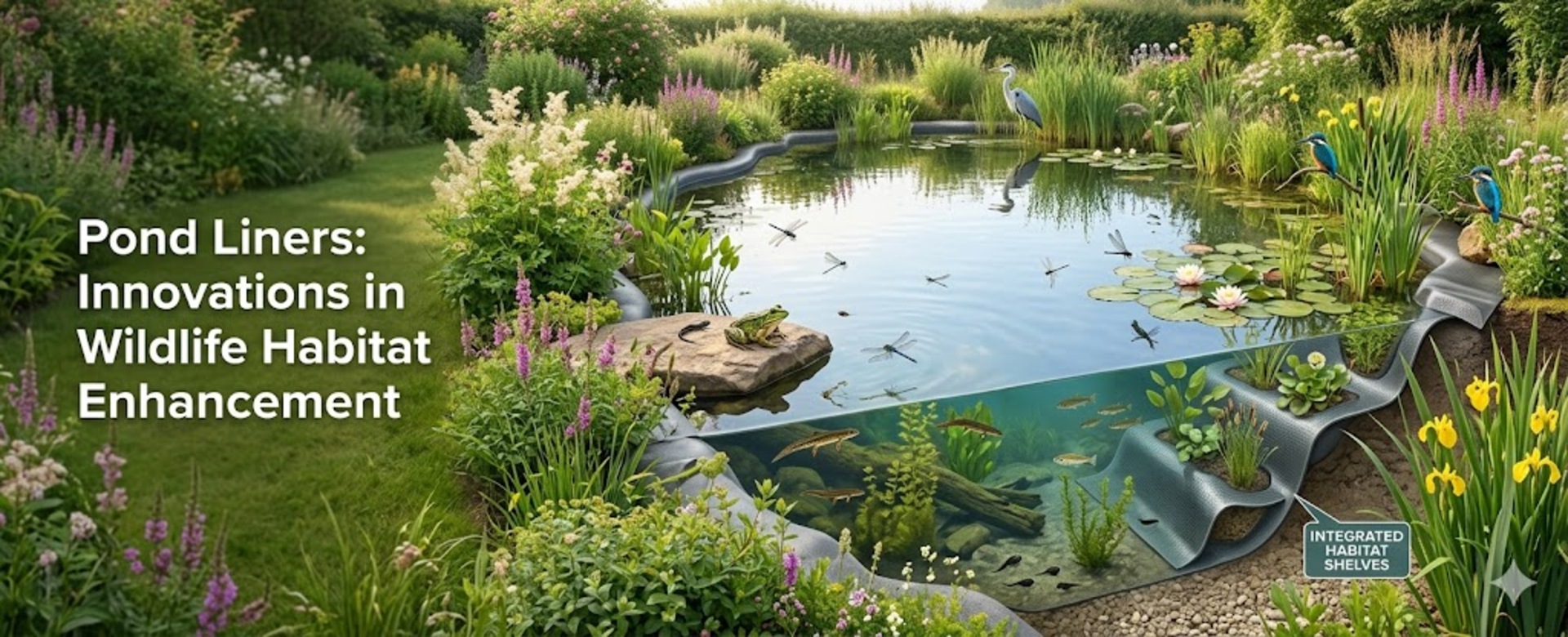

Pond liners are not only functional for water containment but also play a significant role in creating and enhancing wildlife habitats. Innovative uses of liners now enable the design of ponds and wetlands that support diverse ecosystems while promoting sustainability.
Innovations in Wildlife Habitat Enhancement Using Pond Liners:
- Multi-Zoned Habitats:
- Liners allow for the creation of ponds with varying depths and zones to support different species, from shallow areas for amphibians to deeper zones for fish.
- Example: A pond with a gradual slope for wading birds and a deeper central area for fish breeding.
- Vegetation Support:
- Geotextiles or soil layers placed over liners encourage natural vegetation growth, providing shelter and food for wildlife.
- Example: Constructed wetlands with reeds and aquatic plants for nesting birds.
- Floating Habitat Islands:
- Liners are used as the base for floating islands, which provide nesting sites for birds and improve water quality by promoting plant growth.
- Example: Artificial islands in conservation ponds or urban wetlands.
- Wildlife Corridors:
- Liners in interconnected ponds or streams create pathways for species migration and habitat connectivity.
- Example: Linked ponds in nature reserves to support amphibian movement.
- Eco-Friendly Materials:
- Non-toxic and recyclable liners ensure safe environments for aquatic and terrestrial species.
- Example: EPDM liners in wildlife conservation projects.
- Stormwater Retention with Wildlife Integration:
- Liners enable the construction of stormwater ponds that double as wildlife habitats, improving biodiversity in urban areas.
- Example: A stormwater basin with vegetation zones for pollinators and aquatic life.
Benefits of Using Pond Liners for Wildlife Habitats:
- Customizable Design: Accommodates diverse species and ecological needs.
- Environmental Protection: Prevents water contamination and supports clean habitats.
- Long-Term Durability: Ensures consistent habitat conditions over time.
Innovations in pond liner applications are transforming wildlife habitat enhancement, creating sustainable and biodiverse ecosystems that support conservation efforts.