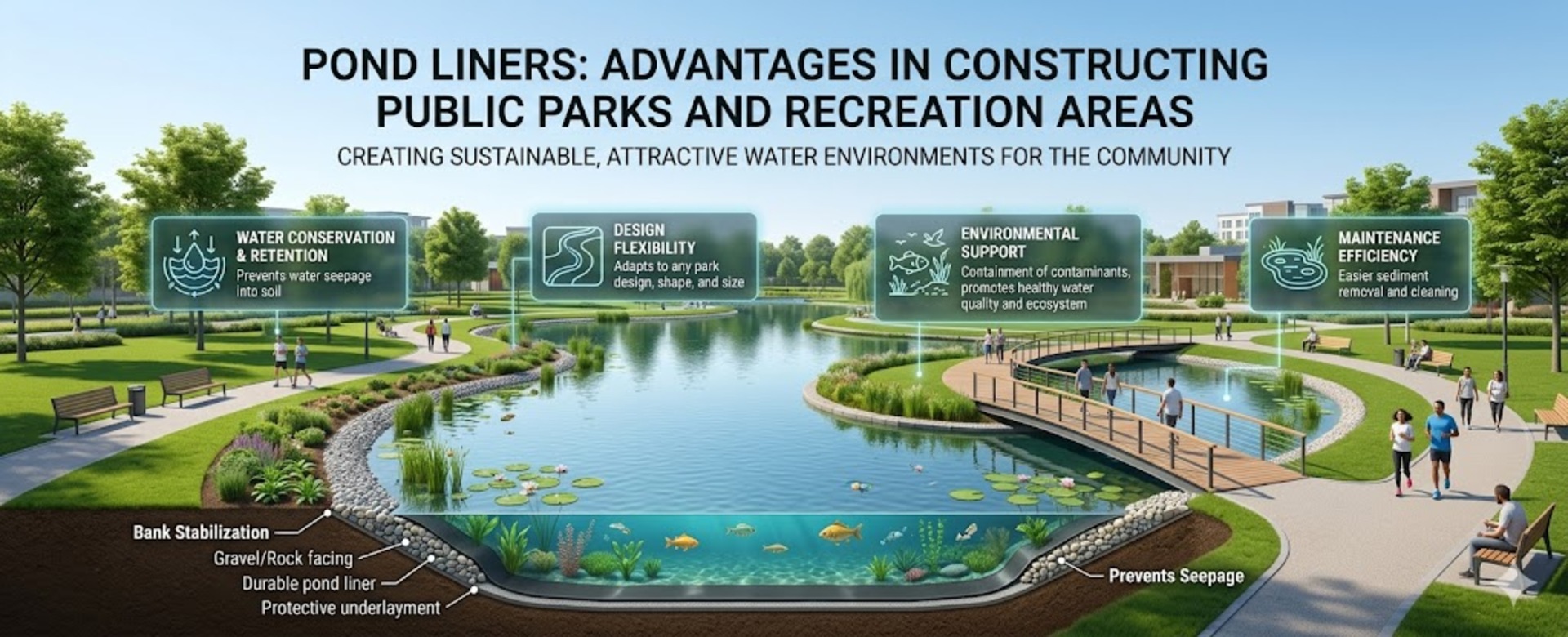

Public parks and recreation areas often feature water elements such as ponds, fountains, and wetlands. Pond liners are an integral component of these water features, offering both functional and aesthetic benefits.
Advantages of Using Pond Liners in Public Parks:
- Water Retention:
- Liners prevent water seepage, ensuring consistent water levels in ponds and fountains.
- Benefit: Reduces water loss and minimizes the need for frequent refilling.
- Aesthetic Flexibility:
- Flexible liners like EPDM allow for custom designs, enabling the creation of unique and visually appealing water features.
- Benefit: Enhances the park’s landscape and visitor experience.
- Low Maintenance:
- Durable liners reduce the risk of leaks or structural issues, minimizing maintenance requirements.
- Benefit: Cost-effective for long-term use in public spaces.
- Support for Biodiversity:
- Liners create stable aquatic habitats, supporting fish, birds, and plants in naturalistic ponds and wetlands.
- Benefit: Promotes environmental conservation and education.
- Durability in High-Traffic Areas:
- High-quality liners withstand wear and tear from foot traffic, equipment, or environmental exposure.
- Benefit: Reliable performance in busy recreational spaces.
- Stormwater Management:
- Liners can be used in rain gardens or retention ponds to manage runoff, preventing flooding in urban parks.
- Benefit: Combines functionality with ecological benefits.
By incorporating pond liners, public parks and recreation areas can feature sustainable, low-maintenance, and visually stunning water features that enhance visitor enjoyment and environmental impact.