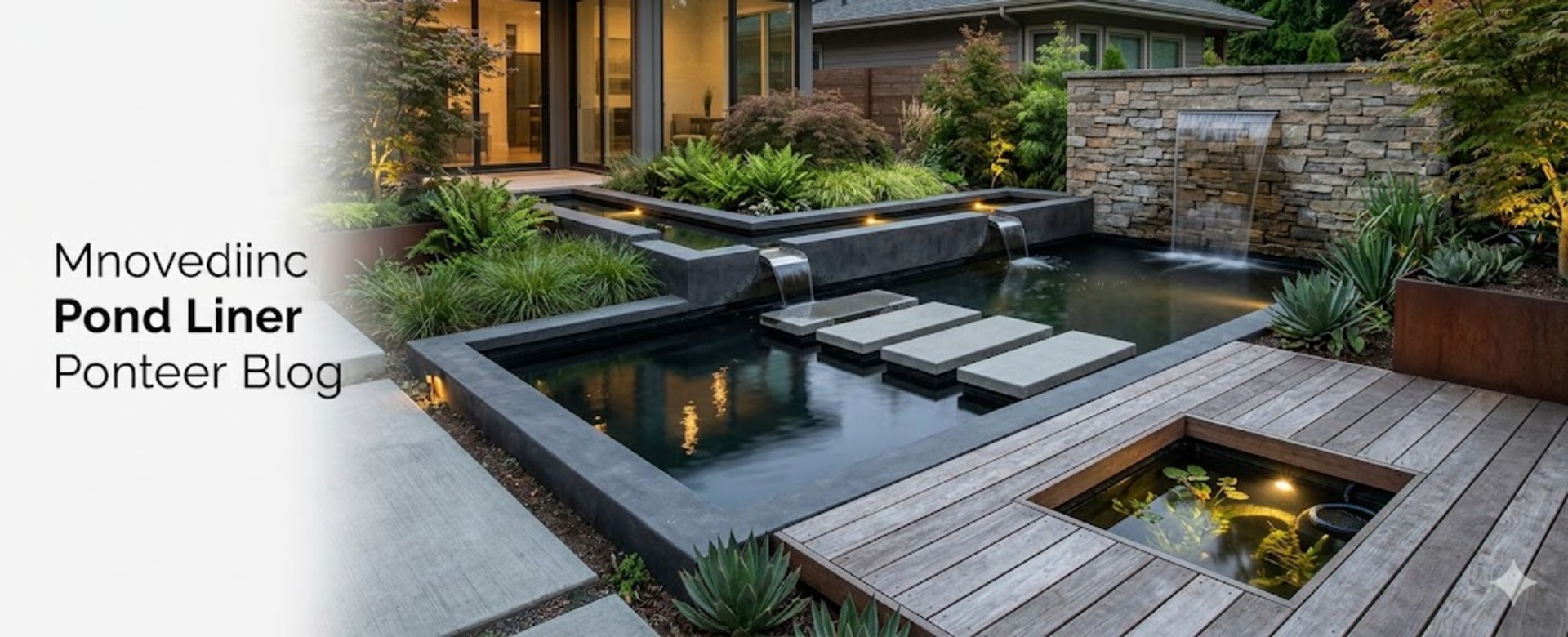

Pond liners are not only functional but also offer creative opportunities for transforming outdoor spaces. They are a cornerstone of modern landscape design, allowing for the construction of beautiful, sustainable, and versatile water features.
Innovative Ways Pond Liners Are Used in Landscape Design:
- Custom-Shaped Decorative Ponds:
- Flexible liners like EPDM allow for ponds of unique shapes and sizes, enabling designers to create water features that complement the natural contours of the landscape.
- Example: Irregularly shaped ponds mimicking natural lakes in residential or commercial properties.
- Integrated Waterfalls and Streams:
- Pond liners are used to line waterfalls and streams, ensuring that water flows efficiently without leakage. This creates dynamic features that add movement and sound to outdoor spaces.
- Example: Multi-tiered garden waterfalls cascading into a lined pond.
- Eco-Pools and Natural Swimming Ponds:
- Liners provide the foundation for eco-pools, which use natural filtration systems and aquatic plants instead of chemicals. These pools are both functional and environmentally friendly.
- Example: A backyard swimming pond that supports aquatic plants and fish while being safe for human use.
- Rain Gardens and Retention Ponds:
- Pond liners are incorporated into rain gardens to manage stormwater runoff, preventing erosion and promoting groundwater recharge.
- Example: A lined rain garden that collects and filters water from rooftops and driveways.
- Floating Islands:
- Liners are used as a base for floating islands, which support vegetation or decorative structures on ponds. These islands improve water quality and create habitats for birds and aquatic life.
- Example: Artificial islands in decorative ponds or wetlands.
- Reflective Pools and Minimalist Features:
- Liners help create shallow reflective pools, popular in contemporary landscape designs for their sleek and minimalist aesthetic.
- Example: Reflective water features in urban plazas or meditation gardens.
- Wetlands for Environmental Restoration:
- In ecological projects, liners are used to create artificial wetlands that treat wastewater, restore habitats, or improve water quality in degraded areas.
- Example: Constructed wetlands lined with HDPE for wildlife conservation and stormwater management.
- Themed Landscapes:
- Pond liners enable the construction of themed landscapes, such as Japanese gardens, desert oases, or tropical retreats, where water plays a central role.
- Example: A Zen garden with a lined koi pond and bamboo accents.
Advantages of Using Pond Liners in Landscape Design:
- Flexibility: Adaptable to any shape, size, or theme.
- Durability: Withstands environmental stressors, ensuring long-term performance.
- Aesthetic Value: Supports creative and visually stunning designs.
- Environmental Impact: Promotes water conservation and habitat creation.
By incorporating pond liners into landscape design, homeowners, architects, and developers can create innovative and sustainable outdoor spaces that enhance beauty, functionality, and environmental stewardship.