
The mining industry is one of the most resource-intensive sectors, requiring effective solutions for environmental protection, resource management, and operational efficiency. Geomembrane sheets have emerged as game-changing materials that address these challenges. Made from materials like HDPE (High-Density Polyethylene) and LDPE (Low-Density Polyethylene), these durable and impermeable sheets are transforming mining operations worldwide by enhancing safety, sustainability, and productivity.
1. Efficient Heap Leaching Process
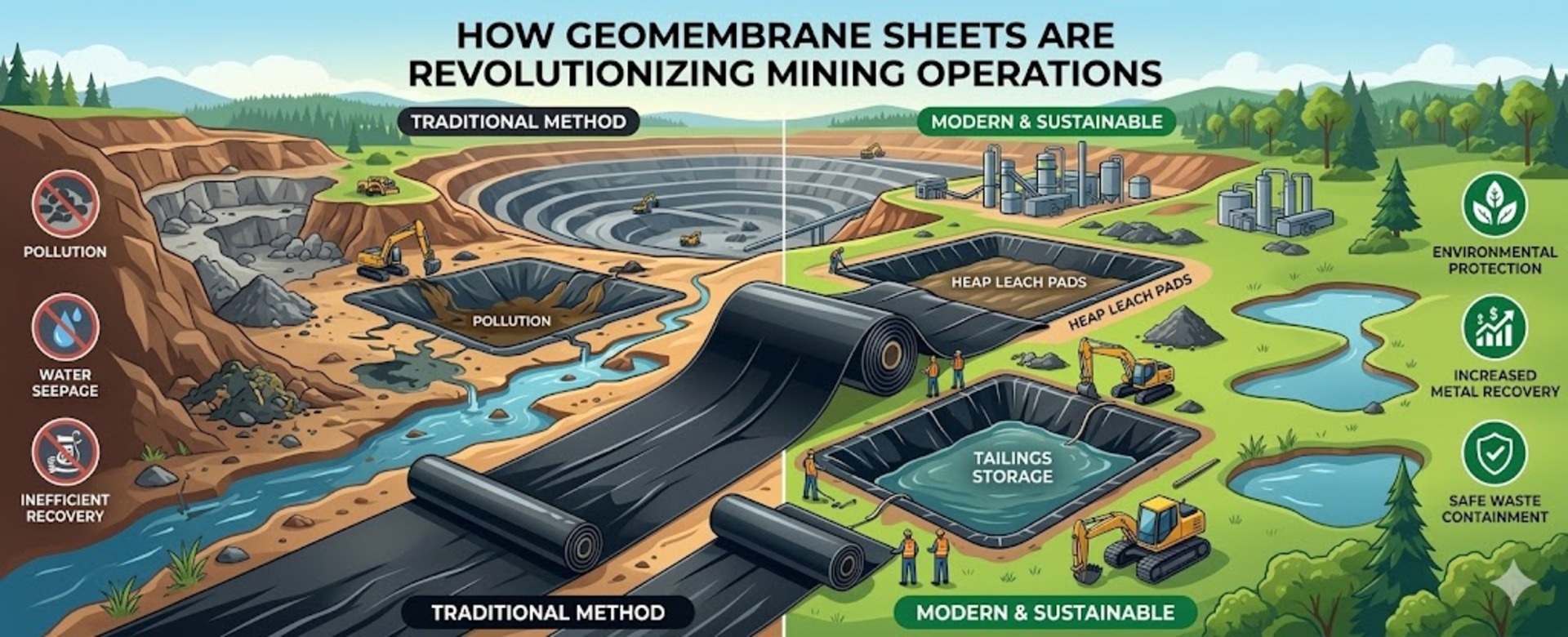
Heap leaching is a critical process in mining for extracting metals such as gold, silver, and copper. Geomembrane sheets play a key role by lining the heap leach pads, where ore is placed and treated with chemical solutions to extract valuable metals. These sheets prevent the chemicals, such as cyanide and sulfuric acid, from seeping into the ground and contaminating soil and groundwater.
The impermeable barrier created by geomembranes not only protects the environment but also improves chemical recovery efficiency. This allows mining companies to maximize metal extraction while adhering to stringent environmental regulations.
2. Tailings Storage Facilities (TSFs)
Mining operations generate large volumes of tailings, which are the leftover materials after ore processing. Geomembrane sheets are used to line tailings storage facilities to contain these materials safely. By preventing toxic substances, heavy metals, and chemicals from leaching into the environment, geomembranes ensure that TSFs are secure and environmentally compliant.
Additionally, geomembrane-lined TSFs reduce water seepage, enabling mining operations to recycle and reuse process water, which is especially crucial in water-scarce regions.
3. Water Management in Mines
Water is an essential resource in mining operations, but its management poses significant challenges. Geomembrane sheets are used in water storage ponds, process water reservoirs, and stormwater management systems to prevent water loss and contamination.
By creating an impermeable lining, geomembranes ensure that water remains contained and clean, making it suitable for reuse in ore processing or dust suppression. This not only conserves valuable water resources but also minimizes the environmental footprint of mining operations.
4. Environmental Protection
One of the most significant benefits of geomembrane sheets in mining is their ability to protect the environment. By acting as barriers, they prevent hazardous chemicals, toxic metals, and other pollutants from escaping into surrounding ecosystems.
For instance, geomembranes are used in containment systems for hazardous waste, spill basins, and drainage channels. These applications help mining companies meet environmental compliance standards and reduce the risk of environmental disasters that can harm communities and ecosystems.
5. Erosion and Slope Stabilization
Geomembrane sheets are also used to stabilize slopes and prevent erosion in open-pit mines. The sheets are installed on embankments, providing a protective layer that prevents soil displacement due to wind, rain, or mining activities.
This helps maintain the structural integrity of mine sites, reducing the risk of landslides or collapse, which could endanger workers and equipment.